Lawn Care Calendar: Month By Month Guide

Your lawn’s maintenance needs change with the seasons, keeping you busy with different tasks throughout the year. To keep things simple, we’ve created a month-by-month lawn care calendar so you know what to do and when.
Every lawn is a unique ecosystem, so use these guidelines as a starting point. What works for one lawn in June or August may not work for another. Lawn care treatments and timing vary based on grass type, soil, climate, and local conditions.
To ensure proper timing, follow a cool-season grass calendar or warm-season grass calendar tailored to your grass type.
Monthly Lawn Care Calendar at a Glance |
Month |
Warm-Season Grass |
Cool-Season Grass |
|
January
(Mid-Winter)
|
|
|
|
February
(Late Winter)
|
|
|
|
March
(Early Spring)
|
|
Clean up debris Rake matted turf Apply pre-emergent herbicide Provide supplemental water if needed Apply fertilizer (based on soil test results) when grass is actively growing Perform first mow of the season |
|
April
(Mid-Spring)
|
|
|
|
May
(Late Spring)
|
Dethatch, aerate, and overseed if needed Apply fertilizer every 4 to 6 weeks based on soil test results Irrigate weekly as needed Gradually raise mowing height so the turf is tall in summer |
|
|
June
(Early Summer)
|
If you didn’t dethatch, aerate, or overseed in late spring, do so in early summer if needed. Continue to apply fertilizer depending on soil test results Irrigate weekly as needed Maintain a regular mowing schedule Monitor for pests and lawn disease Spot-treat weeds with post-emergent herbicide |
Allow grass to enter dormancy or water weekly Monitor for pests and lawn disease Spot-treat weeds with post-emergent herbicide |
|
July
(Mid Summer)
|
Continue to apply fertilizer depending on soil test results Irrigate weekly as needed Maintain a regular mowing schedule Monitor for pests and lawn disease Spot-treat weeds with post-emergent herbicide |
Allow grass to enter dormancy or water weekly Monitor for pests and lawn disease Spot-treat weeds with post-emergent herbicide |
|
August
(Late Summer)
|
Continue to apply fertilizer depending on soil test results Irrigate weekly as needed Maintain a regular mowing schedule Monitor for pests and lawn disease Spot-treat weeds with post-emergent herbicide |
Allow grass to enter dormancy or water weekly Monitor for pests and lawn disease Spot-treat weeds with post-emergent herbicide |
|
September
(Early Fall)
|
Apply last fertilizer application in late August or early September, depending on soil test results Provide supplemental water if needed Test soil, if needed Apply soil amendments Apply pre-emergent herbicide Remove leaves Slow growth rate may lead to less frequent mowing |
Apply final fertilizer application every 4 to 6 weeks if recommended by soil test Dethatch, aerate, and overseed if needed Provide supplemental water if needed Test soil, if needed Apply soil amendments Apply pre-emergent herbicide Remove leaves Resume regular mowing |
October
(Mid Fall) |
Provide supplemental water if needed Remove leaves Slow growth rate may lead to less frequent mowing Gradually lower mowing height for the final mow before winter dormancy |
|
|
November
(Late Fall)
|
|
Continue to apply fertilizer depending on soil test results Provide supplemental water if needed Remove leaves Gradually lower mowing height for the final mow before winter dormancy Perform the last mow of the season |
|
December
(Early Winter)
|
If winter is dry, provide supplemental water every 3 to 4 weeks Occasional mowing may be needed in regions with mild winters |
If winter is dry, provide supplemental water every 3 to 4 weeks Occasional mowing may be needed in regions with mild winters |
Timing may vary slightly depending on climate zone and local weather conditions.
How Grass Type Affects Your Lawn Care Calendar
Your lawn’s grass type determines when you’ll perform the bulk of your lawn care tasks.
Cool-season grasses grow most actively when air temperatures are between 60 and 75 degrees Fahrenheit, so peak maintenance typically occurs in early spring and fall. These grasses are common in the northern United States and include tall fescue, fine fescues, Kentucky bluegrass, and perennial ryegrass.
Warm-season grasses thrive when air temperatures are between 80 and 95 degrees Fahrenheit, making late spring and summer the busiest times for lawn care. They’re commonly grown in the southern United States and include bermudagrass, zoysiagrass, centipedegrass, St. Augustinegrass, bahiagrass, and buffalograss.
Both grass types can grow in the region where northern and southern climates overlap, known as the transition zone. If you live in this area, your lawn may consist of either type.
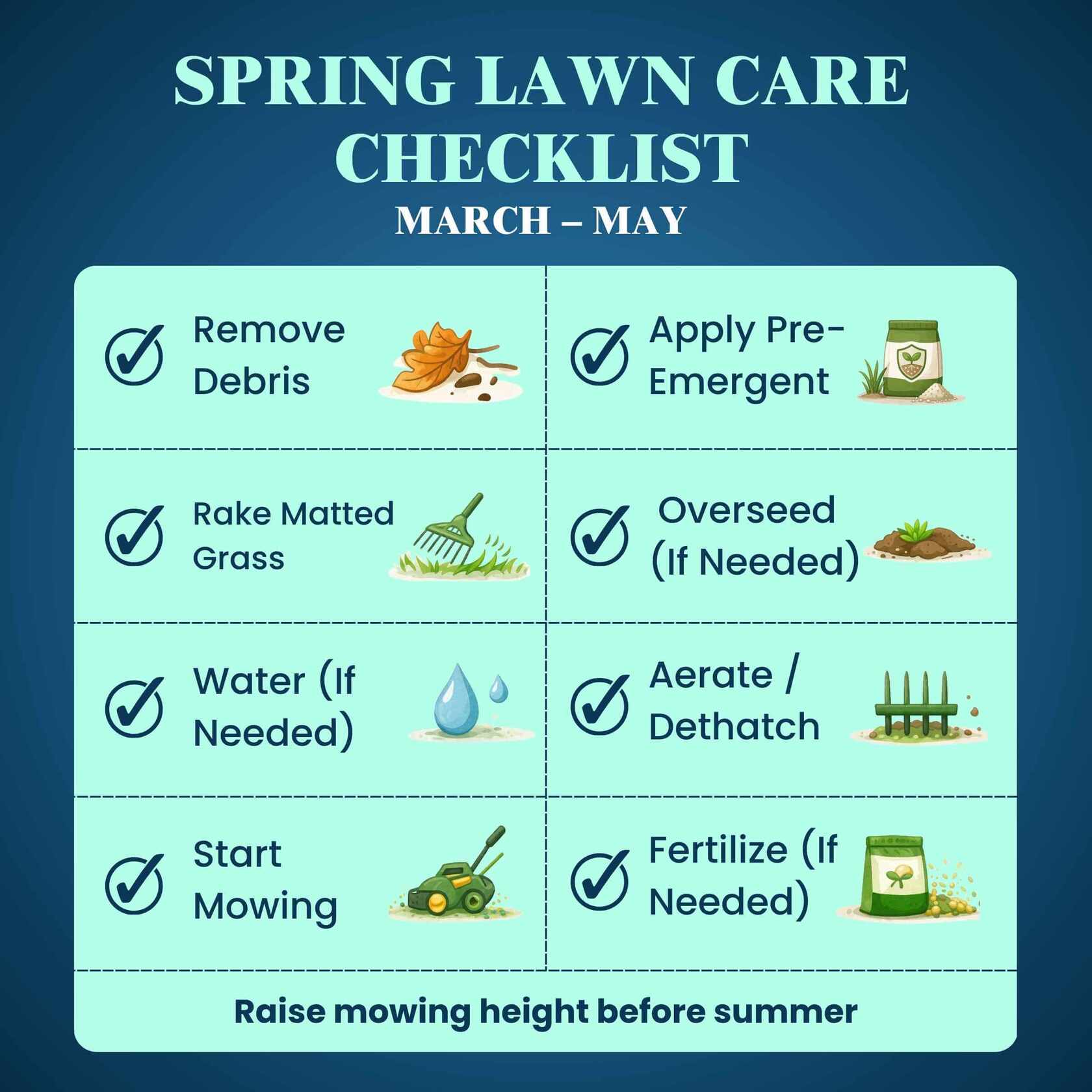
Spring Lawn Care: March, April, May
Cool-season grasses grow actively in spring when temperatures are mild, so they typically green up and begin growing sooner than warm-season lawns.
If you have a cool-season lawn, plan to start maintenance in early spring. Warm-season grasses, on the other hand, don’t need much attention until they begin greening up in mid- to late spring.
Remove Debris
When the snow melts in early spring, clear away any remaining winter debris. Heavy snowfall and strong winds often leave behind broken branches, snapped twigs, and fallen pine needles that can clutter your lawn.
Excess debris can block sunlight from reaching your turf and may also harbor pests or fungal diseases that could damage your lawn.
Rake Matted Grass
Once your lawn shows signs of new growth, gently rake with a leaf rake (not a garden rake) to loosen matted grass and break up any snow mold that may have formed under slow-melting snow.
Cool-season grasses begin growing in early spring, while warm-season grasses typically won’t need raking until mid-spring, when temperatures are warmer.
Irrigate (If Needed)
In many regions of the U.S., spring rainfall provides enough moisture for both cool- and warm-season lawns. During dry spells, watch for signs that your lawn needs water.
Cool-season grasses typically need 1 to 1.5 inches of water per week, while warm-season grasses need about 1 inch per week.
Apply Pre-Emergent Herbicide
If your lawn tends to develop weeds in summer, apply pre-emergent herbicide when soil temperatures are 50 to 55 degrees Fahrenheit for several consecutive days.
Note: Do not apply pre-emergent herbicide if you plan to seed your lawn. Wait at least 12 weeks before overseeding.
Mow New Growth
Once your grass reaches its ideal mowing height, it’s time for the first trim.
Cool-season grasses grow most actively in spring, so they typically need more frequent mowing during this time.
Warm-season grasses may need occasional mowing in spring, but not as often as cool-season lawns.
Tip: Learn to avoid these common lawn mowing mistakes.
Remove Thatch
Most lawns need dethatching every 1 to 5 years, depending on grass type, growing conditions, and maintenance practices. Signs your lawn may need dethatching include a spongy or bouncy feel underfoot, a thatch layer thicker than one-half inch, or yellowing grass.
Early fall is the best time to dethatch cool-season grasses. If you miss this window, early spring is the next best option. Late spring to early summer is the best time to dethatch warm-season grasses.
Aerate Soil
Like dethatching, not all lawns require aeration every year. Learn to recognize the signs your lawn needs aeration to determine when to schedule this task.
As a general rule of thumb, lawns with clay soil benefit from annual aeration, while sandy soils typically need it every 1 to 3 years.
Early fall is the best time to aerate cool-season grasses, with early spring as the next-best option if fall timing doesn’t work out. The best time to aerate warm-season grasses is late spring to early summer.
Overseed
As your lawn greens up, you may notice signs of winter damage, such as bare or thinning patches. Overseeding — the process of planting new grass over your existing lawn — helps restore density and improve overall turf health.
Overseed cool-season grasses in early spring, and warm-season grasses in late spring to early summer.
Overseeding is especially effective after aeration, since it improves seed-to-soil contact.
Caution: After overseeding, wait 4 to 6 weeks before applying a nitrogen-heavy fertilizer.
Apply Fertilizer
Before spreading fertilizer, test your soil to determine its nutrient needs. Early fall is the ideal time for a soil test, but if you missed that window, test in early spring.
Cool-season grasses may benefit from an early-spring fertilizer application, depending on soil test results.
Warm-season grasses should be fertilized every 4 to 6 weeks starting in late spring or early summer, according to the soil test recommendations.
Raise Mowing Height
In late spring, gradually raise your mower blades to the higher end of your grass type’s recommended height. Taller grass shades the soil, keeps roots cooler, and helps retain moisture during hot summer months.
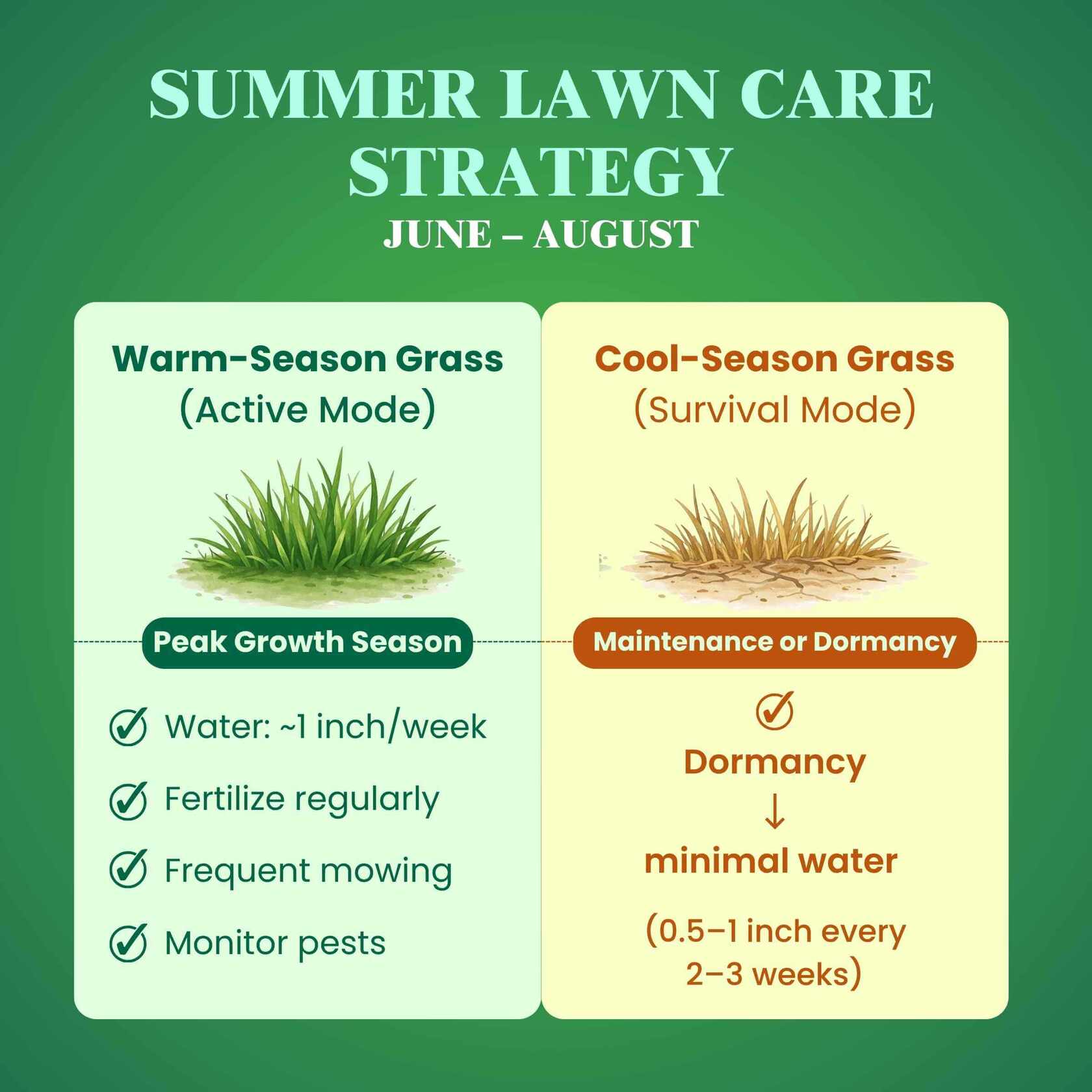
Summer Lawn Care: June, July, August
Cool-season grasses slow down during summer and generally require less maintenance.
In contrast, warm-season grasses grow quickly in summer, often needing more frequent mowing and fertilizer applications.
If you have warm-season grass and didn’t dethatch, aerate, or overseed in late spring, early summer is the ideal time to complete those tasks.
Irrigate
Summer is when lawns need the most supplemental watering to handle heat and drought stress.
Warm-season grasses typically require about 1 inch of water per week during their active growing season.
Homeowners with cool-season grasses have two options:
1. Water 1 to 1.5 inches per week to encourage a green lawn. Keep in mind, however, that a green lawn isn’t always guaranteed. Extreme heat, poor soil, or other stress factors can still cause browning.
2. Allow the lawn to go dormant. During dormancy, cool-season grasses need only 0.5 to 1 inch of water every 2 to 3 weeks to keep the crowns alive.
Fertilize
Always follow soil test recommendations for timing, frequency, and application rates.
As a general guideline:
Cool-season grasses usually don’t need fertilizer during summer.
Warm-season grasses should be fertilized in late spring or early summer, and then every 4 to 6 weeks through late summer or early fall.
Continue to Mow
Keep mowing throughout the summer. Warm-season grasses often need frequent mowing, while cool-season grasses may only require occasional mowing during brief cool spells that stimulate growth.
Remove Weeds
Weeds such as dandelions and crabgrass often appear in summer. If left unchecked, they can quickly outcompete and crowd out your turfgrass. Spot-treat weeds with a post-emergent herbicide to keep infestations under control.
Monitor Pests and Diseases
Stressed grass and high heat make summer lawns prime targets for pests and diseases. Watch for signs like chewed blades, discolored patches, fungal growth, or ant hills.
A healthy, well-maintained lawn is much less susceptible to pests and fungi than a weak or neglected one. Adjust your lawn care routine as needed before resorting to chemical treatments such as pesticides or fungicides.
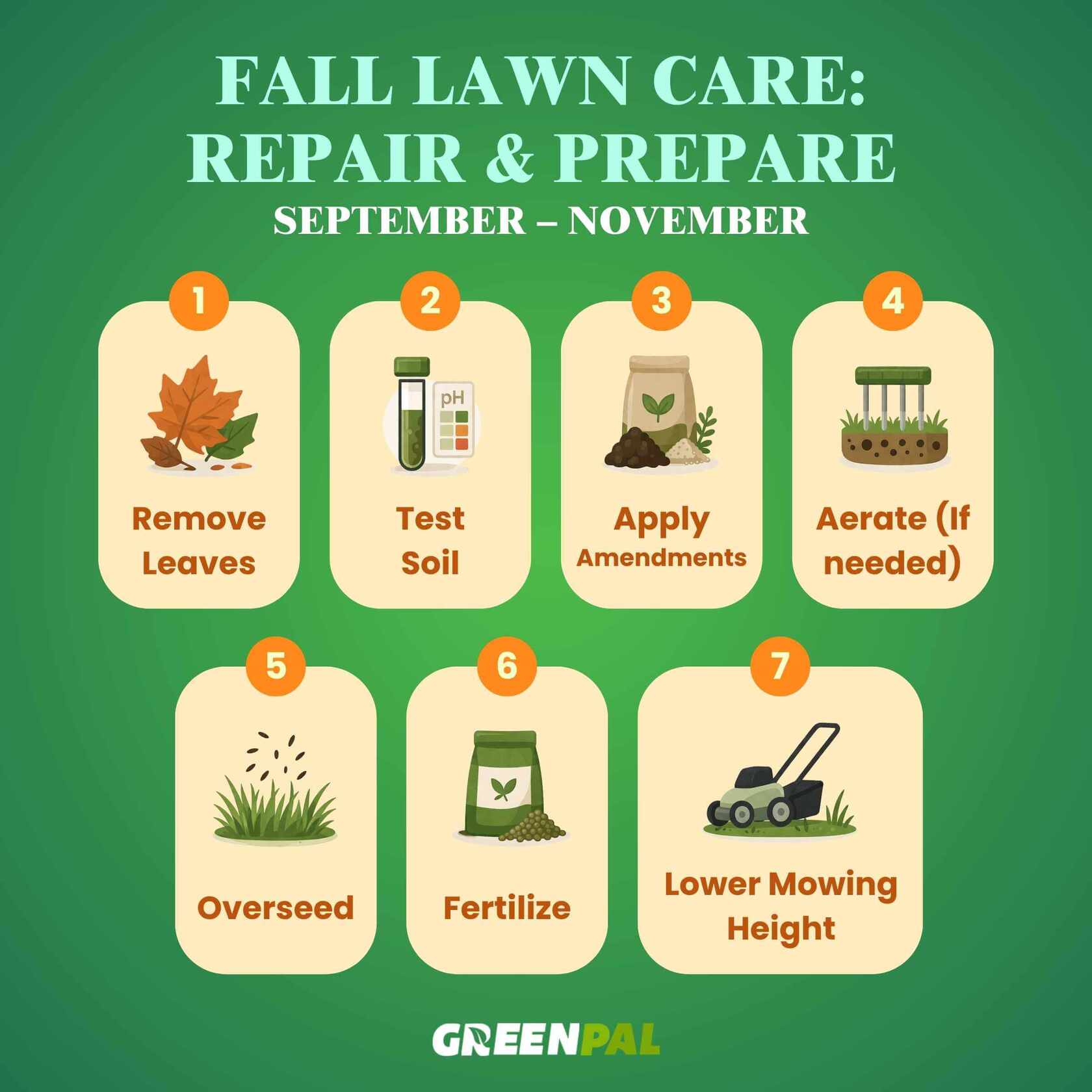
Fall Lawn Care: September, October, November
While early spring is a good time to aerate and dethatch cool-season grasses, early fall is the preferred time for these tasks.
Grab your rake or leaf blower and get ready to clear autumn leaves while preparing your lawn for winter.
Continue to Mow
As warm-season grasses slow down in fall, cool-season grasses begin to grow more actively. Warm-season grasses may still benefit from an occasional trim during warm spells, while cool-season grasses require regular mowing throughout the season.
Irrigate
Like in spring, fall rainfall often provides enough water for lawns in many regions. Watch for signs of drought stress and irrigate as needed.
Test Soil
Early fall is the ideal time to test your soil, giving you a chance to apply the right amendments before winter so your lawn returns strong in spring.
A soil test can reveal the following traits about your soil:
Soil type (clay, sandy, loamy, or silt)
pH level (alkaline or acidic)
Nutrient deficiencies
Organic matter levels
Tip: Test your soil every 3 to 5 years.
At-home soil test kits are widely available and often provide simplified, easy-to-understand results. For more comprehensive analysis and tailored maintenance recommendations, send a soil sample to your local cooperative extension for laboratory testing.
Apply Soil Amendments
A soil test may recommend applying amendments to improve your soil’s structure and nutrient availability. Common amendments include lime and sulfur, which help balance soil pH.
Note: When soil pH is too high or too low, roots struggle to absorb nutrients. Amendments like lime and sulfur can take several months to take effect, so follow your soil test recommendations to determine when to apply fertilizer.
Soil amendments can be applied in early fall to both cool-season and warm-season grasses.
Apply Pre-Emergent Herbicide
To prevent annual weeds over winter, apply pre-emergent herbicide when soil temperatures drop below 70 degrees Fahrenheit but before they reach 55 degrees.
Note: After applying pre-emergent herbicide, wait at least 12 weeks before planting new grass seed.
Dethatch, Aerate, and Overseed
Early fall is the best time to dethatch, aerate, or overseed cool-season grasses.
Avoid dethatching, aerating, or overseeding warm-season grasses during this time.
Fertilize
A soil test may recommend a final fertilizer application for warm-season grasses in late summer or early fall.
For cool-season grasses, begin fertilizing in early fall, followed by additional applications every 4 to 6 weeks based on soil test recommendations.
Rake Leaves
While a light layer of fallen leaves can add organic matter to the soil, too many can block sunlight from reaching your turf. Leaves can also harbor pests and diseases, with wet leaves creating an even more favorable environment.
Remove leaves using a rake, leaf blower, or mulcher, or consider hiring a professional leaf removal service.
Lower the Mowing Height
As you approach the final mow of the season, gradually lower your mower to the low end of your grass type’s recommended height range. Shorter grass going into winter helps prevent snow mold, reduces the risk of pest nesting, and minimizes matting under snow.
Note: Avoid cutting too much at once. Removing more than one-third of the grass blade in a single mow can stress the turf, so lower the height gradually over several mowing sessions.
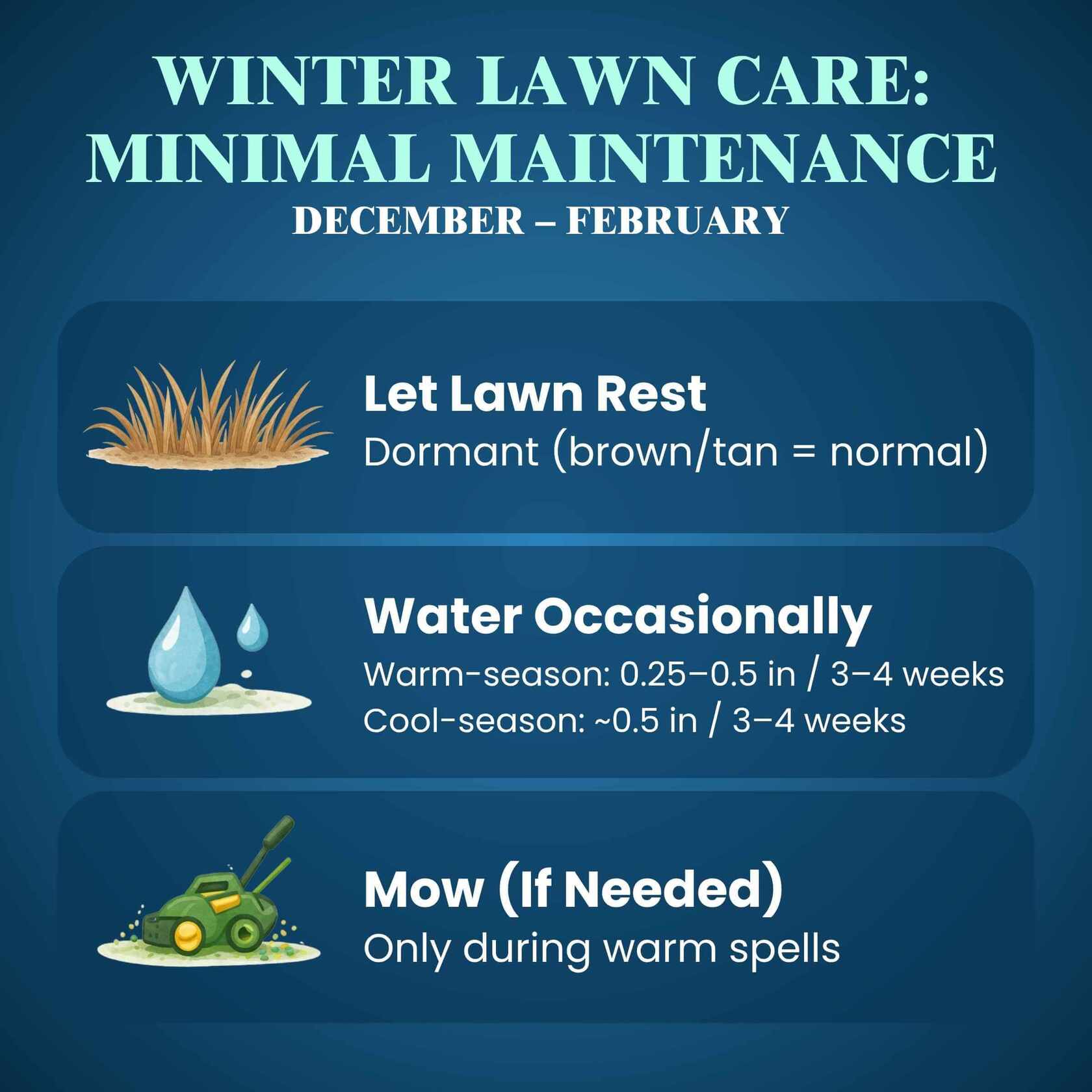
Winter Lawn Care: December, January, February
Cool-season and warm-season grasses typically require minimal care in winter. As temperatures drop, lawns enter dormancy as a survival mechanism and turn brown or tan.
Mow (If Needed)
Unusually warm temperatures may extend grass growth into early winter. For example, cool-season lawns in the transition zone — such as in Charlotte, North Carolina — may continue growing if temperatures remain elevated. In these cases, some homeowners turn to local Charlotte lawn mowing services for occasional winter mowing.
Irrigate (If Needed)
Winter precipitation, including rainfall and snow, is usually sufficient for lawns. However, during extended dry periods, provide dormant warm-season lawns with 0.25 to 0.5 inches of water every 3 to 4 weeks, and dormant cool-season lawns with about 0.5 inches every 3 to 4 weeks.
Frequently Asked Questions
How Often Should You Perform Lawn Maintenance Tasks?
How often you perform various lawn care tasks depends on the lawn’s grass type, growing conditions, and local climate. Here’s a general estimate:
Watering: Between 1 and 1.5 inches of water per week during the active growing season, including rainfall.
Mowing: Between twice per week and once every two weeks, depending on the growth rate.
Soil Testing: Every 3 to 5 years.
Thatch Removal: Every 1 to 5 years, depending on thatch accumulation.
Aeration: Clay soil often requires annual aeration. Sandy soil typically needs aeration every 1 to 3 years.
Soil Amendments: Apply according to soil test results.
Fertilization: Every 4 to 6 weeks during the active growing season, based on soil test results.
Overseeding: Annually, as needed.
Weed Control: Year-round, as needed.
Which Grasses Are the Hardest to Maintain?
High-maintenance warm-season grasses include bermudagrass and St. Augustinegrass. Among cool-season grasses, Kentucky bluegrass and perennial ryegrass typically require the most upkeep.
Do I Need a Different Calendar For Different Grass Types?
Yes. Warm-season grasses require the most attention during summer, while cool-season grasses need the most care in fall.
How Do I Adjust the Calendar For My Location?
Plan your lawn care schedule around your local spring thaw and first frost dates
The farther north you live, the later your grass will green up in spring and the earlier it will go dormant in fall. For example, a homeowner in Maine may start spring lawn care weeks later than someone in Pennsylvania.
The farther south you live, the earlier your grass will green up and the longer it will stay active into fall or early winter.
Leave Your Lawn Care Calendar to the Pros
Maintaining a lawn is no small task. It’s a year-round job that requires a trained eye, consistency, and plenty of time — especially with weekly mowing. Consider entrusting your yard care to a local lawn care professional so you can focus on other parts of your calendar, like vacations, holidays, and weekend activities.