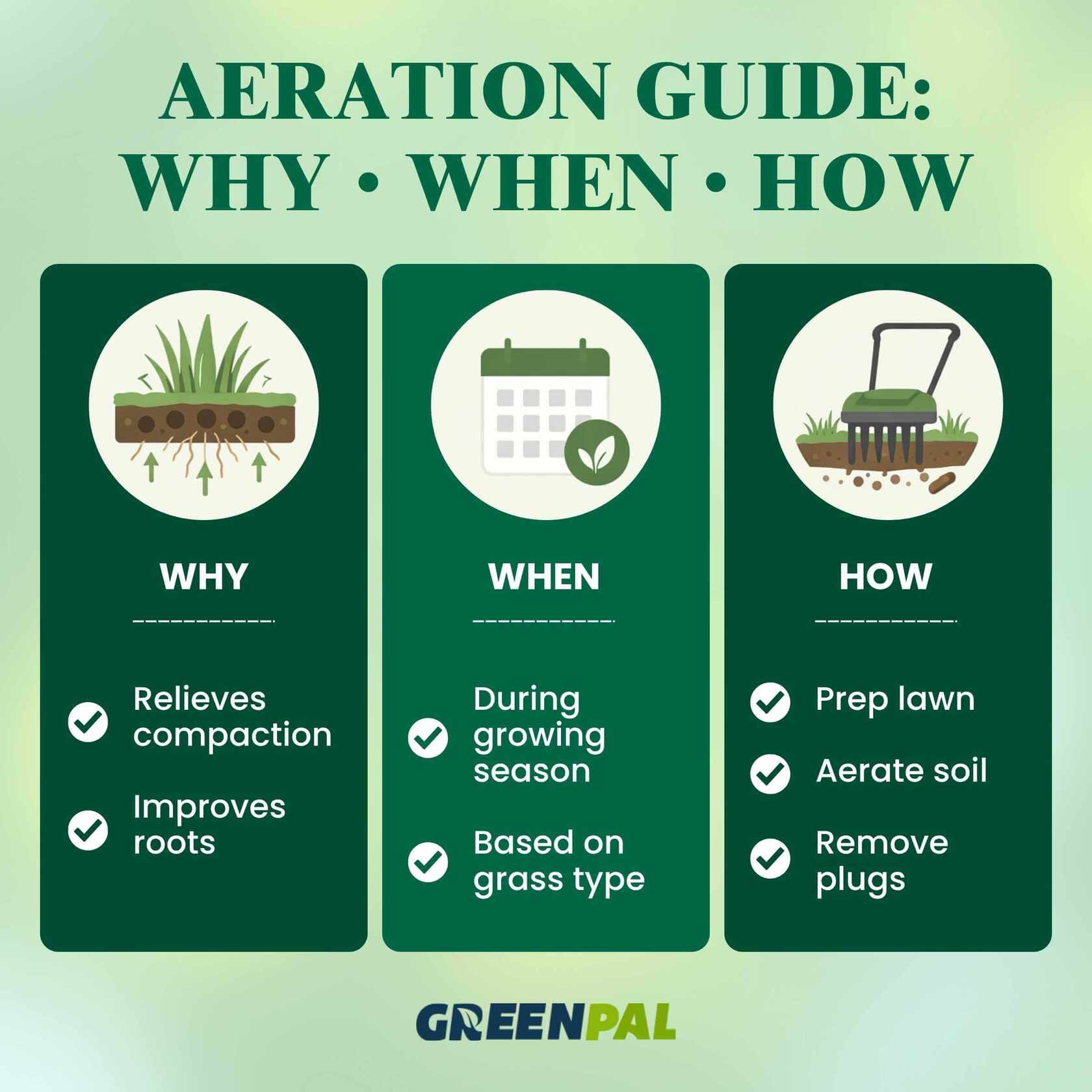
Lawn aeration is one of the most effective ways to relieve compacted soil. This guide covers why, when, and how to aerate your lawn so you can grow a healthier, more beautiful yard.
First, flag sprinkler heads and shallow utility lines. Then prepare your lawn by mowing, dethatching, and watering it properly. Once that’s done, you’re ready to remove plugs of soil from the ground.
While aeration is highly beneficial, it can also be labor-intensive. Manual aerators require repetitive movement, and motorized machines are heavy and often difficult to maneuver. If you’d rather skip the DIY hassle, consider hiring a professional lawn aeration service.
What Is Lawn Aeration?
Lawn aeration is the process of creating small holes in the ground to relieve soil compaction, allowing grass roots to access water, nutrients, and oxygen while promoting deeper root growth.
Why Should You Aerate the Lawn?
Lawn aeration offers many benefits and creates the conditions your lawn needs to thrive. Benefits include the following:
By loosening compacted soil, it allows water, oxygen, and nutrients to reach the roots more easily, resulting in a healthier lawn.
The holes left behind give roots room to expand, allowing the lawn to become thicker, stronger, and more resilient against stress.
Aeration exposes the soil, preparing the lawn for overseeding, fertilizer, soil amendments, and topdressing.
Aeration improves drainage, which promotes deeper root development and reduces runoff.
Types of Soil Aeration
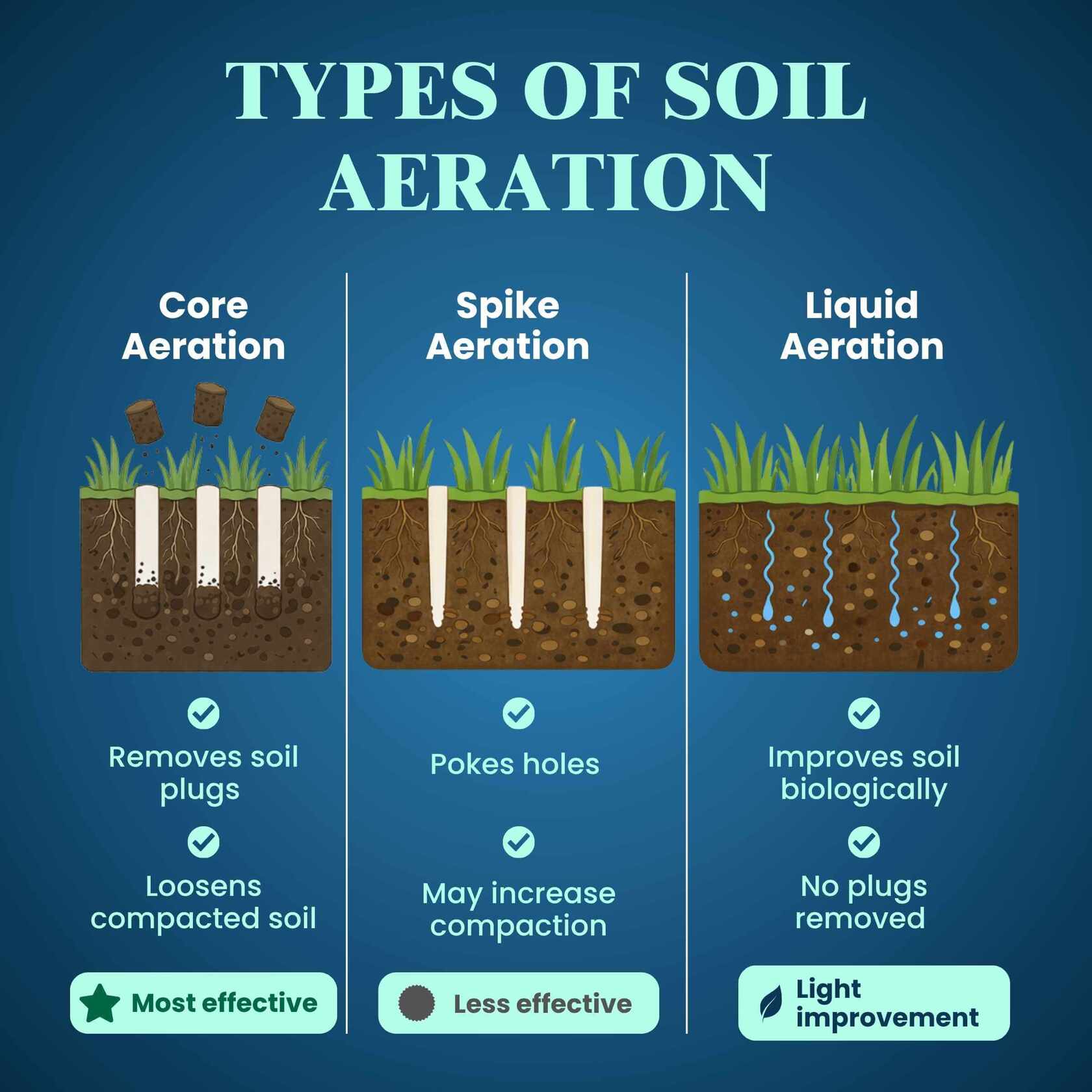
The three most common soil aeration methods include core, spike, and liquid aeration, with core aeration being the most effective at relieving severe compaction:
Core aeration creates holes using hollow tines that remove plugs of soil from the ground, allowing compacted soil to loosen and shift into the open space. It can be performed with motorized self-propelled or riding machines, as well as tow-behind or manual core aerators.
Spike aeration, by contrast, uses solid spikes to create holes in the ground without removing soil. While this allows water, oxygen, and nutrients to penetrate the surface, it may further compact the surrounding soil. Spike aeration is typically done with manual or push-behind tools, though spiked aeration shoes are also available.
Liquid aeration helps improve soil structure and create microscopic pathways for water and nutrients by encouraging microbial activity. Although liquid aeration lowers the chance of damaging underground utility lines and doesn’t leave behind plugs of soil, it is generally not as effective as core aeration for relieving severe compaction.
Some lawns require aeration every year, while others may only need it every few years. The difference often comes down to soil type, foot traffic, and overall lawn health.
Although yellow grass and thinning may be a sign of compacted soil, these symptoms may also be caused by other issues. Learn to recognize these more definitive signs that your lawn needs aeration:
Compacted soil: Dense, hard soil struggles to absorb water, nutrients, and oxygen and needs to be loosened. To test whether the soil is compacted, try to insert a 4- to 6-inch screwdriver into moist soil. If it’s difficult to push in, the soil is likely compacted.
Heavy clay soil: Lawns with heavy clay soil are more susceptible to compaction than sandy or loamy soils, which only need aeration every few years. Since lawns with clay soil benefit from annual aeration, many homeowners in areas with this soil type, such as Oklahoma City, rely on professional lawn aeration to handle this recurring task.
Poor drainage: When puddles start to pool on the lawn’s surface after rainfall or irrigation, water may be struggling to drain into the dense soil underneath.
High traffic areas: Areas exposed to high traffic often have compacted soil due to the repeated pressure from heavy foot traffic, vehicles, or lawn equipment.
When to Aerate the Lawn?
The best time to aerate the lawn is during its active growing season, which depends on the type of grass you have.
If your lawn has cool-season grass, the best time to aerate is in early fall. If you miss this ideal window, early spring is the next-best opportunity to aerate cool-season grass.
For warm-season grass, the best time to aerate is late spring to early summer.
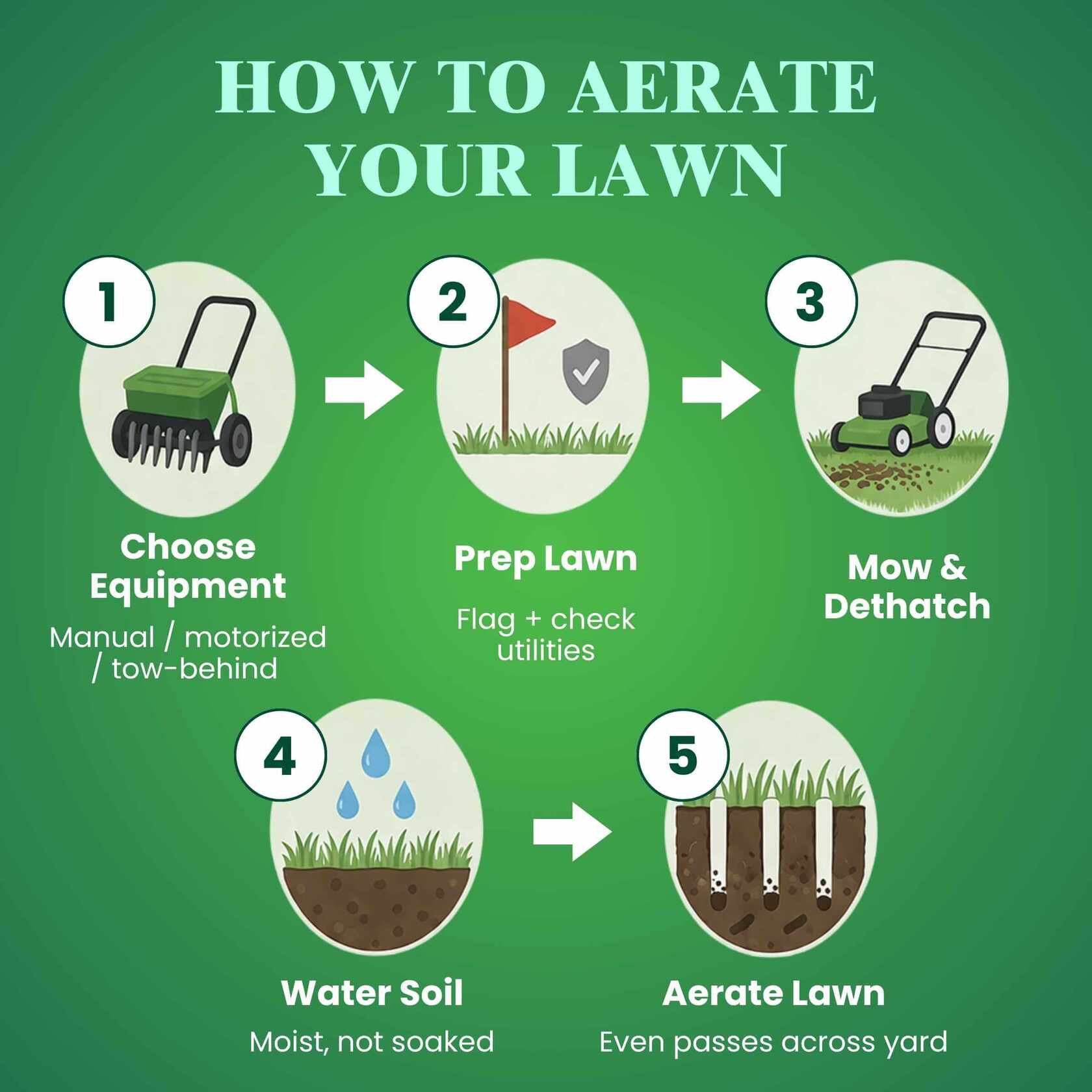
Since core aeration is the recommended approach among professionals, the following instructions describe how to aerate the lawn with various core aeration tools.
Step 1: Choose Your Core Aeration Equipment
Before you begin, decide whether you want to use a manual, motorized, or tow-behind tool to aerate the lawn.
Manual core aerators are inexpensive, easy to store away, and suitable for small lawns. However, repeatedly driving the tool into the ground can quickly become tiresome.
Motorized aeration machines, such as push-behind or riding aerators, can be bought or rented. Although heavy and sometimes difficult to turn, these motorized tools speed up the job significantly.
Tow-behind core aerators can be hitched to the back of a riding mower, lawn tractor, or ATV.
Step 2: Flag Sprinkler Heads
Core aerators are powerful tools that can damage your lawn’s sprinkler heads. Before you aerate, place flags in the ground to identify where your sprinkler heads are.
Step 3: Call 811 Before You Dig
Call 811 two to three business days before you perform core aeration to locate public utility lines on your property (this service is available for free). While core aerator tines usually only extract cores between 1 and 6 inches long, they can damage shallow utility lines.
Keep in mind that 811 does not mark private utility lines, such as dog fences, sprinkler systems, or electrical lines.
Step 4: Mow and Dethatch the Lawn
To increase contact between the aerator tines and the soil surface, mow your lawn before aeration. If your lawn’s thatch layer is more than half an inch thick, remove the buildup with a dethatching rake or motorized dethatcher.
Step 5: Water the Lawn
Water the lawn 1 to 2 days before aeration so that the soil is moist, but not saturated. Moist soil allows tines to penetrate deeper into the ground than dry soil.
Step 6: Wear Protective Gear
When operating a core aerator, keep yourself safe by wearing the following protective gear:
Safety glasses or goggles
Long sleeves
Long pants
Work gloves
Closed-toed shoes
Ear protection
Sun protection
Step 7: Begin Aeration
Now it’s time to aerate. Similar to mowing, start by making a pass around the lawn’s perimeter, then work back and forth in alternating directions.
Always read your equipment’s operating instructions to protect the machine, your lawn, and yourself. For example, core aerators can be difficult to turn because the tines must be lifted off the ground before pivoting. Otherwise, they can rip and tear the lawn.
If you’re using a manual core aerator, press the aerator tines into the ground with your foot. Repeat this movement across the whole lawn, ensuring holes are about 2 to 3 inches apart (roughly 20 to 40 holes per square foot).
Step 8: Check Core Size
As you aerate, check the size of the soil cores being extracted. If the cores are shorter than 2 inches, the aerator may need more weight to penetrate properly.
Many motorized core aerators allow you to add weight, either with built-in weights or a water tank. If increasing the weight doesn’t improve core depth, the soil is likely too dry and should be watered before continuing.
Step 9: Aerate the Other Way
If your core aerator didn’t achieve at least 20 to 40 holes per square foot, make additional passes over the lawn in a perpendicular pattern to increase coverage.
For example, if your first pass ran east to west, follow up with a second pass running north to south.
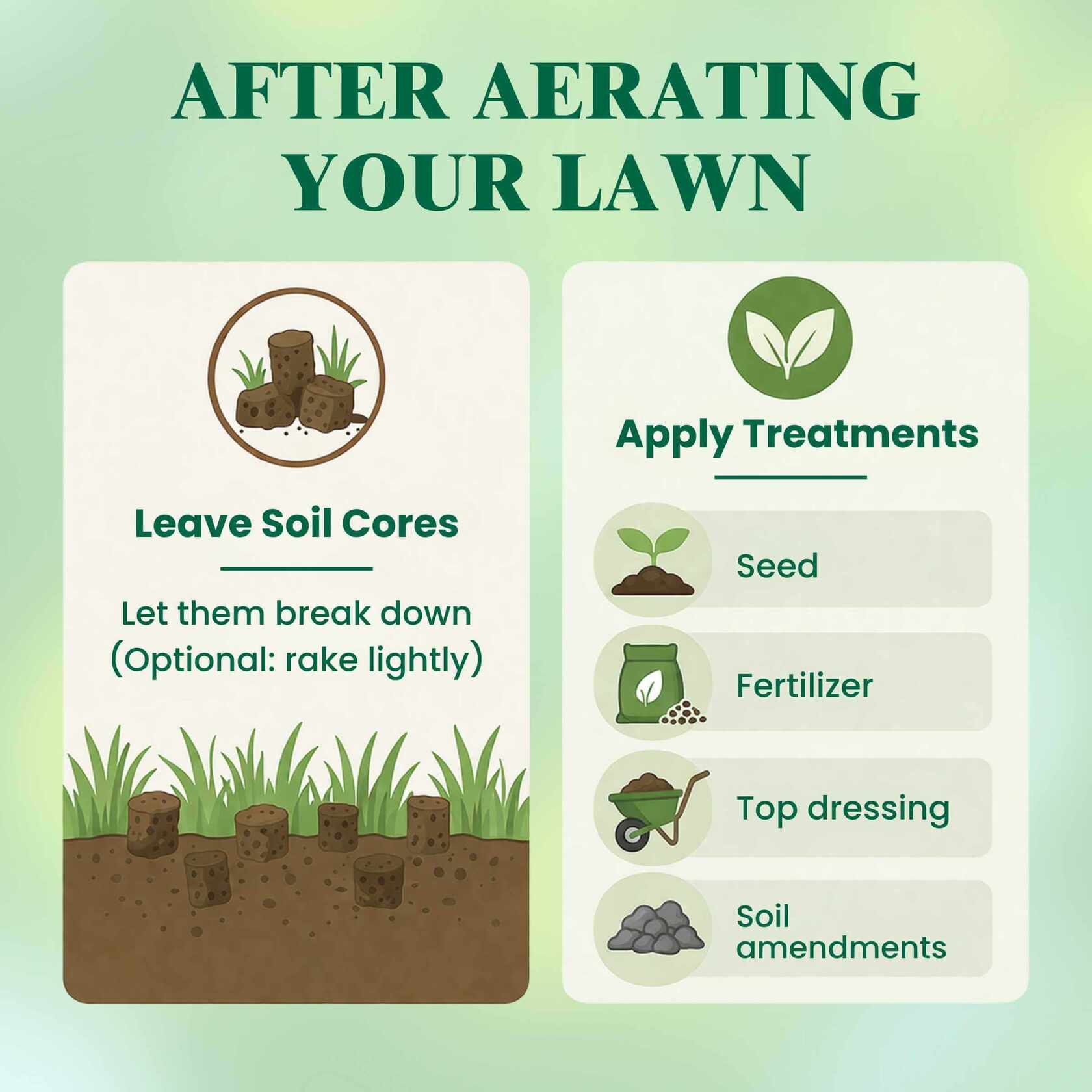
After aerating, soil cores will be scattered across the lawn. To help return nutrients and soil back into the ground, leave the cores in place. They’ll decompose within 2 to 4 weeks, but you can speed up decomposition by breaking them down with a garden rake.
Because aeration exposes the soil, post-aeration is a great time to apply:
New grass seed
Starter fertilizer high in phosphorus
Top dressing
Soil amendments
Frequently Asked Questions
What Is the Difference Between Dethatching and Aeration?
Dethatching is the process of removing thatch buildup from the lawn, often performed with a thatch rake or motorized dethatcher. Thatch is the layer of dead and living organic material that accumulates between the grass blades and soil surface.
Aeration can help break up a thin thatch layer, but its primary purpose is to relieve soil compaction.
How Long Does the Lawn Take to Heal After Aeration?
Lawns typically heal from aeration in 2 to 4 weeks. During this time, the soil plugs decompose and grass roots grow into the holes.
How Often Should You Aerate the Lawn?
It depends on how quickly your soil becomes compacted. Heavy clay soils may require aeration once per year to help relieve or prevent compacted soil. Sandy and loamy soils, which compact less often than clay soils, may only need aeration once every few years.
Hire Local Aeration Services
Among core, spike, and liquid aeration, core aeration is the most effective method for treating severely compacted lawns.
Whether you use a motorized or manual aerator, core aeration remains a labor-intensive task. If you’d rather skip the workout, consider hiring a local lawn care professional so you can enjoy healthier grass without the back pain.