Best Time to Aerate Your Lawn

Core aeration can boost your lawn’s health and curb appeal, but performing this treatment at the wrong time of year harms your grass. The best time to aerate your lawn is during its active growing season when temperatures are mild.
We’ll also cover when not to aerate your lawn. Avoid aerating during extreme temperatures, drought, and dormancy.
Once you’ve added aeration to your lawn care schedule, you can learn how to aerate the lawn yourself or hire a local lawn care professional.
When to Aerate the Lawn
Aeration is most effective during the lawn’s active growing season, when it can recover quickly from this invasive treatment.
Warm-season grasses grow rapidly when air temperatures are between 80 and 95 degrees Fahrenheit, making late spring and early summer the best time to aerate the lawn.
Cool-season grasses thrive when air temperatures are between 60 and 75 degrees Fahrenheit. Early fall is the best time to aerate cool-season grasses, but if you miss this window, early spring is the next-best time to aerate.
Pro Tip: Aerate the lawn after thatch removal, but before overseeding, fertilizing, and applying soil amendments. Aeration increases soil exposure, allowing these treatments to make better contact and work more effectively.
When planning your lawn care schedule, time each treatment based on your grass type. Use a warm-season grass calendar or a cool-season grass calendar to guide your timing.
When to Avoid Aerating the Lawn
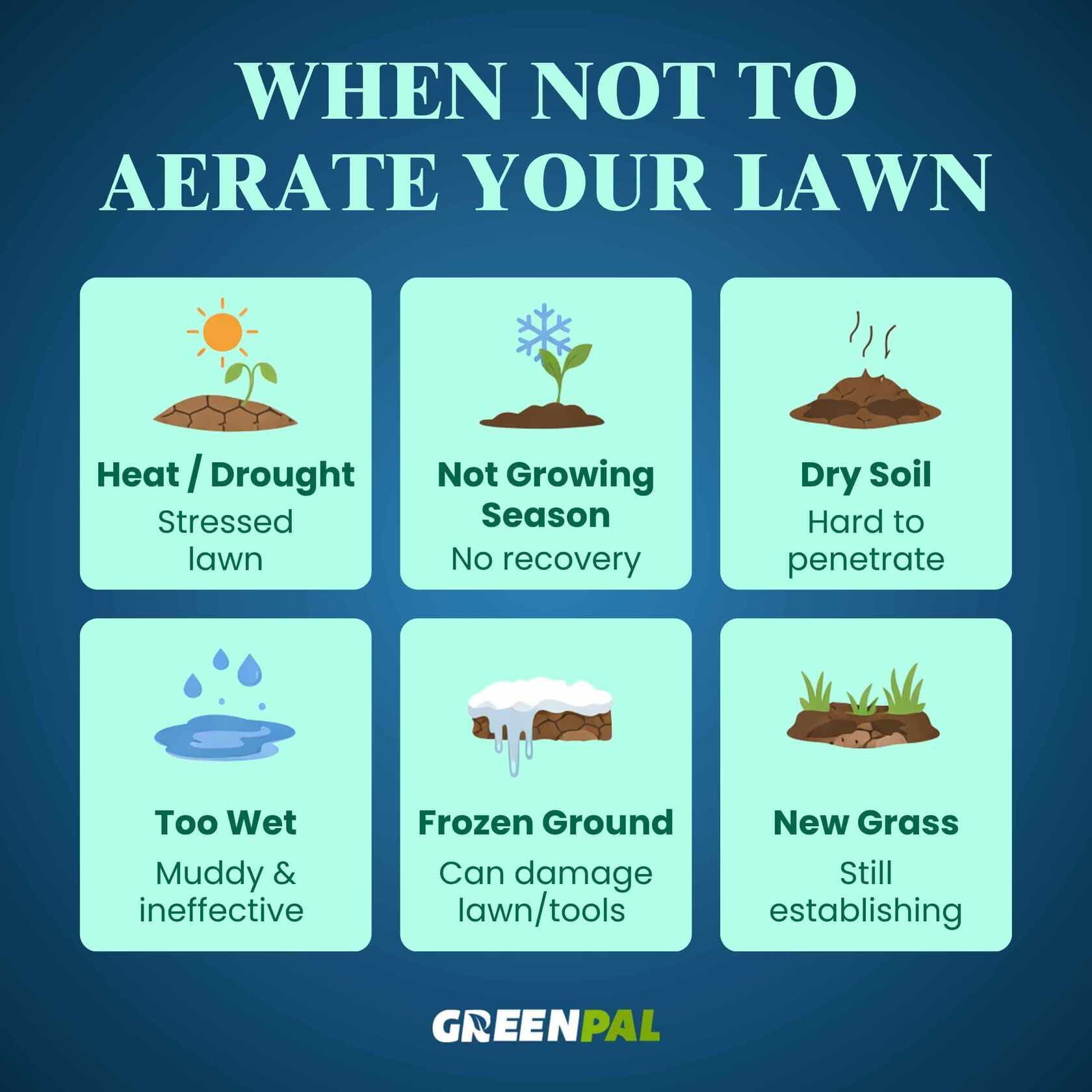
Because aeration can be taxing on turfgrass, it’s important to avoid it when your lawn is most vulnerable. Hold off on aerating when:
The lawn is severely stressed: Avoid aerating during periods of intense heat or prolonged drought, as this can further weaken the turf.
It’s not the grass’s growing season: When the lawn isn’t actively growing, it won’t fill in the holes left behind by aeration.
The soil is too dry: Dry, compacted soil is difficult to aerate and often produces shallow plugs. Water the lawn 1 to 2 days beforehand to ensure proper soil moisture.
The soil is too wet: Aerating after heavy rainfall or flooding clogs the aerator and creates a muddy mess rather than improving soil structure.
The ground is frozen: Frozen soil may break or damage equipment. Plus, turf is not actively growing when temperatures are freezing.
Newly seeded or sodded grass is establishing: Recently seeded or sodded lawns need time to develop strong roots before they can withstand aeration.
The grass is dormant: Aeration can severely damage a dormant lawn because the grass does not have the energy to recover.
When in doubt, wait for mild temperatures and active growth to give your turfgrass the best chance to recover quickly.
How Often Should You Aerate the Lawn?
Not all lawns benefit from annual aeration, but many do. Lawns with heavy clay soils, such as lawns in Portland, Oregon, often benefit from professional aeration services once per year.
Sandy and loamy soils may also need annual aeration, but some lawns with these soil types can go 2 to 3 years (or more) without aeration.
When you’re unsure how often you should aerate, pay attention to what your lawn is telling you. It will often show clear signs it needs aeration, which we’ll cover in the next section.
Signs Your Lawn Needs Aeration
When your lawn shows signs it needs aeration, add this treatment to your lawn care calendar.
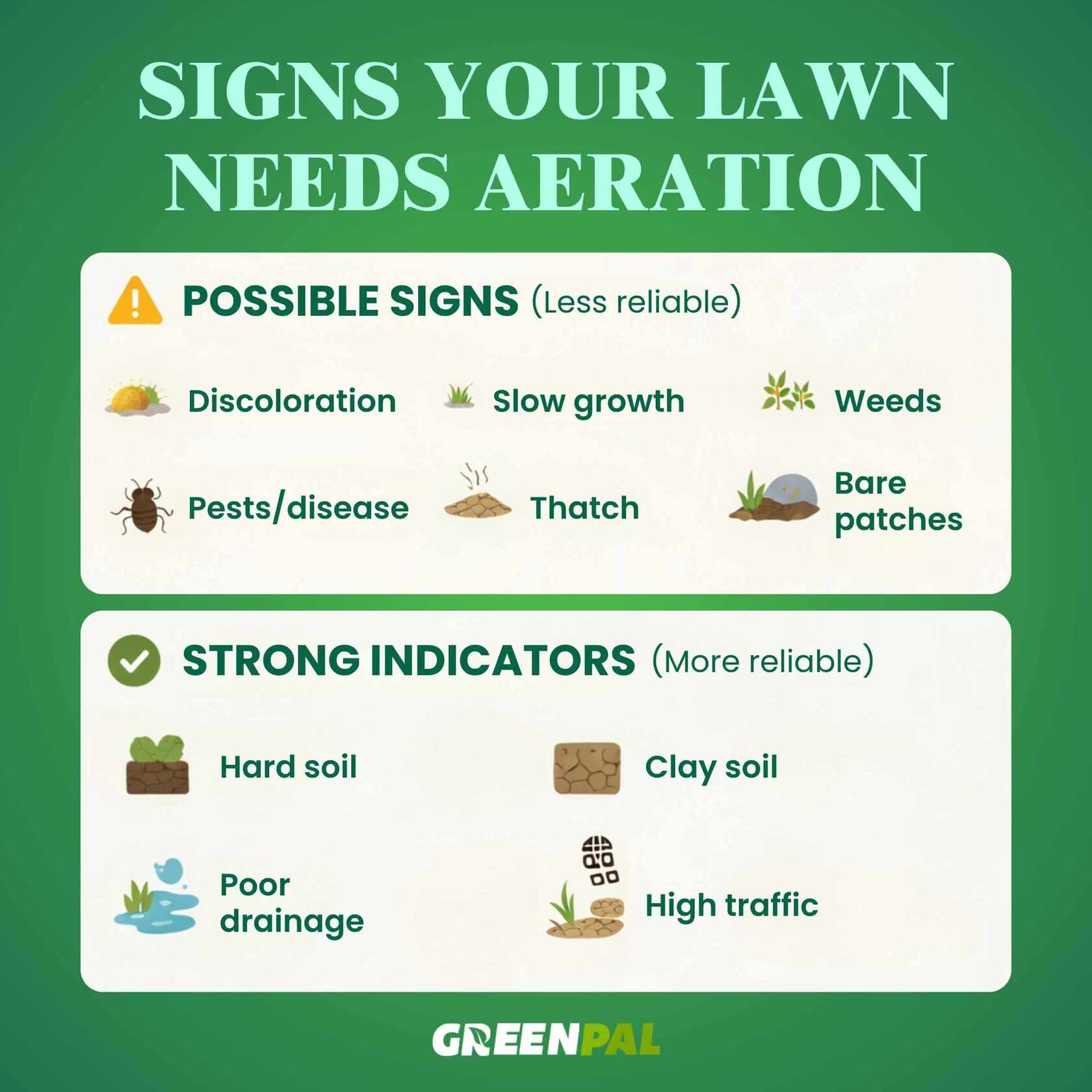
The following symptoms may indicate compacted soil that requires aeration; however, they can also result from other lawn issues:
Yellow or discolored grass
Slow grass growth during the active growing season
Weeds
Pests or lawn diseases infesting the lawn
Thinning, bare patches, or dead grass
Excessive thatch buildup
More reliable signs that your lawn needs aeration include:
Hard, dense soil: If it’s difficult to insert a 4- to 6-inch screwdriver into the soil, the soil is likely compacted and needs relief.
Heavy clay soil: This soil type compacts more easily than sandy or loamy soils, and benefits from annual aeration.
Poor drainage: When water puddles on the lawn’s surface, the soil is likely too compacted to absorb it.
High traffic: Areas receiving heavy use often have compacted soil due to repeated pressure from foot traffic, vehicles, and lawn equipment.
Frequently Asked Questions
What Are the Benefits of Core Aeration?
Core aeration promotes a healthier lawn and deeper root growth by removing plugs of soil from the ground, creating small holes that allow grass roots to access water, nutrients, oxygen, and the space needed to grow.
Other benefits of lawn aeration include improved drainage, thatch reduction, and increased microbial activity.
What Is the Difference Between Core Aeration and Other Methods?
Core aeration removes plugs of soil from the ground to relieve soil compaction. It is the most effective aeration method for treating severely compacted soil.
Spike aeration creates holes by pushing soil into the ground with solid spikes. Lawn care professionals often discourage spike aeration because it can compress surrounding soil rather than relieve compaction.
Liquid aeration uses a liquid solution to improve soil structure and porosity by increasing microbial activity. It is typically less effective than core aeration for relieving compaction.
Can I Aerate My Lawn When It Has a Pest or Disease?
Yes, aeration can help manage the compacted soil and thatch that often allow pests and lawn diseases to survive.
Turn to the Lawn Care Pros
The best time to aerate your lawn is during its active growing season. For warm-season grasses, that’s late spring to early summer. For cool-season grasses, the best time to aerate is early fall. Now that you know when to aerate your lawn, consider adding “schedule professional lawn aeration” to your calendar.