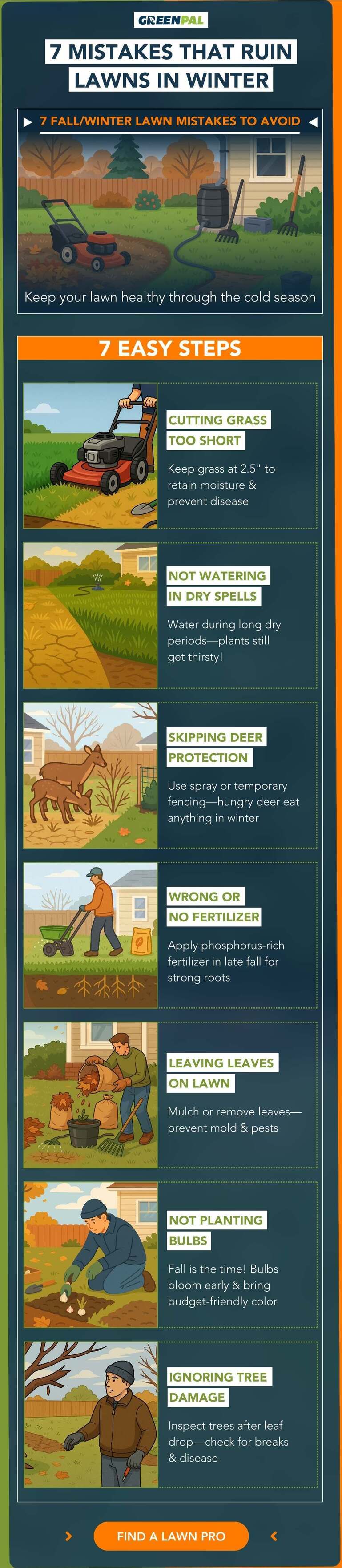
Fall and winter lawn mistakes usually come from doing too little, not too much. Cutting the grass too short, skipping water completely, or ignoring leaves can all set your yard back before spring even gets here.
One of the easiest ways to hurt the lawn is to scalp it before winter. Keeping grass around 2.5 inches helps protect moisture, reduce stress, and lower disease risk.
Late-season cleanup matters more than most people think. Leaves left on the lawn, skipped fertilizer, and unchecked tree damage can create bigger problems than the cold itself.
Winter prep is not just about the grass. Protecting plants from deer, checking trees for damage, and staying on top of dry-weather watering can make the difference between a rough spring and a strong one.
7 Fall/Winter Lawn Care Mistakes to Avoid
Are you unknowingly making mistakes that could ruin your lawn over the fall and winter? From cutting the grass too short to neglecting tree care, some seemingly minor oversights can have major consequences.
But don't worry - we've got you covered with 7 common yard landscaping pitfalls to avoid this season.
Read on to ensure your lawn emerges lush and vibrant come spring.
1. Cutting the Lawn TOO Low
As winter rolls in it is generally a good idea to cut your lawn lower than you did in the warmer months. Especially if you are planning to aerate and overseed.
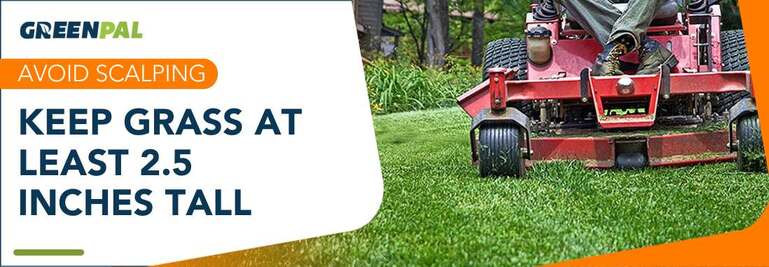
However, cutting your lawn too low can cause issues, even during the cooler months. In general, you want to keep your grass around 2.5 inches in height during the cooler months. Otherwise, you risk damaging your lawn.
Here's the deal, grass that is too short won’t retain moisture, and won’t photosynthesis properly. This can lead to fungal diseases and other issues.
It’s true, plants don’t need as much water during the winter. However, they may still need water from time to time. Especially if you have a recently planted, or transplanted tree or shrub. Or you have a new lawn that is still establishing itself.
Remember to be mindful of rainfall, and water as needed Even during the fall and winter.
3. Failing to Deer-Proof Your Landscape
Depending on where you live, one of the biggest threats to your landscape is the roaming herbivore, the deer. While deer might be welcomed guests throughout most of the year.
During the winter, especially when it snows. Deer get hungry!
And while they might leave your delicately pruned landscape around most of the year. During the cooler months, deer will munch on nearly anything they can get to. Even plants marketed as deer-resistant.
Pro Tip! Consider a regular application of deer spray, or install temporary fencing.
4. Not Fertilizing, or Using the Wrong Type
It's true, while regular fertilizer applications throughout the year make a healthy lawn. Most people simply cannot afford to fertilize the lawn as regularly as they could.
But, there are 2 annual applications that all homeowners who are serious about their lawns SHOULD NOT skip. And those applications are; an early spring and a late fall fertilizer application.
In the late fall, you want to put down a winter fertilizer that contains phosphorus. Phosphorus stimulates root growth and overall plant development. This will help your lawn get the nutrition it needs throughout the winter, and come into the new year stronger than ever.
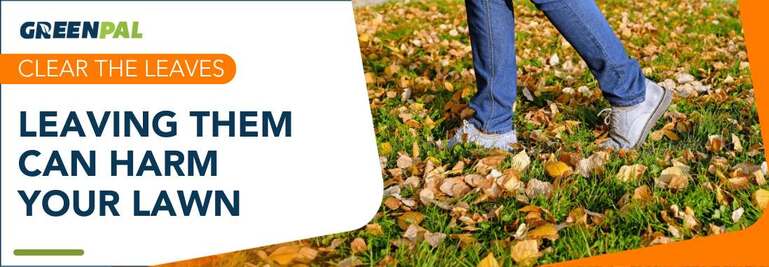
There are many reasons to be sure you don’t leave fall leaves all winter. Leaves in the yard over the winter can:
Lead to mold and fungus growth in the yard,
Give a habitat for rodents and bugs to live in,
And lead to premature rot around your home.
Pro tip! With a mulching blade on your lawnmower, you can chop fall leaves into little bits that will break down and feed your lawn. Best of all you won’t need to bust out the rake.
6. Failing to Plant Bulbs
While you may not have considered this, but the best way to get year-round color on a budget is planting bulbs in the fall. There are countless varieties of flowering plants that are available in bulbs.
In my experience, planting bulbs is one of the most cost-effective things you can do to spice up your lawn and landscape. Not only are bulbs much easier to plant, they are much cheaper too!
7. Failing to Inspect Your Trees for Injury
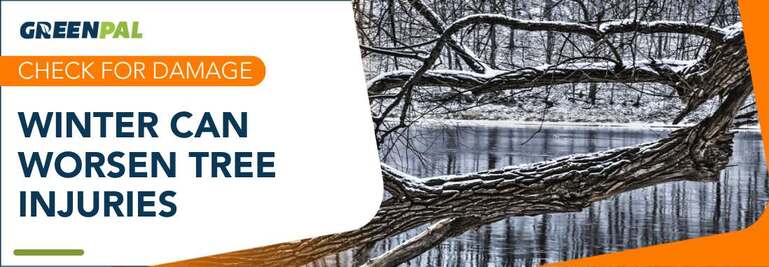
Winter is harsh on trees. And if your trees are injured, winter is likely going to make it worse.
Once the leaves have fallen from your trees, you will have a clear line of sight on any injuries that your trees may have. Look for broken branches, damaged trunks, insect infestations, and fungal growth.
If in doubt, hire a tree care expert. Trees can be quite valuable, and they are worth taking care of.
Pro Tip! Inspect your trees for damage before and after winter. It will be easier to see any apparent damage when the leaves are down from the trees.
TL;DR
To ensure a healthy lawn next year and avoid common fall lawn care mistakes, follow these tips:
Mistake
How to Avoid
1. Cutting the Lawn TOO Low
Don't cut your lawn shorter than 2.5 inches as winter approaches.
2. Not Watering During Dry-Spells
Be mindful of rainfall and water as needed, even during fall and winter.
3. Failing to Deer-Proof Your Landscape
Consider regular application of deer spray or install temporary fencing.
4. Not Fertilizing, or Using the Wrong Type
Apply a late fall fertilizer containing phosphorus to stimulate root growth.
5. Leaving the Leaves on the Yard
Use a mulching blade to chop leaves into small bits that can feed the lawn, or rake them up.
6. Failing to Plant Bulbs
Plant bulbs in the fall for year-round color on a budget.
7. Failing to Inspect Your Trees for Injury
Inspect trees for damage before and after winter when leaves are down.
Winter Preparation at the End of the Day
At the end of the day, avoiding these 7 lawn care mistakes this fall will give you a greener, more colorful yard next year. If you need to slow down, pause, or adjust your mowing plan for winter, here’s how: How to Continue or Modify Your Lawn Mowing Service Schedule.
Perhaps more importantly, keeping these points in mind will save you issues down the road. And help you keep your lawn looking better year after year.
For more great lawn care and landscaping tips, be sure to check out our landscaping blog.
GreenPal
Book lawn care near you in 60 seconds
Fast, easy, & free quotes — no contracts, no haggling
Hi, I'm Gene Caballero and I'm the co-founder of GreenPal. At GreenPal, we're helping hundreds of thousands of Americans solve one of the trickiest problems: a reliable, fast, and affordable way to get lawncare taken care of. On behalf of GreenPal, I've been featured in the Indianapolis Star, the Sacramento Bee, Entrepreneur, Inc.com, and dozens more. Please feel free to say hi on or connect with me on LinkedIn.
Follow me on:
About The Author
Gene Caballero
Hi, I'm Gene Caballero and I'm the co-founder of GreenPal. At GreenPal, we're helping hundreds of thousands of Americans solve one of the trickiest problems: a reliable, fast, and affordable way to get lawncare taken care of. On behalf of GreenPal, I've been featured in the Indianapolis Star, the Sacramento Bee, Entrepreneur, Inc.com, and dozens more. Please feel free to say hi on or connect with me on LinkedIn.