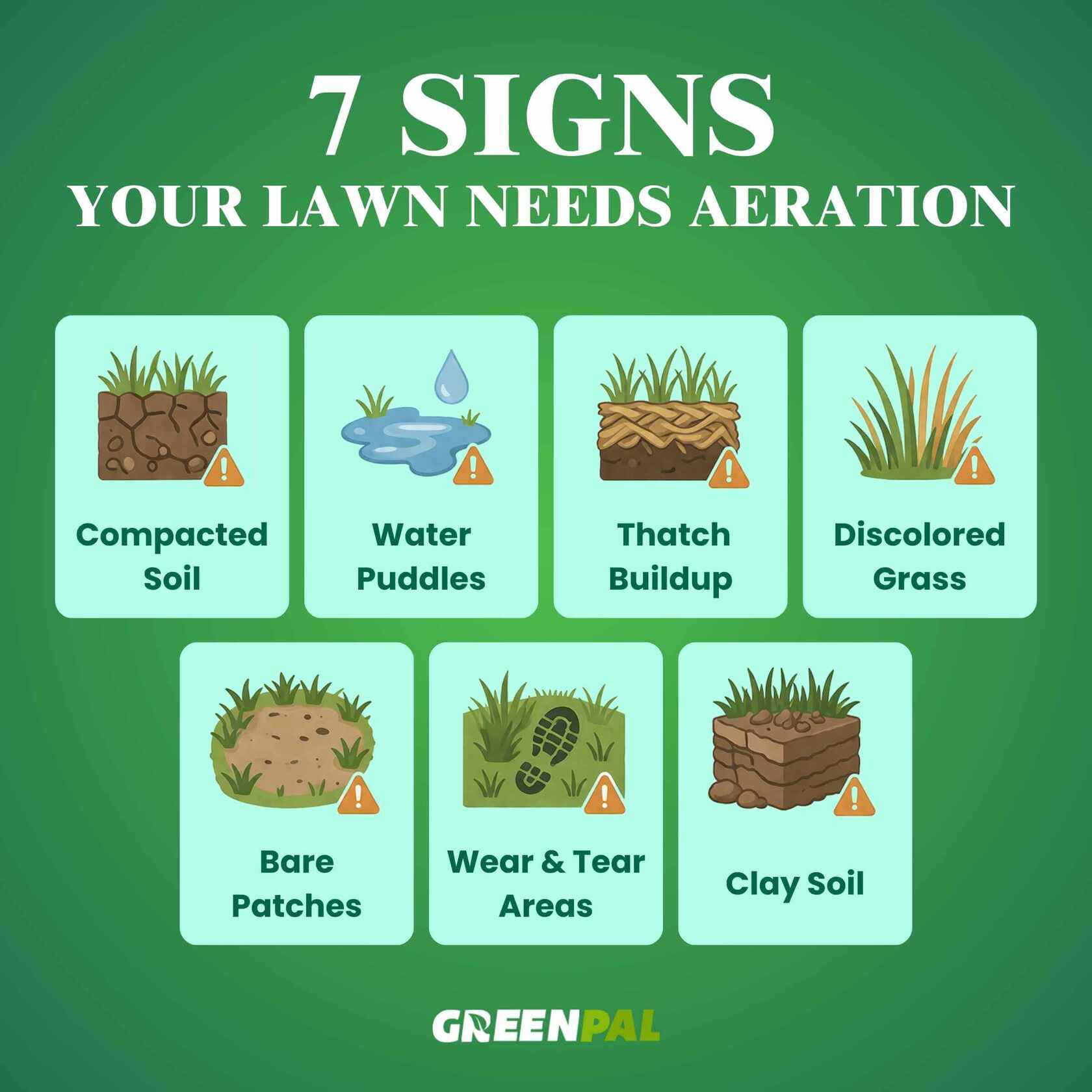
Poor drainage, compacted soil, and bare patches are all signs your lawn needs aeration. When soil becomes too dense, grass roots struggle to access the water, oxygen, and nutrients they need to thrive. Lawn aeration solves this problem by creating small holes in the soil that relieve compaction and give roots room to grow.
Not sure if your lawn needs aeration? Look for these 7 common warning signs:
Compacted Soil
Water Puddles and Poor Drainage
Thatch Buildup
Discolored Grass
Thinning and Bare Patches
Areas of Wear and Tear
Your Lawn Has Clay Soil
1. Compacted Soil
Dense, hard soil is the No. 1 sign your lawn needs aeration. To check for compaction, try inserting a 4- to 6-inch screwdriver into moist soil. If it’s difficult to push in, your soil is likely compacted.
Why Aeration Helps: Aeration works like a conditioner for hard soil by creating open channels that allow the tightly packed soil to expand and breathe.
2. Water Puddles and Poor Drainage
When water pools on the lawn’s surface and forms puddles, the soil is likely compacted and unable to absorb water properly.
Why Aeration Helps: Aeration improves drainage, helping prevent puddles from forming after rain and irrigation.
3. Thatch Buildup
Earthworms and microorganisms in the soil help to decompose thatch. However, compacted soil lacks the water and oxygen they need to survive. If your lawn is developing excessive thatch, it’s often a sign the soil is too dense and may need aeration.
Why Aeration Helps: Aeration improves airflow and water movement in the soil, creating healthier conditions for earthworms and microorganisms to survive and break down thatch before it becomes excessive.
4. Discolored Grass
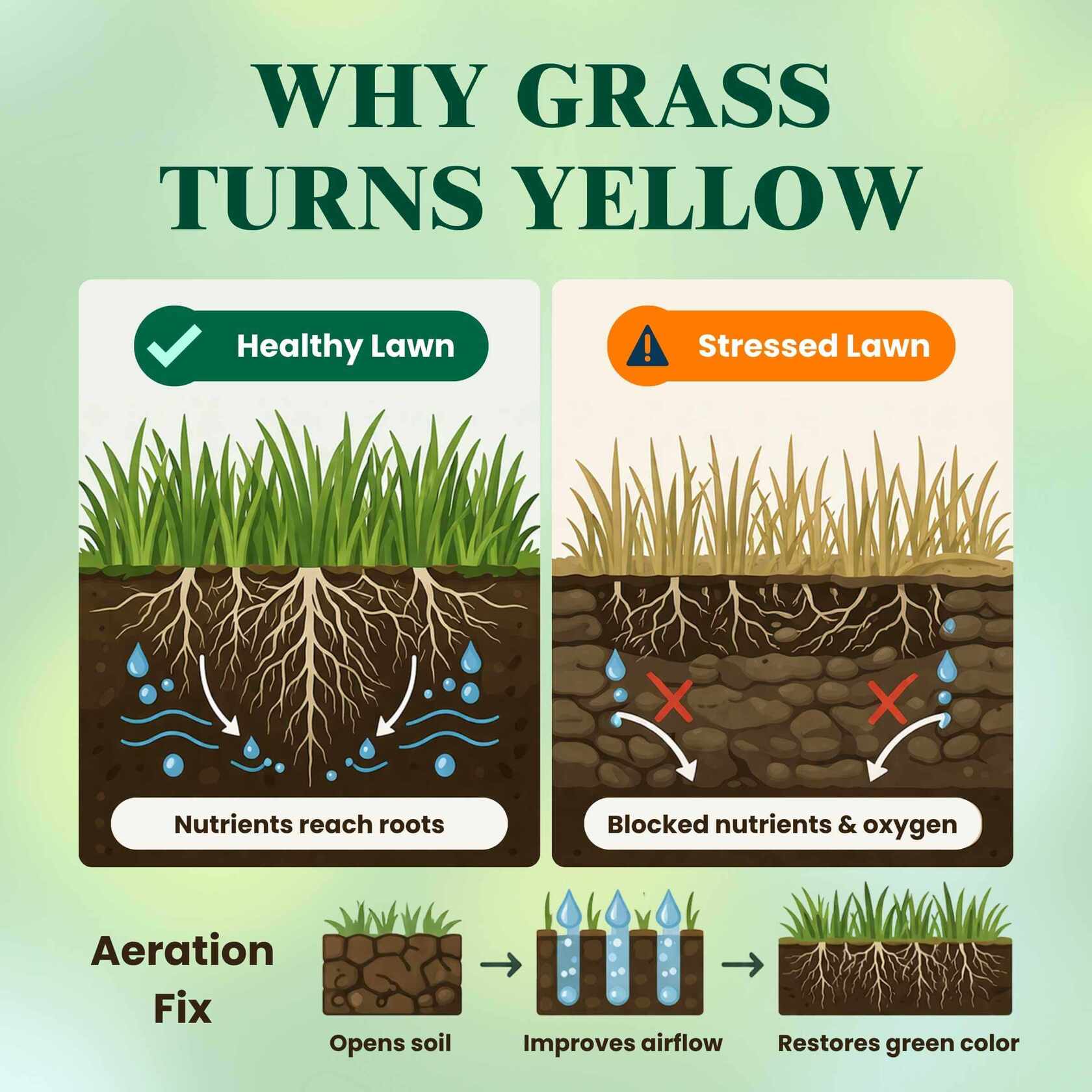
When a well-fertilized lawn fades from vibrant green to yellow, it may mean the roots aren’t absorbing nutrients effectively. Compacted soil can restrict the movement of water and oxygen while also preventing nutrients from reaching the roots.
Why Aeration Helps: Aeration helps water, oxygen, and nutrients reach the roots so grass can regain its healthy green color.
5. Thinning and Bare Patches
If thin, bare, or dead patches are developing in your lawn, it may be a sign that compacted soil in those areas is preventing roots from accessing essential water, oxygen, and nutrients.
Why Aeration Helps: In addition to improving access to water, oxygen, and nutrients, the openings created by aeration give roots room to expand and grow, allowing the grass to recover and fill in bare spots.
6. Areas of Wear and Tear
High-traffic areas are especially prone to soil compaction, as repeated pressure from foot traffic, lawn mowers, and vehicles can compress the soil. Even if these areas don’t show visible signs of stress, try inserting a screwdriver into the ground — if it’s difficult to push in, the soil is likely compacted and may need aeration.
Why Aeration Helps: Aeration relieves compaction in high-traffic areas by helping grass recover from damage and better withstand continued foot traffic. If wear and tear is visible, follow up with overseeding to encourage new growth and help the lawn recover.
7. Your Lawn Has Clay Soil
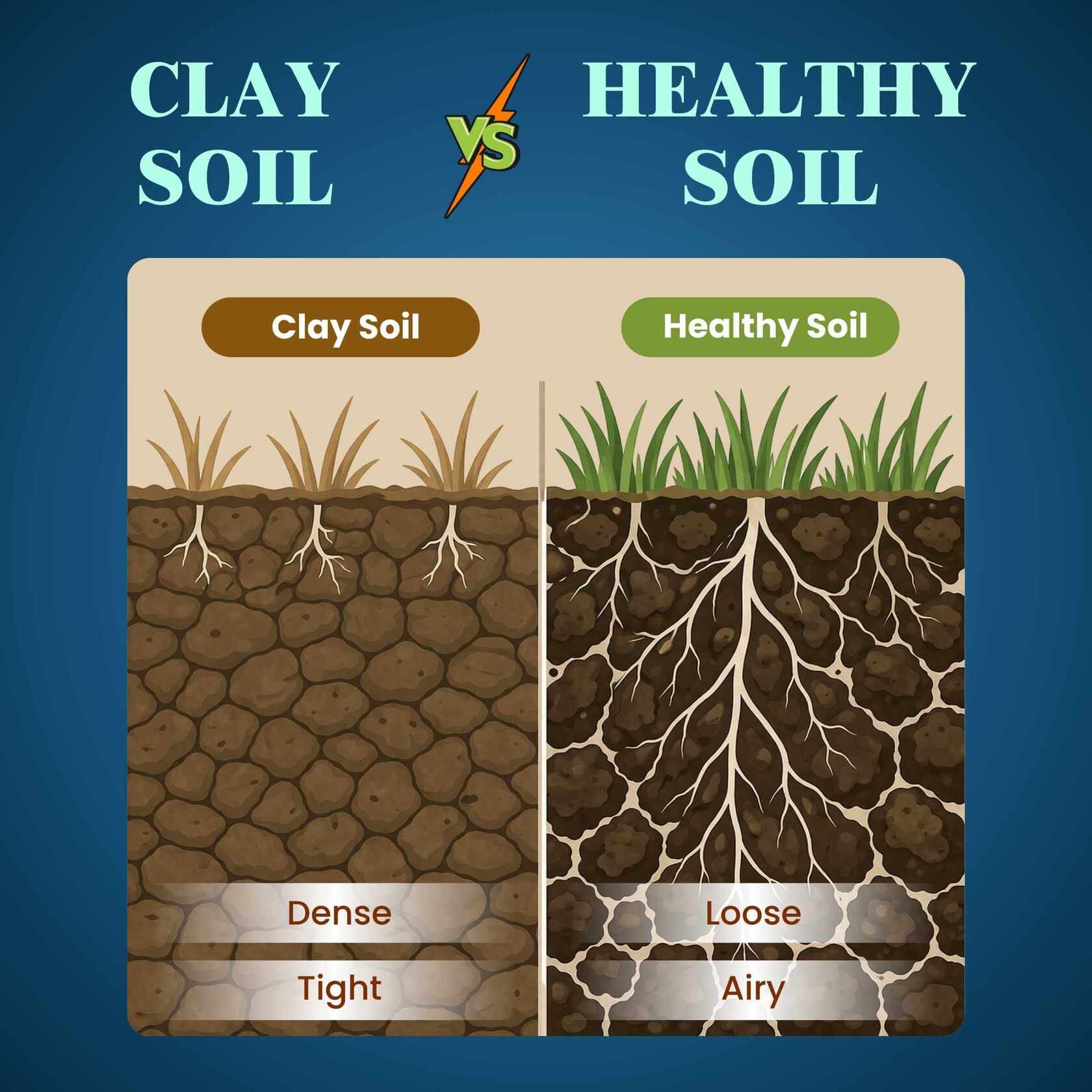
Lawns with clay soil are more prone to compaction than sandy or loamy soils. Clay particles are very small and pack tightly together, leaving little room for roots, water, air, and nutrients. If your lawn has clay soil, it may be more susceptible to compaction and benefit from regular aeration.
Why Aeration Helps: Aeration breaks up dense clay, improving drainage and making it easier for roots to grow.
In cities with clay-heavy soils like Denver, CO, aeration can become an annual task, which is why many homeowners rely on Denver lawn aeration services to maintain stressed lawns.
Frequently Asked Questions
When Is the Best Time to Aerate Soil?
The best time to aerate depends on your grass type. Warm-season grasses benefit from aeration in late spring to early summer, while cool-season grasses should be aerated in early fall. If you miss the fall window, early spring is the next best option.
How Often Do I Need to Aerate the Lawn?
It depends on how often your lawn shows signs of compaction. Lawns with clay soil often require annual aeration, while lawns with loamy or sandy soil may only need aeration every 2 to 3 years.
Why Is Overseeding Performed After Aeration?
While not required, aeration creates ideal conditions for overseeding by exposing soil and improving seed-to-soil contact. This helps new grass seed germinate more easily and grow into a thicker lawn.
What’s the Difference Between Core Aeration and Spike Aeration?
The difference lies in how the holes are created. Core aeration removes small plugs of soil, while spike aeration pushes soil deeper into the ground.
Lawn care professionals often recommend core aeration because spike aeration can increase compaction around the holes rather than relieve it.
Can You Aerate Your Lawn Yourself?
Yes, you can aerate your lawn using manual or motorized equipment. However, for larger lawns or heavily compacted soil, professional aeration may provide more thorough and consistent results.
Schedule Professional Lawn Aeration
Your lawn is a living ecosystem, and compacted soil can limit its access to water, oxygen, nutrients, and space. If you’ve noticed signs like poor drainage, thinning grass, or thatch buildup, professional lawn aeration can help restore healthy growth and improve your lawn’s overall appearance.