16 Common Lawn Mowing Mistakes to Avoid
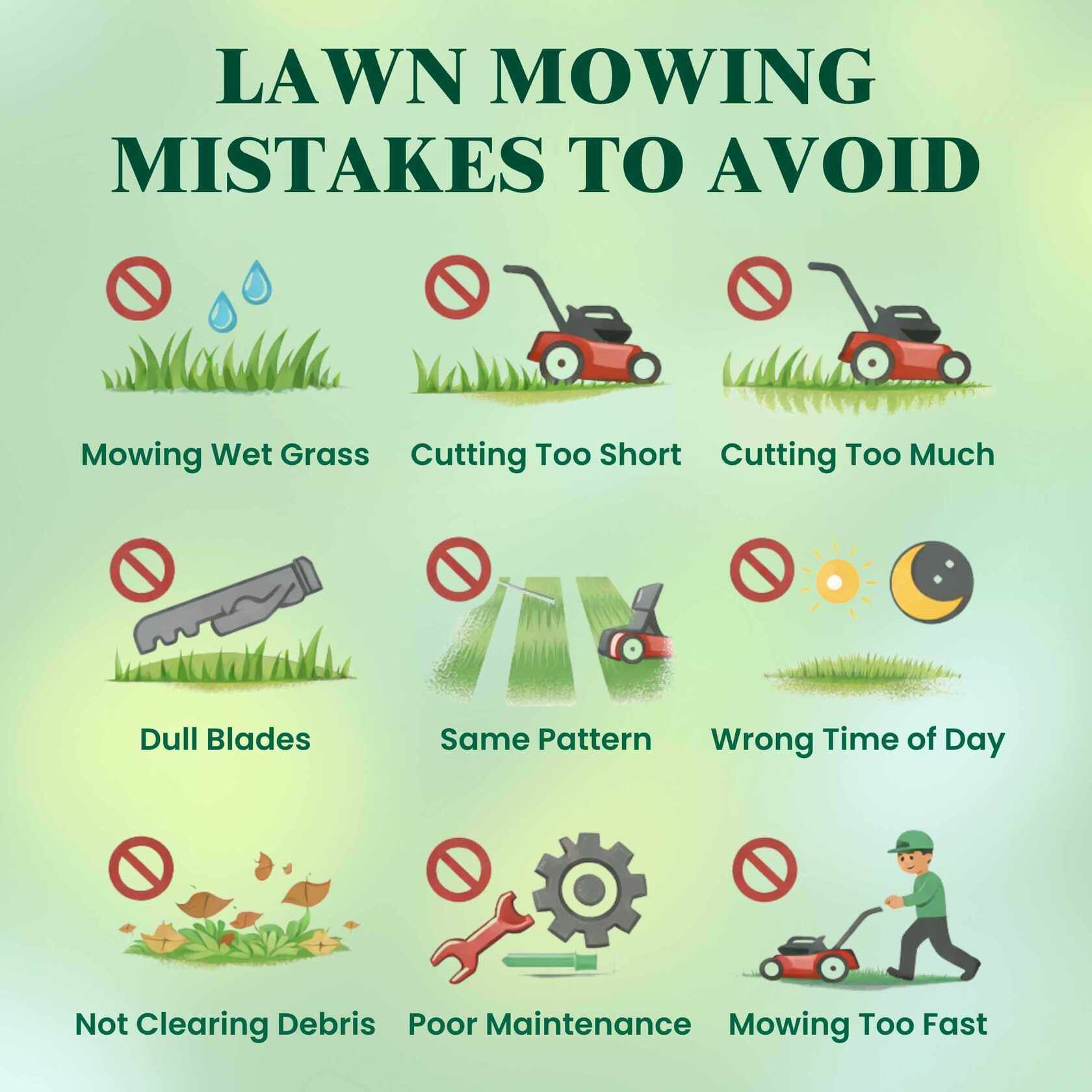
Poor mowing habits don’t just affect your lawn’s curb appeal, they also jeopardize its health. Fortunately, these common lawn mowing mistakes are easy to avoid.
Common missteps include mowing wet grass, cutting too much at once, and failing to adjust the mowing height for your grass type.
While many people can mow a lawn, maintaining one properly is an ongoing commitment. For consistent results and long-term lawn health, working with a local lawn care professional can make all the difference.
Mistake #1: Mowing Grass Too Short
It may be tempting to cut grass extremely short to reduce mowing frequency. But you’ll only create more work for yourself when you’re left repairing a damaged lawn.
Often referred to as scalping, cutting the grass down to the soil surface stresses and weakens turf. Here’s why:
Energy Depletion: Instead of storing energy for healthy root development, the grass must now expend energy on recovery and developing new shoots.
Reduced Photosynthesis: With less plant tissue available, the grass cannot produce enough food to develop healthy growth.
Exposed Soil: More soil is exposed to the sun, increasing water loss through evaporation and leading to dryness, compaction, and cracking.
Exposed Crown: The grass's primary growing point, known as the crown, becomes vulnerable to heat stress or frost damage.
Vulnerable to Pests, Diseases, and Weeds: A weakened lawn is less resilient, making it more susceptible to infestations and further stress.
Mistake #2: Cutting Too Much At Once
Not only should you avoid cutting the grass too short, you don’t want to remove more than one-third of the grass blade’s height during a single mow. Why? Because cutting off too much at once can shock your turfgrass.
Always follow the one-third rule when cutting your grass. For example, if your grass is 3 inches tall, don’t remove more than 1 inch during a single mow.
Mistake #3: Ignoring Your Grass’s Preferred Mowing Height
Grasses require different mowing heights due to their varying growth habits, blade width, and shade and heat tolerance.
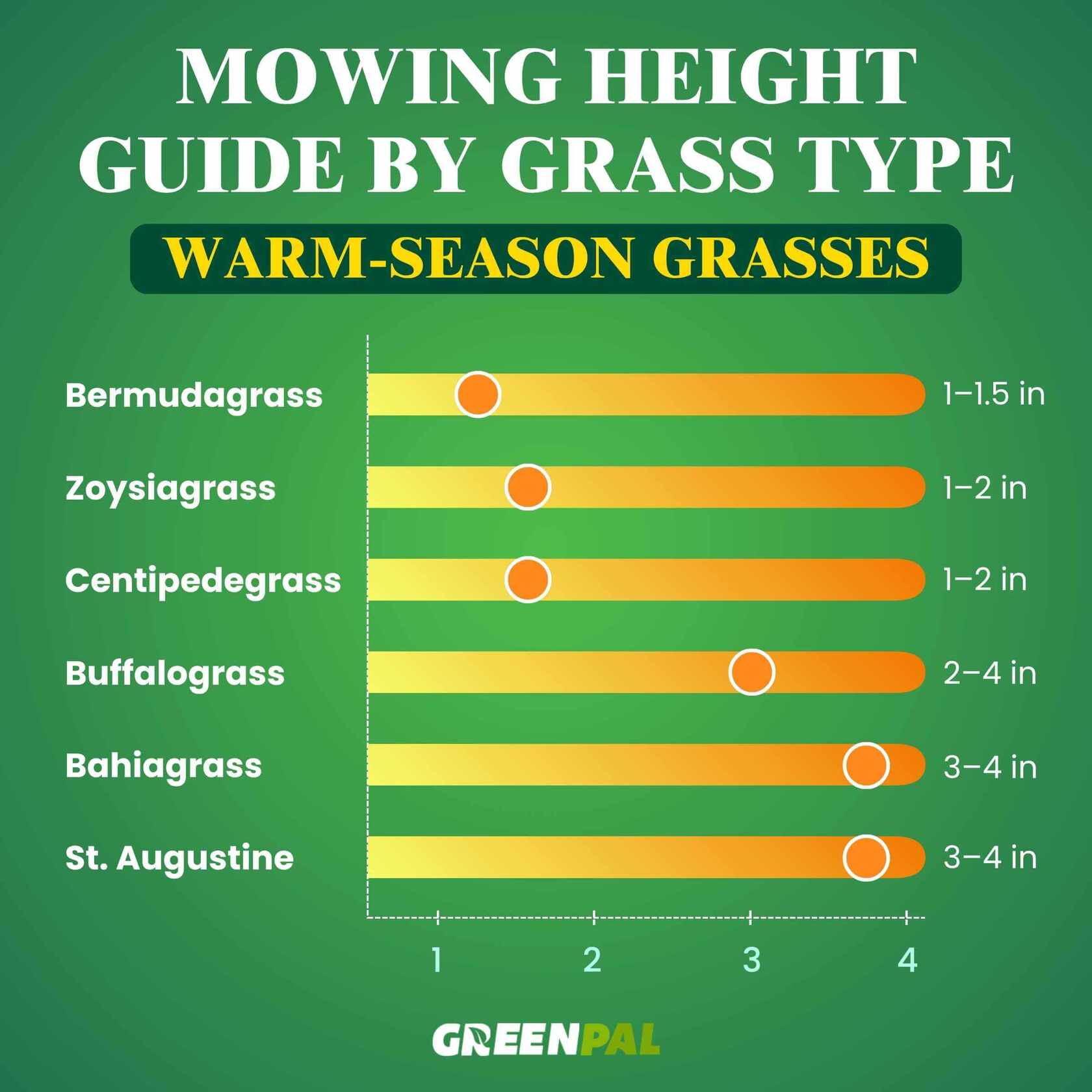
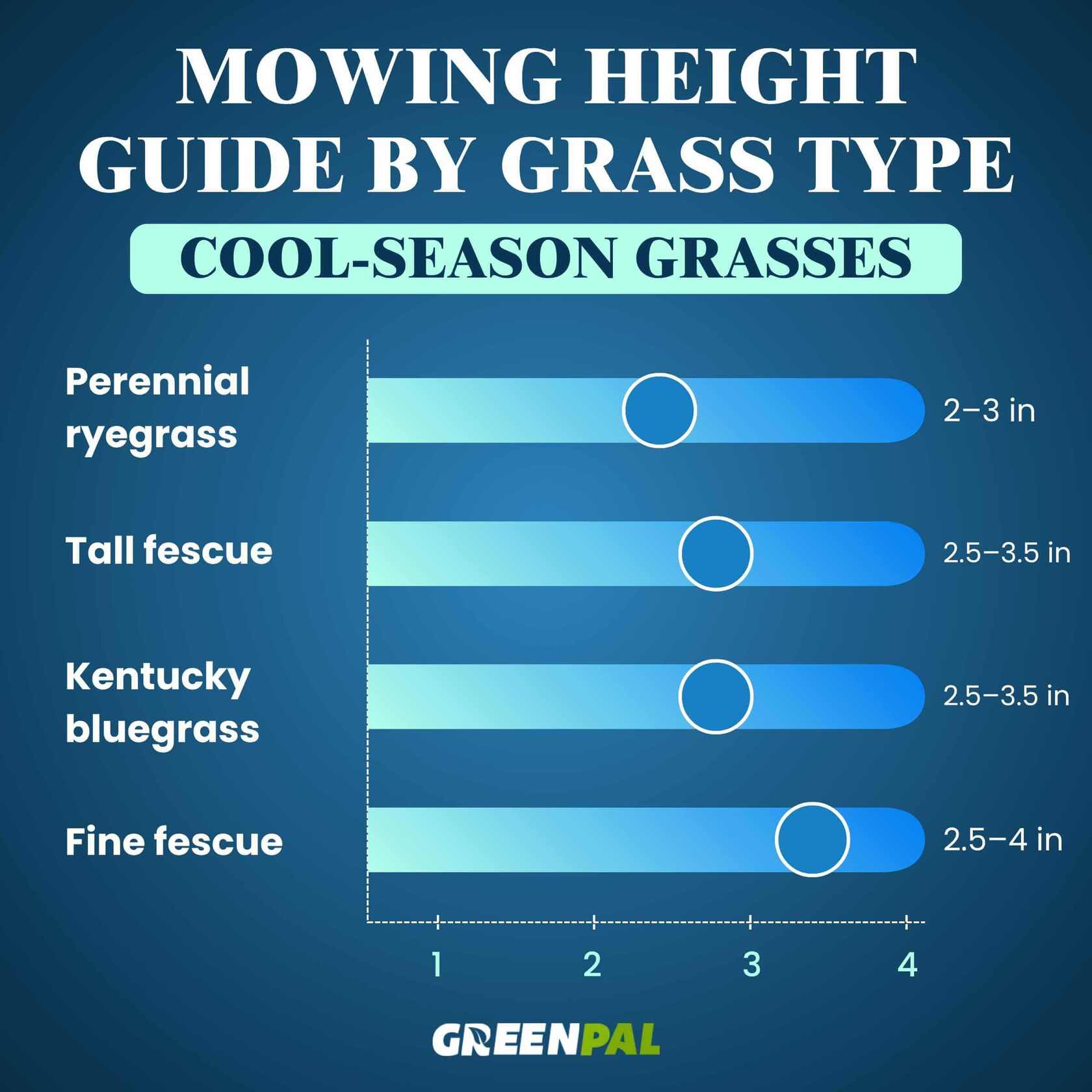
Some grasses thrive best at shorter heights, while others prefer taller mowing heights. Take a look at the mowing height charts below to learn your grass type’s preferred height:
How High to Cut Warm-Season Grasses |
Grass type |
Set mower to (inches) |
Mow when grass reaches this height (inches) |
Bermudagrass |
1 to 1.5 |
1.5 to 2.25 |
Zoysiagrass |
1 to 2 |
1.5 to 3 |
Centipedegrass |
1 to 2 |
1.5 to 3 |
Buffalograss |
2 to 4 |
3 to 6 |
Bahiagrass |
3 to 4 |
4.5 to 6 |
St. Augustinegrass |
3 to 4 |
4.5 to 6 |
How High to Cut Cool-Season Grasses |
Grass type |
Set mower to
(inches)
|
Mow when grass reaches this height
(inches)
|
Perennial ryegrass |
2 to 3 |
3 to 4.5 |
Tall fescue |
2.5 to 3.5 |
3.75 to 5.25 |
Kentucky bluegrass |
2.5 to 3.5 |
3.75 to 5.25 |
Fine fescue |
2.5 to 4 |
3.75 to 6 |
Mistake #4: Mowing Wet Grass
Mowing wet grass often leads to an uneven cut and can dull your mower blades faster. Wet blades tend to tear rather than cut grass, leading to ragged edges that slow recovery and increase moisture loss. Damp clippings also clump together, which can clog the mower and smother the grass beneath.
Another risk is disease. Clumped, wet grass forms damp conditions that encourage infections like brown batch or dollar spot. To protect your lawn, wait until the grass is dry before mowing.
Mistake #5: Mowing in the Same Pattern Every Time
Humans are creatures of habit, so mowing your lawn in the same direction each time is an easy trap to fall into.
If you consistently mow in the same pattern, the grass may start to lean in one direction, resulting in an uneven cut.
Varying your mowing pattern helps the grass remain upright, encourages an even cut, and redistributes the weight of the mower to help prevent soil compaction.
Mistake #6: Not Overlapping Lines
Overlapping your mowing lines is more about appearance than lawn health. While it may require a few extra passes, it helps prevent streaks of uncut grass and creates a more even, polished look.
Mistake #7: Mowing at the Wrong Time of Day
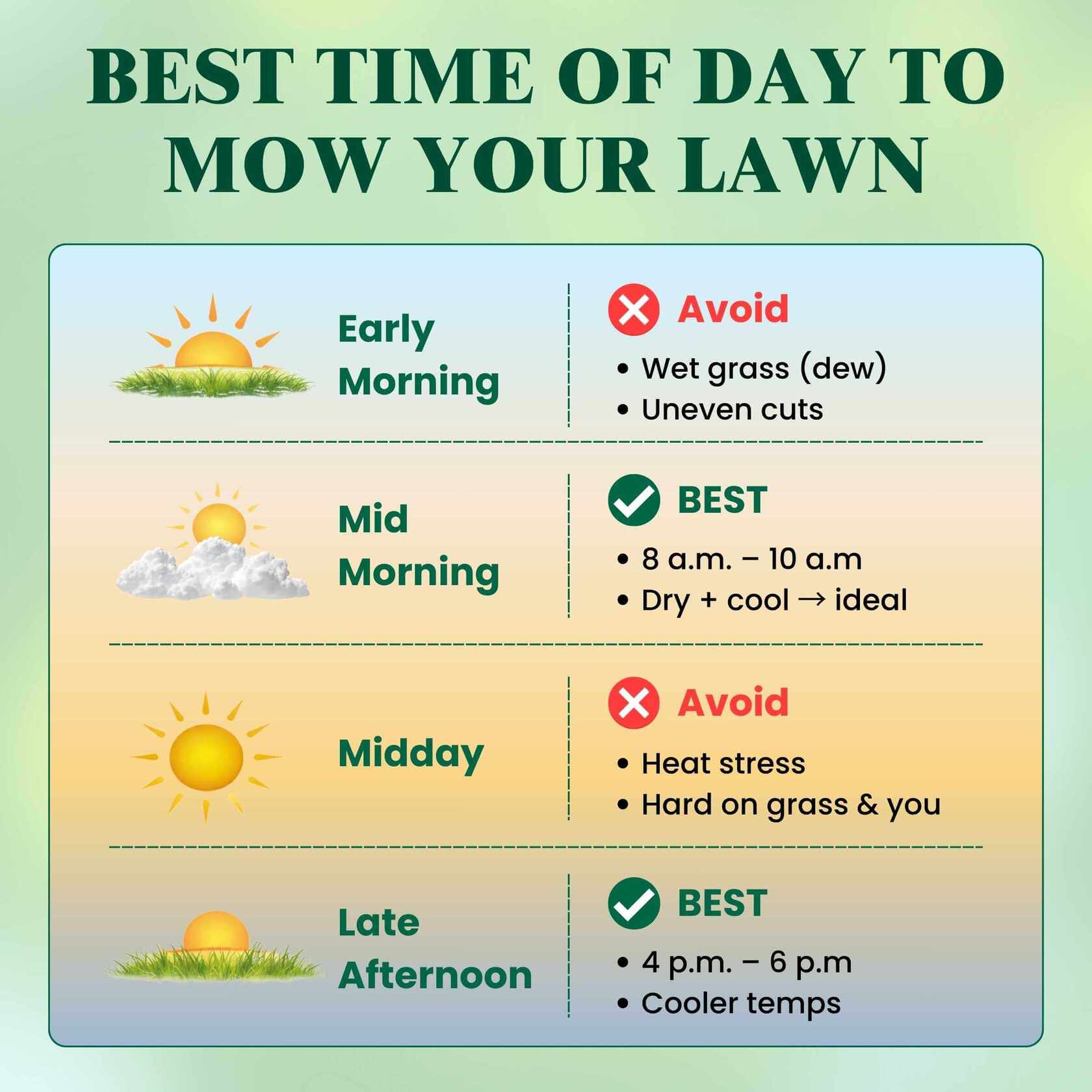
The best time to mow the lawn is mid-morning (8 a.m. to 10 a.m.) while the temperatures are cool and the lawn has had enough time to dry from the morning dew. Another great time to mow is late afternoon (4 p.m. to 6 p.m).
Avoid mowing at these times:
Early morning: Grass may still be wet with dew.
Midday: The hottest part of the day can stress both you and your lawn.
Evening: Fresh cuts may be more vulnerable to lawn diseases in cool, damp conditions.
The best time to mow the lawn is often during work hours, which is why many homeowners hire a local lawn care professional for the job.
Mistake #8: Always Bagging Grass Clippings
Grass clippings are free organic fertilizer for the lawn (and your garden, too). While removing grass clippings may improve the yard’s appearance, leaving them on the lawn allows nutrients to return to the soil and boost turf health.
Note: If your lawn is suffering from a fungal disease, remove infected grass clippings.
Mistake #9: Not Clearing Your Lawn
Debris on the lawn can be a safety hazard while you mow. Scan the yard for broken branches, loose gravel, dog poop, small toys, or other hazardous debris. Not only can these objects damage your mower, but they can also be thrown by the blades, posing a risk to you and others nearby.
Mistake #10: Neglecting Lawn Mower Maintenance
Just like your car needs a tune-up, so does your lawn mower. Staying on track with your lawn mower maintenance ensures a healthy and even cut, extends the lifespan of your mower, and prevents repair costs.
Examples of lawn mower maintenance include oil changes, sharpening mower blades, replacing spark plugs, and checking tire pressure.
If your lawn mower needs fixing, find lawn mower repair services near you.
Mistake #11: Using Dull Mower Blades
One of the worst things you can do to your lawn is mow it with dull mower blades. Dull mower blades rip and tear the grass instead of cutting it cleanly, resulting in brown tips, slow recovery, moisture loss, and vulnerability to further damage.
Mistake #12: Not Cleaning Underneath Your Lawn Mower
The mower deck houses the blade assembly, so it’s important to keep it clean. Grass clippings and debris often stick underneath, leading to buildup, rust, and premature wear. Regularly cleaning the mower deck helps to ensure a crisp cut, extends the mower’s lifespan, and prevents clogs.
Mistake #13: Mowing Too Infrequently
When life gets busy, it’s easy to fall behind on lawn mowing chores. Overgrown grass is harder to cut properly and increases the risk of removing more than one-third of the blade at once — stressing your lawn in the process.
Mistake #14: Not Adjusting Mowing Height
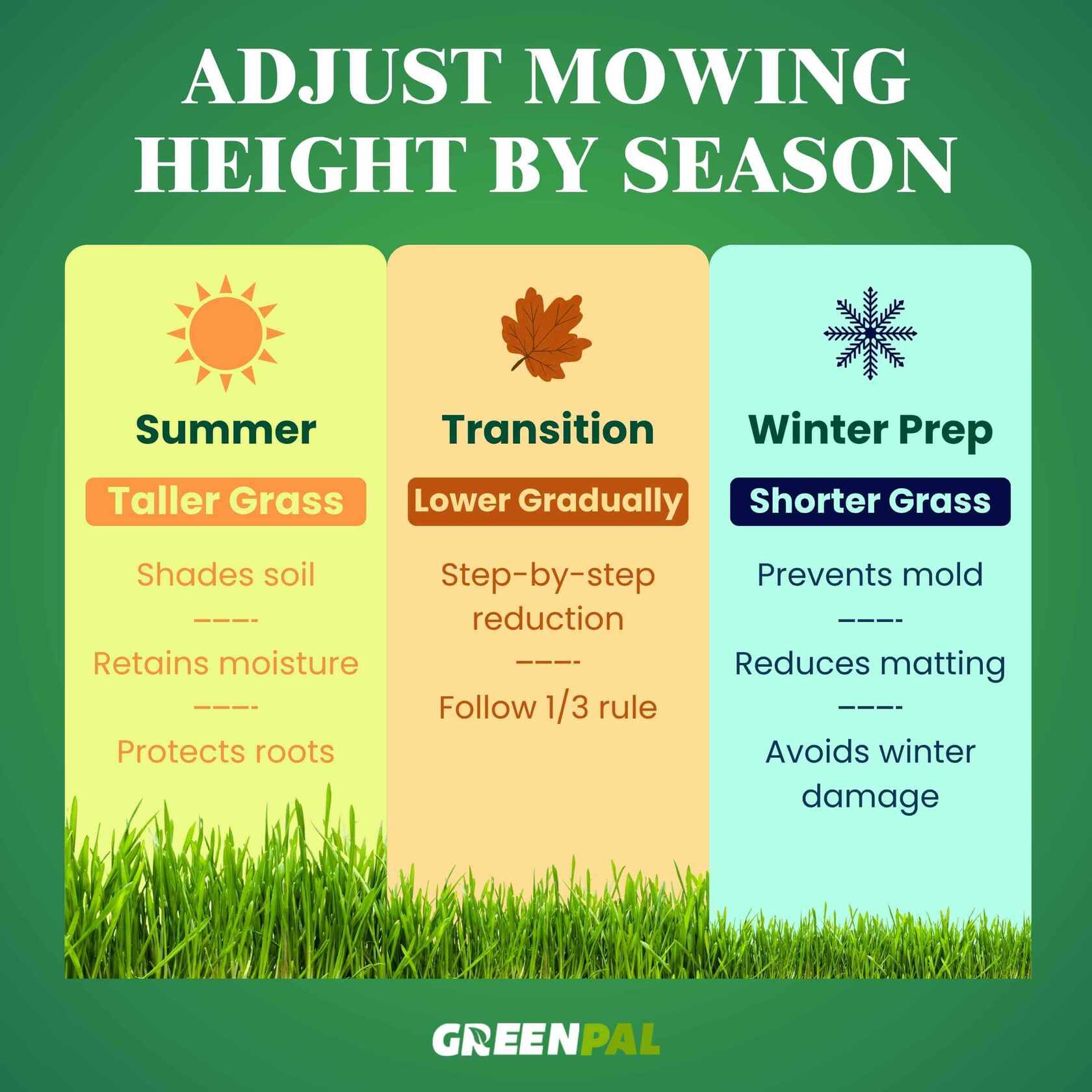
As seasons change, so should the lawn’s mowing height.
In summer, adjust the mower blades to the higher end of your grass type’s preferred height range. Tall grass helps conserve moisture by shading the soil and cooling the roots.
For the last mow before winter, mow the grass at the lower end of your grass type's preferred height range. Short grass is less susceptible to snow molds, matting, and winter damage.
When lowering the mowing height, do it gradually over a few mows. Otherwise, you risk removing more than one-third of the grass blade.
Mistake #15: Mowing Too Soon After Sodding or Seeding
Wait 2 to 4 weeks before mowing new sod, and only mow if it stays firmly rooted when gently tugged. Mow your seeded lawn for the first time after 4 to 6 weeks.
Mistake #16: Mowing Too Fast
You may be eager to work quickly, but mowing too fast results in an uneven cut. Why? Because when the mower deck pushes the grass down, the blades don’t have time to spring back up before being cut. Move your lawn mower at a speed of 3 to 5 mph to achieve a clean, crisp cut.
Frequently Asked Questions
Which Grass Types Require the Most Mowing?
Bermudagrass requires the most mowing, about once every 5 to 7 days. In areas where it is the predominant turfgrass, such as Phoenix, Arizona, managing this fast-growing grass in the dry summer heat can be challenging. For this reason, professional Phoenix lawn mowing services are a popular choice for many property owners.
Among cool-season grasses, Kentucky bluegrass and perennial ryegrass require the most mowing, about once every 5 to 7 days.
Which Seasons Require the Most Mowing?
It depends on your grass type’s most active growing season. Warm-season grasses require the most mowing in summer, and cool-season grasses require the most mowing in spring and fall.
What If You Have to Cut Really Tall Grass?
When your grass gets very tall, avoid cutting too much at once. Raise the mower blades to their highest setting (or use a weed whacker) and remove no more than one-third of the grass’s height at a time. Wait a few days between each cut until the lawn reaches the proper height.
Keep It Simple: Hire a Lawn Care Pro
Mowing too much at once, using dull blades, or always mowing in the same direction can all harm your lawn. While these mistakes are easy to avoid, many homeowners value the peace of mind that comes from hiring a local lawn care professional who knows how much to cut and can adjust care accordingly when the turf is stressed.