How to Water Your Lawn: Tips & Schedule
Most established lawns need 1 to 1.5 inches of water per week during the growing season, either from rainfall or supplemental irrigation. This guide covers when, how much, and how often to water your lawn, along with expert techniques for encouraging a healthy root system.
Every lawn is different, so treat these guidelines as general recommendations. Water needs vary depending on grass type, soil, region, and local conditions. The key is to get to know your lawn and observe how it responds to watering, drought, and heat.
How Much Water Does Grass Need?
How much water your lawn needs depends on several factors, including whether it’s warm-season grass, cool-season grass, actively growing, or dormant.
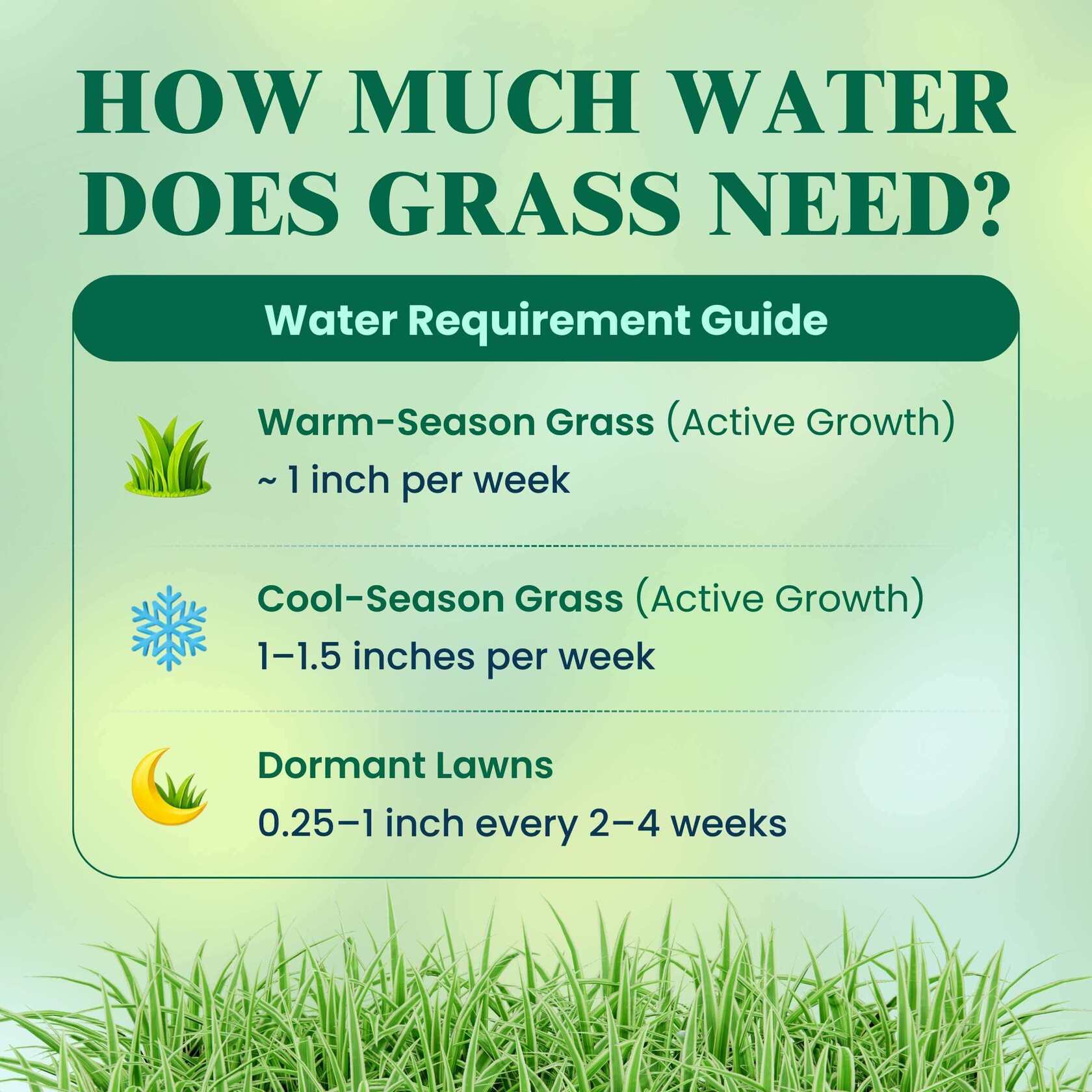
Warm-season grasses typically require about 1 inch of water per week when they’re actively growing. However, some drought-tolerant species, such as zoysiagrass, may require closer to 0.5 to 1 inches of water depending on soil, weather, and local conditions.
Cool-season grasses that are actively growing typically prefer 1 to 1.5 inches of water per week.
Dormant lawns typically require 0.25 to 1 inch of water every 2 to 4 weeks, depending on grass type, soil, local climate, and observable signs of thirst.
Grass Type |
Amount of Water |
Active Growing Warm-Season Grasses |
1 inch per week |
Active Growing Cool-Season Grasses |
1 to 1.5 inches per week |
Winter Dormant Warm-Season Grasses |
0.25 to 0.5 inches every 3 to 4 weeks |
Winter Dormant Cool-Season Grasses |
0.5 inches every 3 to 4 weeks |
Summer Dormant Cool-Season Grasses |
0.5 to 1 inches every 2 to 3 weeks |
Watering Warm-Season Grasses |
Grass Type |
Recommended inches of water per week |
Buffalograss |
0.25 to 1 |
Bahiagrass |
0.5 to 0.75 |
Zoysiagrass |
0.5 to 1 |
St. Augustinegrass |
0.75 to 1 |
Centipedegrass |
1 |
Bermudagrass |
1 to 1.25 |
Watering Cool-Season Grasses |
Grass Type |
Recommended inches of water per week |
Tall Fescue |
1 |
Fine Fescue |
1 |
Kentucky Bluegrass |
1 to 1.5 |
Perennial Ryegrass |
1.5 |
The charts above provide general watering guidelines for different grass types under favorable conditions.
How Often Should You Water the Lawn?
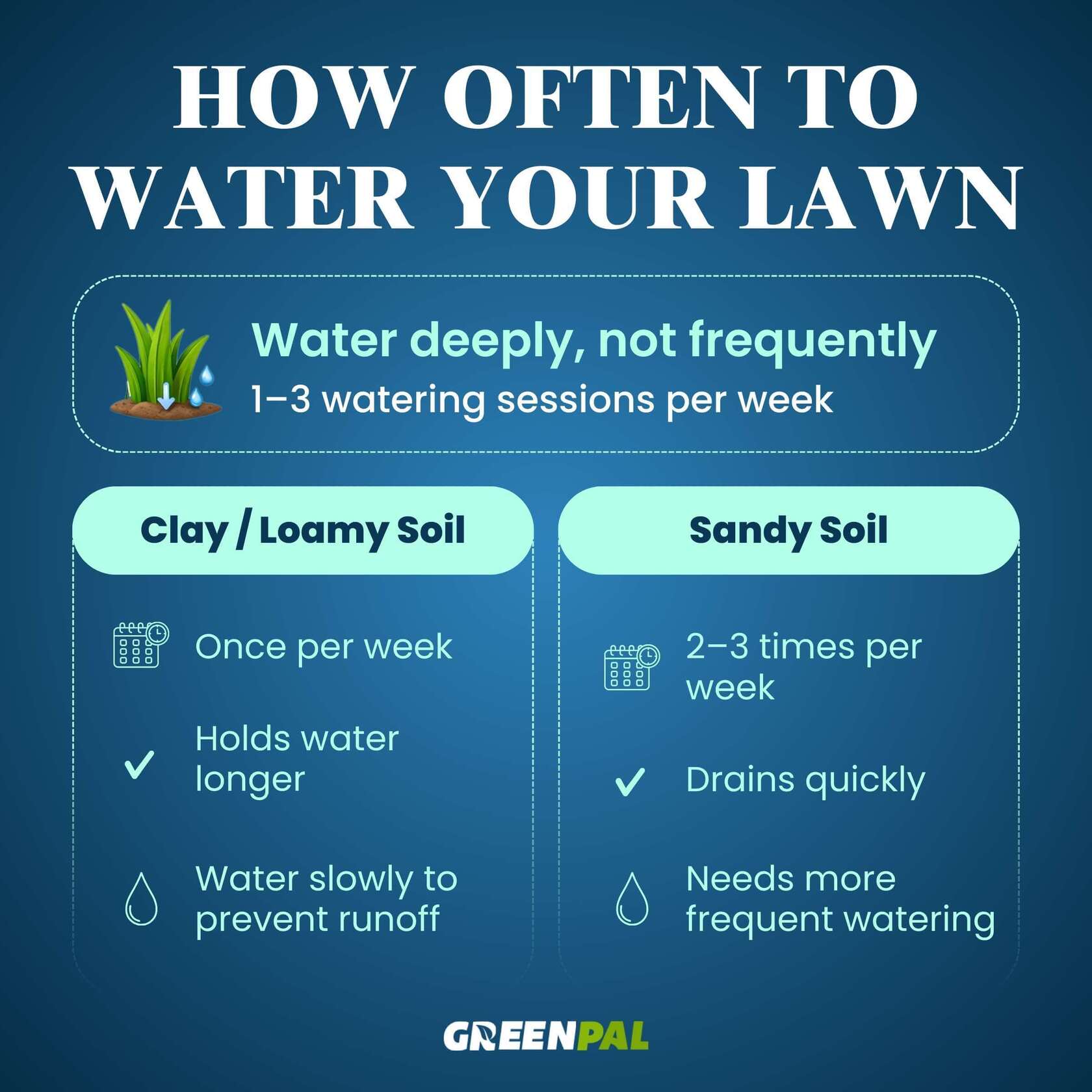
Most lawns benefit from watering one to three times per week for longer periods. Watering deeply but less frequently encourages a deeper, healthier root system, whereas frequent shallow watering can lead to shallow roots.
How often you water an actively growing lawn largely depends on its soil type:
Clay and loamy soils hold water well and retain moisture longer than sandy soils, so lawns growing in these soils usually need less frequent watering. In many cases, watering once per week is sufficient, provided the lawn receives its recommended 1 to 1.5 inches of water.
Note: Clay soils absorb water slowly. To prevent runoff, apply 0.5 to 0.75 inches of water, wait about an hour, then apply another 0.5 to 0.75 inches.
Sandy soils drain quickly and do not retain moisture as well as clay or loamy soils. Lawns growing in sandy soil may need more frequent watering — sometimes two to three times per week — to reach the recommended 1 to 1.5 inches of total weekly water.
How Long Should You Water the Lawn For?
The length of your watering sessions depends on your sprinkler system.
Place shallow cans (such as tuna cans) or rain gauges evenly across each watering zone. Run your sprinkler system and note how long it takes for the containers to collect 1 inch of water.
Adjust your watering schedule based on the results. For example, if it takes 30 minutes to deliver 1 inch of water, a sandy-soil lawn may only need 10 to 15 minutes per session, three times per week, to reach the recommended 1 to 1.5 inches.
When Is the Best Time to Water the Lawn?
The best time to water the lawn is in the early morning, between 6 a.m. and 10 a.m., to avoid water loss through evaporation.
Avoid watering in the evenings. The lawn won’t dry properly, and the moist conditions can attract pests and fungal growth.
Lawn Watering by Season
Your lawn’s watering needs change throughout the year as it enters dormancy, endures drought, and actively grows. Whether you grow warm- or cool-season grass also determines how much to water each season.
Lawn Watering in Spring
In many regions, spring rainfall often provides enough water for the lawn. Provide supplement water during dry spells or when your lawn shows signs of thirst.
Lawn Watering in Summer
Warm-season grasses grow most actively in summer and often require supplemental irrigation, especially during periods of heat stress or drought.
Cool-season grasses often enter dormancy during hot summer weather, and homeowners typically choose between two approaches:
The first option is to irrigate the lawn with 1 to 1.5 inches of water per week to help maintain green growth throughout summer. This approach requires consistent watering during heat and drought.
The second option is to allow the lawn to go dormant. Dormancy is your grass’s natural way of surviving heat and drought stress. During extended drought, provide 0.5 to 1 inch of water every 2 to 3 weeks to keep the crowns alive.
Lawn Watering in Fall
Similar to spring, fall rainfall often provides enough water for lawns. Provide supplement irrigation if your lawn isn’t receiving its recommended amount.
Lawn Watering in Winter
In many regions, irrigation systems can rest during winter because lawns are dormant and precipitation provides adequate moisture.
However, if it hasn’t snowed or rained in 3 to 4 weeks and the soil is not frozen, apply 0.25 to 0.5 inches of water for dormant warm-season grasses and about 0.5 inches for cool-season grasses when air temperatures are above 40 degrees Fahrenheit.
Signs Your Lawn Needs Water
Every lawn is unique. The closer you observe your lawn’s response to water levels and its signs of thirst, the closer you’ll come to understanding how much water it needs.
If your lawn is exhibiting any of these signs of thirst, it may not be receiving enough water:
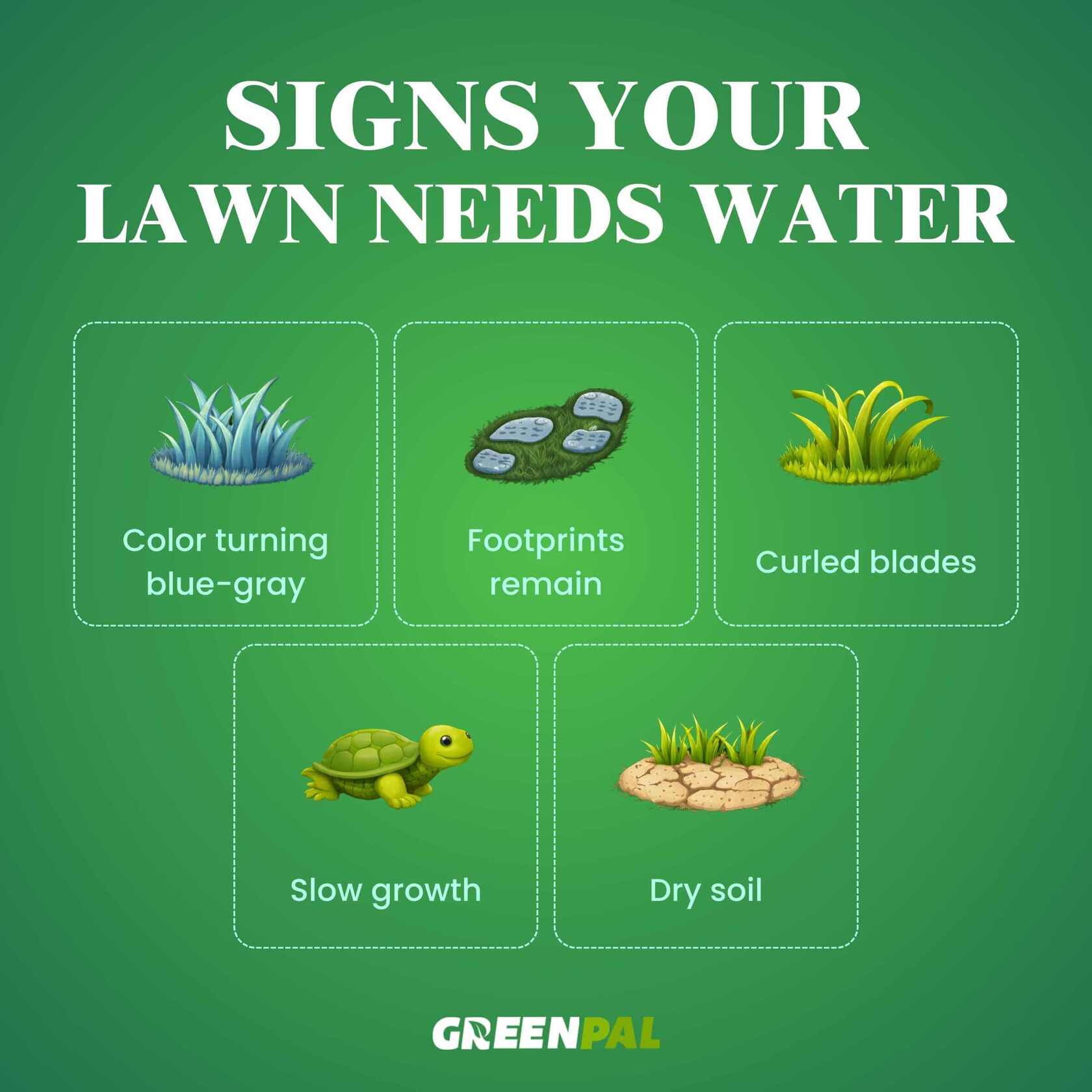
Color change: A healthy, well-watered lawn is vibrant green. If the grass turns blueish-gray, this is a warning sign of stress.
The footprint test: Hydrated grass blades immediately bounce back when you walk on them. If the blades don’t spring back, they’re likely thirsty.
Wilted or curly blades: Grass blades start to curl or whither when thirsty.
Slow growth: If your grass is growing slowly during its active growing season along with other signs of stress, it may not be receiving enough water.
Dry soil: Push a 4 to 6 inch screw driver into the soil. If it’s difficult or met with resistance, the soil is dry and needs water.
How can you tell whether your dormant lawn needs water? Pull back the grass and check the crown (where the blade meets the soil). If the crown is shriveled or brittle, it needs water. You can also try the screw driver test mentioned above. If a 4 to 6 inch screwdriver slides into the soil easily, it has adequate moisture.
Signs Your Lawn Is Overwatered
Some lawns require less water than others. If your grass shows the following signs of overwatering, allow the lawn a few days to dry and adjust your irrigation schedule:
Puddles or runoff: When puddles form on the lawn, commonly known as waterlogging, the soil is oversaturated with water.
Wilted or yellow grass: Grass that changes from vibrant green to yellow may be overwatered.
Lawn feels squishy: If the lawn feels squishy or spongy when you walk on it, it’s a strong sign of too much water.
Pests and fungus: An overwatered lawn’s wet environment is attractive to moisture-loving pests and fungi.
Moss and weeds: Overwatering the lawn jeopardizes its health, making it susceptible to moss growth and weed invasions.
Bare patches: Persistent overwatering prevents healthy roots from developing, which can lead to thinning or bare patches.
Ask a Local Lawn Care Professional
While many lawns benefit from 1 to 1.5 inches of water per week, this is a general recommendation. As you get to know your lawn, you may discover it thrives best with 0.75 inches per week, or 1.25 inches.
If you’re unsure how much water your grass type needs, ask an agent at your local cooperative extension or a lawn care professional. Cooperative extensions have a deep understanding of the region’s soil and climate conditions and can provide detailed guidance.
Once your lawn receives enough water, you should begin to see steady, healthy growth. And with that growth comes the need for regular mowing. If you’d rather skip the sweat, consider hiring a local lawn mowing pro for the job.