Summer droughts and local water restrictions raise the same question for homeowners across the country: how long can a lawn actually survive without water? The answer depends on three main factors: your grass type, your climate, and whether you’re trying to keep the lawn green or simply alive until cooler weather returns.
The truth is, many lawns can go weeks without water by entering a dormant state. That doesn’t mean they look good. Without water, brown, brittle blades are almost inevitable. The key is knowing how long your grass can endure drought and when to step in with “survival watering.”

How Do I Know How Much Water My Grass Needs?
Most established lawns need about 1–1.5 inches of water per week to stay green during the summer. If watering restrictions or costs make that impossible, you can allow dormancy instead. Dormant lawns require around 0.25 to 1 inch every 2–4 weeks, depending on heat and soil type, just enough to keep the crowns alive.
A quick test can tell you whether your grass is hanging on. Peel back a blade near the soil and look at the crown. If it’s firm and off-white, the grass is alive. If it’s mushy or brittle, that patch has died.
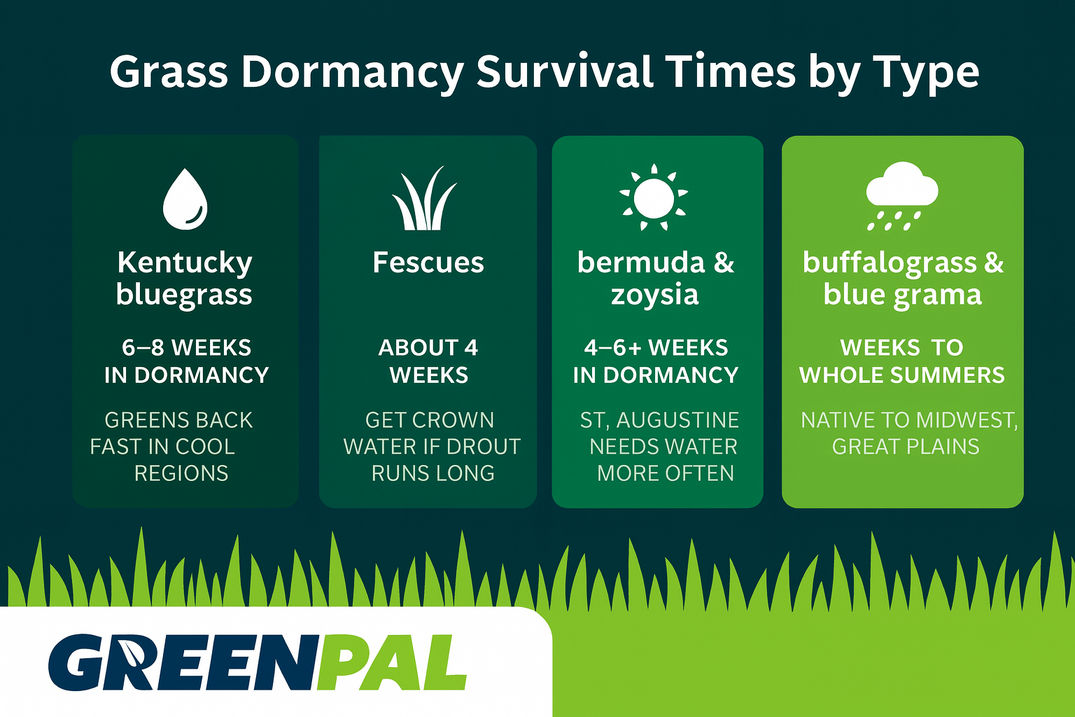
Grass Type Survival Guide
Not all grasses handle drought equally. Cool-season grasses like Kentucky bluegrass and fescues often rely on dormancy to survive, while warm-season grasses such as bermuda and zoysia are naturally built to withstand weeks of hot, dry weather.
| Grass Type |
Survival Without Water |
Notes |
| Kentucky Bluegrass |
Up to 6–8 weeks in dormancy |
Recovers quickly in cool regions |
| Tall Fescue |
3–4 weeks in heat |
Deep roots, but thin in extended drought |
| Fine Fescues |
Around 4 weeks |
Require light survival water for crowns |
| Perennial Ryegrass |
1–2 weeks |
Very poor drought tolerance |
| Bermudagrass & Zoysia |
4–6+ weeks in dormancy |
Excellent recovery once rain returns |
| St. Augustine |
2–3 weeks before thinning |
Needs more frequent irrigation |
| Buffalograss & Blue Grama |
Several weeks to months |
Native species highly drought-adapted |
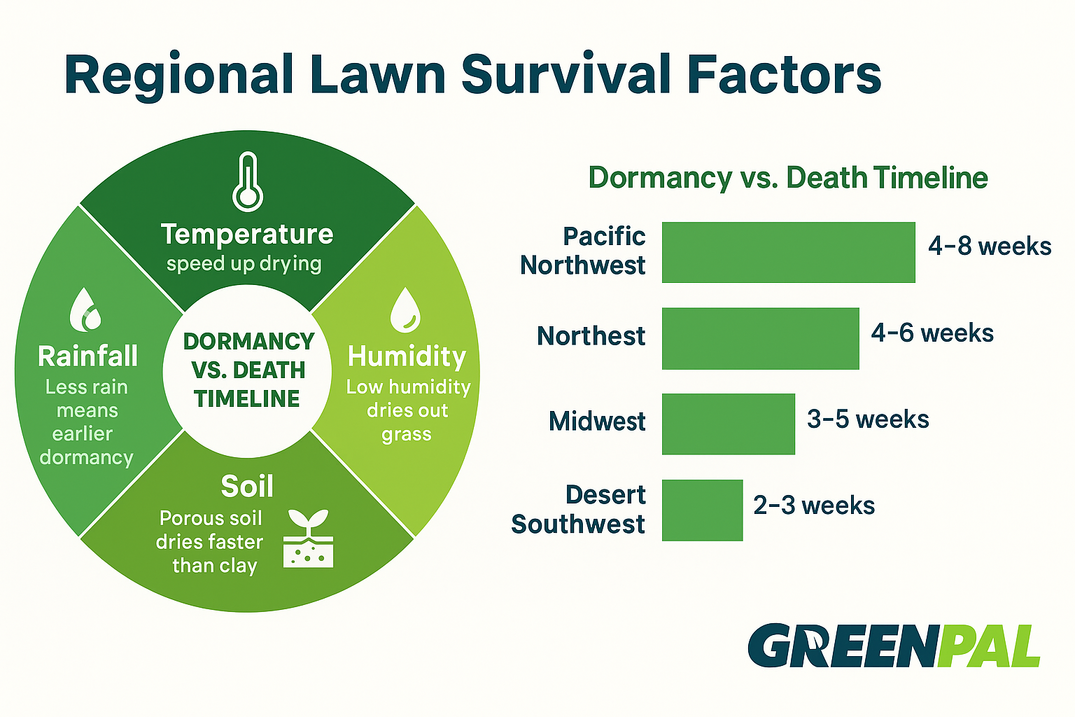
Regional Differences: How Long Lawns Last Without Water
Understanding how long your lawn can last without water isn’t just about the grass itself; it’s also about where you live. Climate plays a huge role in how quickly a lawn dries out and how well it can recover. A yard in Seattle faces a very different summer than one in Phoenix or Miami, even if both have the same grass type.
Factors like temperature, rainfall, humidity, and soil type all change the timeline for when dormancy sets in and when permanent damage might occur. That’s why it helps to look at survival times by U.S. region and major metro areas, so you know what’s realistic for your lawn during the hottest months.
Pacific Northwest (Seattle, Portland, Eugene)
Cool-season grasses dominate here, but summers are dry. Lawns can usually survive 4–8 weeks in dormancy before needing survival water. Homeowners often let lawns go brown and water deeply only once a month.
Northern Midwest & Northeast
In cities like Chicago, Boston, New York, Philadelphia, and Minneapolis, cool-season grasses dominate. Kentucky bluegrass can last six to eight weeks in dormancy, and fine fescues hold up well, too. Ryegrass, on the other hand, fades quickly under drought. To keep crowns alive, plan for about 0.5 inch of water every 2–3 weeks during summer dry spells.
Mountain West & High Plains
The intense sun and low humidity of places such as Denver, Salt Lake City, and Boise make drought especially tough on lawns. Bluegrass may survive for a few weeks, but native grasses like buffalograss and blue grama are much better suited, often lasting entire summers with little irrigation. For traditional lawns, expect to apply about 1 inch of water per month.
California Mediterranean
In regions like the Bay Area, Sacramento, Los Angeles, and San Diego, lawns face wet winters and bone-dry summers. Cool-season grasses often go completely dormant, while warm-season grasses like Bermuda and Zoysia handle drought better. The best strategy here is survival irrigation—small, occasional soakings to keep crowns from dying until rains return.
Desert Southwest
Cities such as Phoenix, Tucson, and Las Vegas see extreme summer heat that can kill grass in just 3–4 weeks without water. Bermudagrass is the most resilient choice, but even it requires 0.5–1 inch every 2–3 weeks during peak heat to stay alive.
Transition Zone & Mid-Atlantic
Areas including St. Louis, Louisville, Washington D.C., Raleigh, and Nashville grow both cool- and warm-season grasses. Tall fescue typically survives about three weeks before thinning out, while Bermuda and zoysia last much longer. Fescue lawns benefit from 0.5 inch every 2–3 weeks of survival watering.
Southeast & Gulf Coast
In metros like Atlanta, Houston, Orlando, Tampa, and Dallas, warm-season grasses dominate. Bermuda and zoysia can ride out drought through dormancy, but St. Augustine needs steadier irrigation to avoid thinning. The best method here is deep, infrequent watering when restrictions allow.
South Florida
In Miami, Fort Lauderdale, and West Palm Beach, sandy soils dry out quickly, and lawns may show stress within just a few days without rainfall. St. Augustine and bahia grasses are common, but both require timely irrigation. When permitted, apply 0.5–0.75 inch per session to keep the crowns alive.
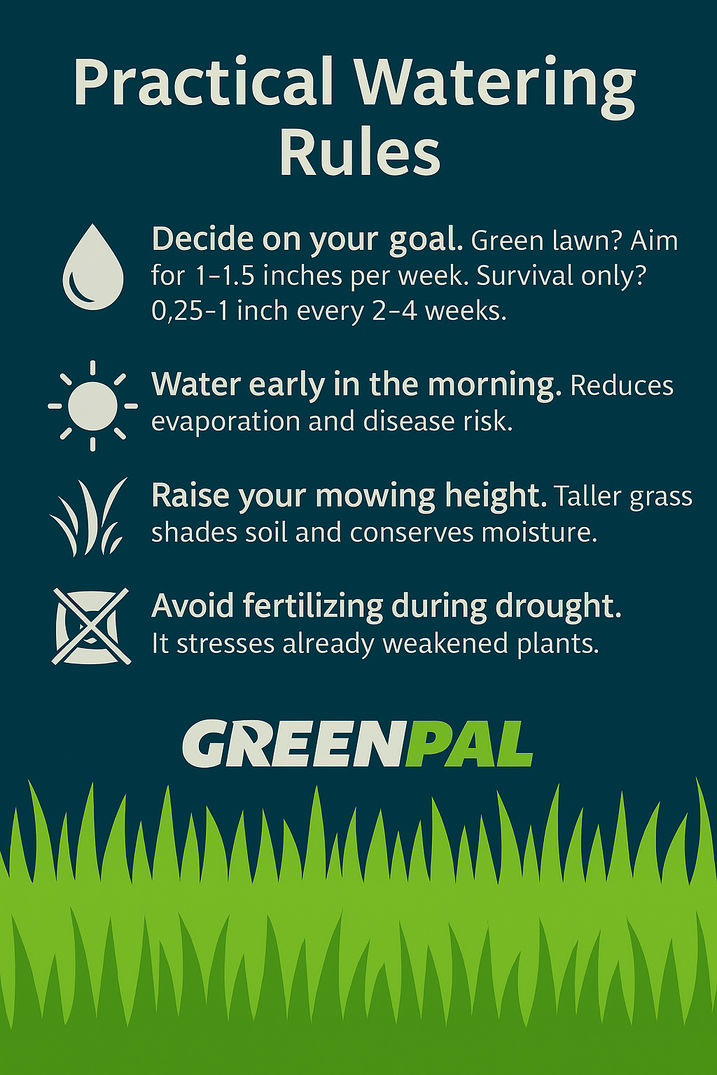
Practical Watering Rules
Whether you want a green lawn all summer or just want to keep it alive, the same principles apply:
Decide on your goal. Green lawn? Aim for 1–1.5 inches per week. Survival only? 0.25–1 inch every 2–4 weeks.
Water early in the morning. Reduces evaporation and disease risk.
Raise your mowing height. Taller grass shades soil and conserves moisture.
Avoid fertilizing during drought. It stresses already weakened plants.
Final Thoughts
A summer drought doesn’t have to mean the end of your lawn. If you want a pro to handle the mowing while you manage watering, start here: How to Use Your Free GreenPal Account for Lawn Care Services. With the right balance of survival watering and patience, most grasses recover once cooler, wetter weather returns. The key is knowing your grass type, understanding your region’s climate, and watering just enough to keep the crowns alive. Contact GreenPal today to have an expert take a look at your lawn and offer watering recommendations.


