Mowing Height Chart: How High to Cut Your Grass
Is your lawn looking stressed or scalped after hiring the neighbor’s teen to mow it? Your grass may have been cut too short for its type. Different grasses thrive at different mowing heights, and the mowing chart below shows exactly how high to cut your grass.
We’ll also dive into how to adjust your mowing height throughout the year and share practical mowing tips for a healthy lawn. If you find yourself skipping mows, consider hiring a local lawn mowing professional.
How High Should You Cut Your Grass?
How High to Cut Warm-Season Grasses |
Grass type |
Set mower to (inches) |
Mow when grass reaches this height (inches) |
Bermudagrass |
1 to 1.5 |
1.5 to 2.25 |
Zoysiagrass |
1 to 2 |
1.5 to 3 |
Centipedegrass |
1 to 2 |
1.5 to 3 |
Buffalograss |
2 to 4 |
3 to 6 |
Bahiagrass |
3 to 4 |
4.5 to 6 |
St. Augustinegrass |
3 to 4 |
4.5 to 6 |
How High to Cut Cool-Season Grasses |
Grass type |
Set mower to (inches) |
Mow when grass reaches this height
(inches)
|
Perennial ryegrass |
2 to 3 |
3 to 4.5 |
Tall fescue |
2.5 to 3.5 |
3.75 to 5.25 |
Kentucky bluegrass |
2.5 to 3.5 |
3.75 to 5.25 |
Fine fescue |
2.5 to 4 |
3.75 to 6 |
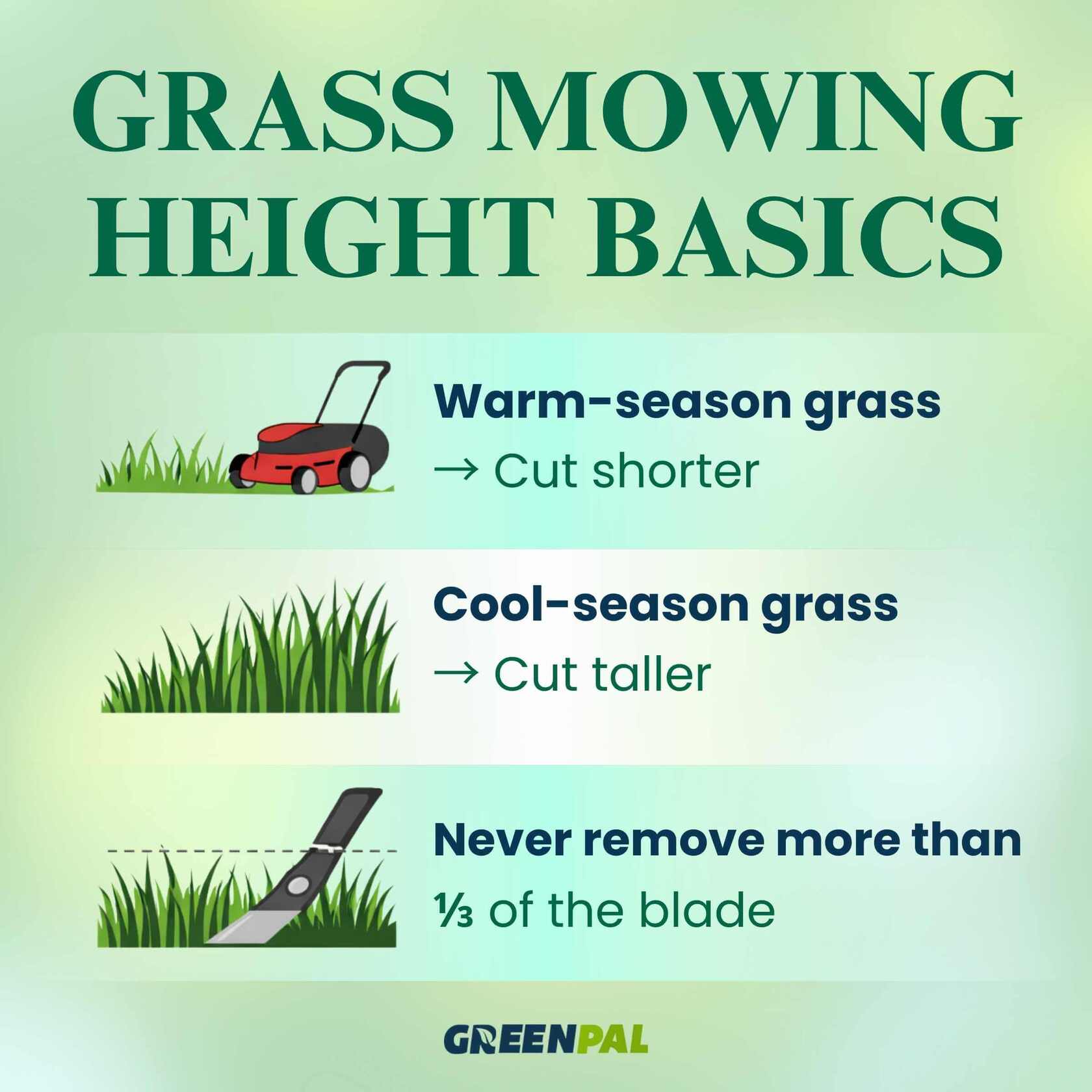
The optimal mowing height varies between warm- and cool-season grasses, which have different growth patterns and seasonal needs.
Warm-season grasses, like zoysiagrass and bermudagrass, prefer to be kept short and require the most mowing in summer when temperatures are warm.
Cool-season grasses prefer higher cutting heights and grow most actively in spring and fall, requiring more frequent mowing during these cooler periods.
And here’s a key takeaway for healthy turf: Never cut more than one-third of the grass blade in a single mow. Cutting too much at once stresses your lawn. For example, if your grass is 3 inches tall, do not remove more than 1 inch.
Mowing Height by Season
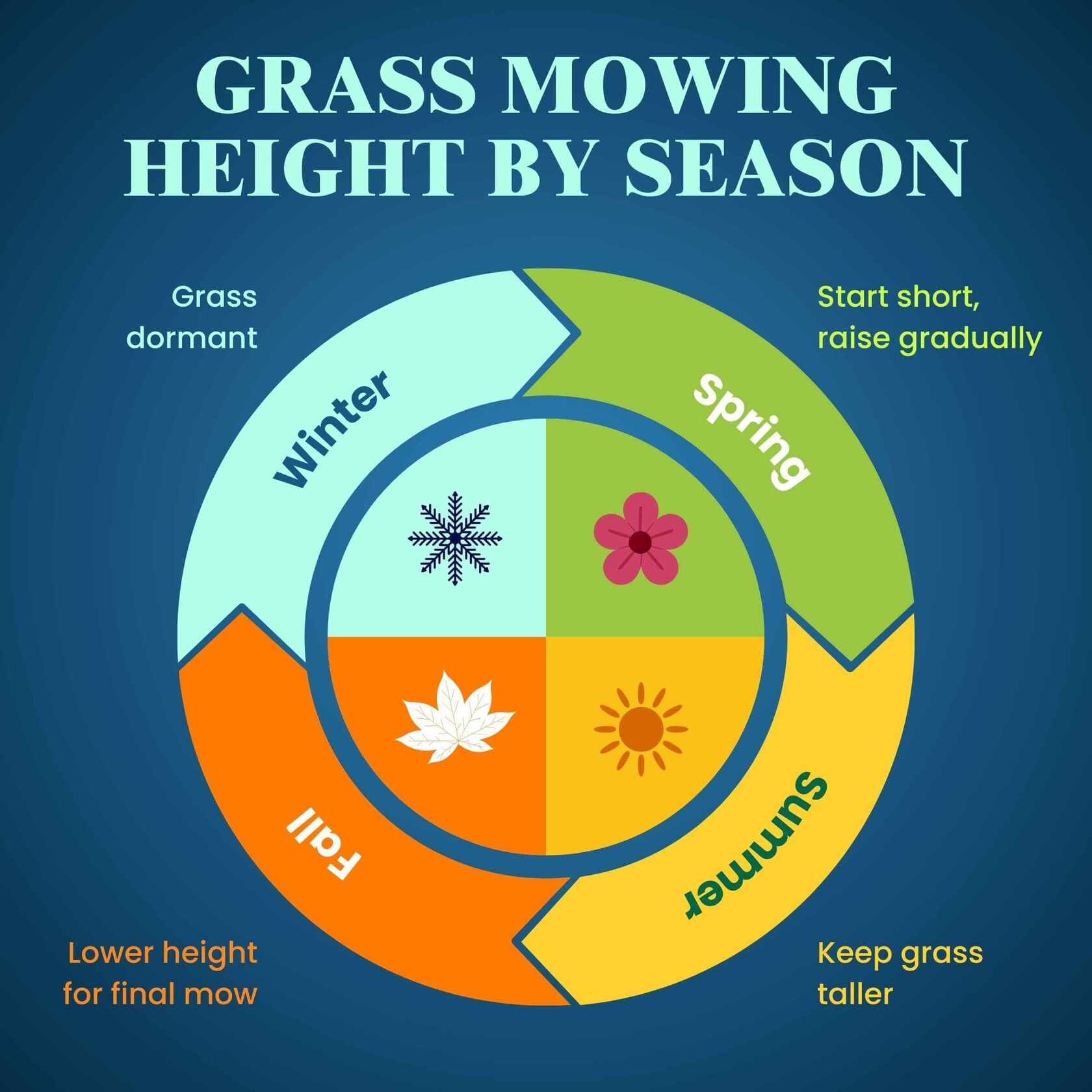
Seasons influence mowing height due to changes in temperature, weather patterns, and local conditions. Take a closer look.
How High to Cut Grass in Summer
Raise the mowing height to the higher end of your grass type's preferred cutting range. Taller grass provides more shade to the soil, which cools the roots and helps to retain moisture.
Warm-season grasses are actively growing in summer and require more frequent mowing than cool-season grasses during this time. Cool-season grasses slow down growth in summer and may require only occasional mowing.
How High to Cut Grass in Fall
Cool-season grasses thrive in fall’s cool temperatures, so prepare for more frequent mowing. Warm-season grasses, on the other hand, slow down during this time.
To prepare your lawn for its last mow before winter, gradually lower the mowing height until you’ve reached the low end of its preferred range. Adjust gradually to avoid cutting off too much at once, which can shock your turf.
If your grass enters winter too tall, it can become susceptible to snow molds and matting.
How High to Cut Grass in Winter
Cool- and warm-season grasses are typically dormant during winter. However, in areas with mild winters, cool-season grasses may grow very slowly and require occasional mowing. Growth resumes once soil temperatures rise in spring.
How High to Cut Grass in Spring
In spring, start by mowing warm- and cool-season grasses at the shorter end of their preferred range to remove winter-damaged or dead foliage. Over the next few mowings, gradually raise the blades to reach the grass’s optimal height.
Because cool-season grasses prefer cooler temperatures, they’ll start to grow much sooner than warm-season lawns.
Near the end of spring, gradually raise the mower blades to the high end of the grass type’s preferred range to prepare for summer.
Grass Mowing Tips for a Healthy Lawn
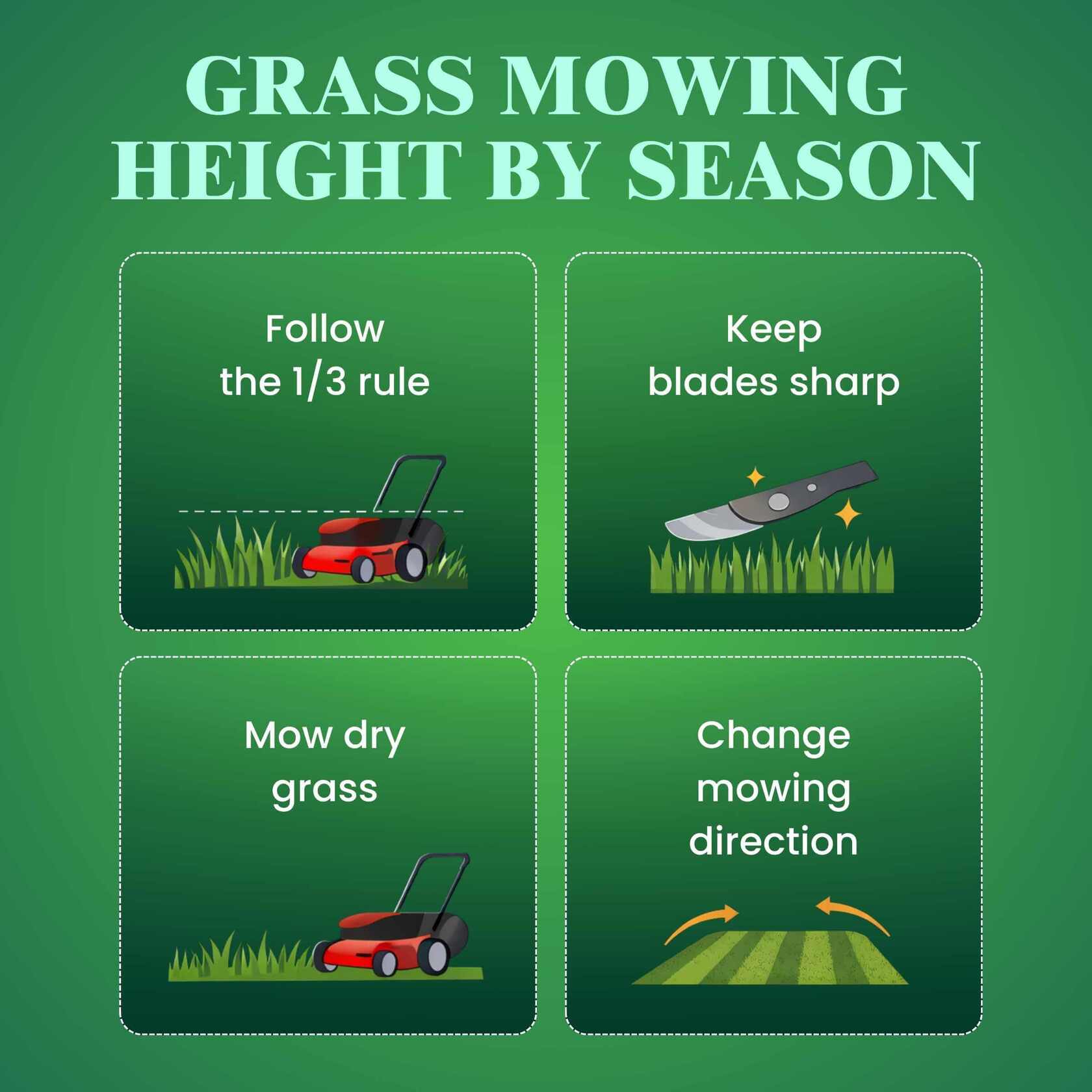
In addition to mowing within your grass’s optimal height range, follow these lawn mowing best practices for a healthy lawn:
Follow the rule of one-third: Never remove more than one-third of the grass blade’s height in a single mow.
Sharpen mower blades regularly: Dull mower blades rip and tear grass, resulting in an unhealthy lawn susceptible to pests and disease.
Mow dry grass: Mowing wet grass leads to an uneven cut. Wet grass clippings often clump, which can suffocate the lawn and clog the mower.
Change direction: Vary your mowing pattern each time you mow to ensure the grass doesn’t lean in one direction.
Hire a Lawn Care Professional With GreenPal
Mowing your grass down to its optimal height is essential to its health. Cut the turf too short, and you risk scalping the lawn. Keep the grass too tall, and you risk cutting off too much to catch up. Consider hiring a lawn mowing professional who can keep the lawn’s height just right.