Lawn Care Calendar For Cool-Season Grass
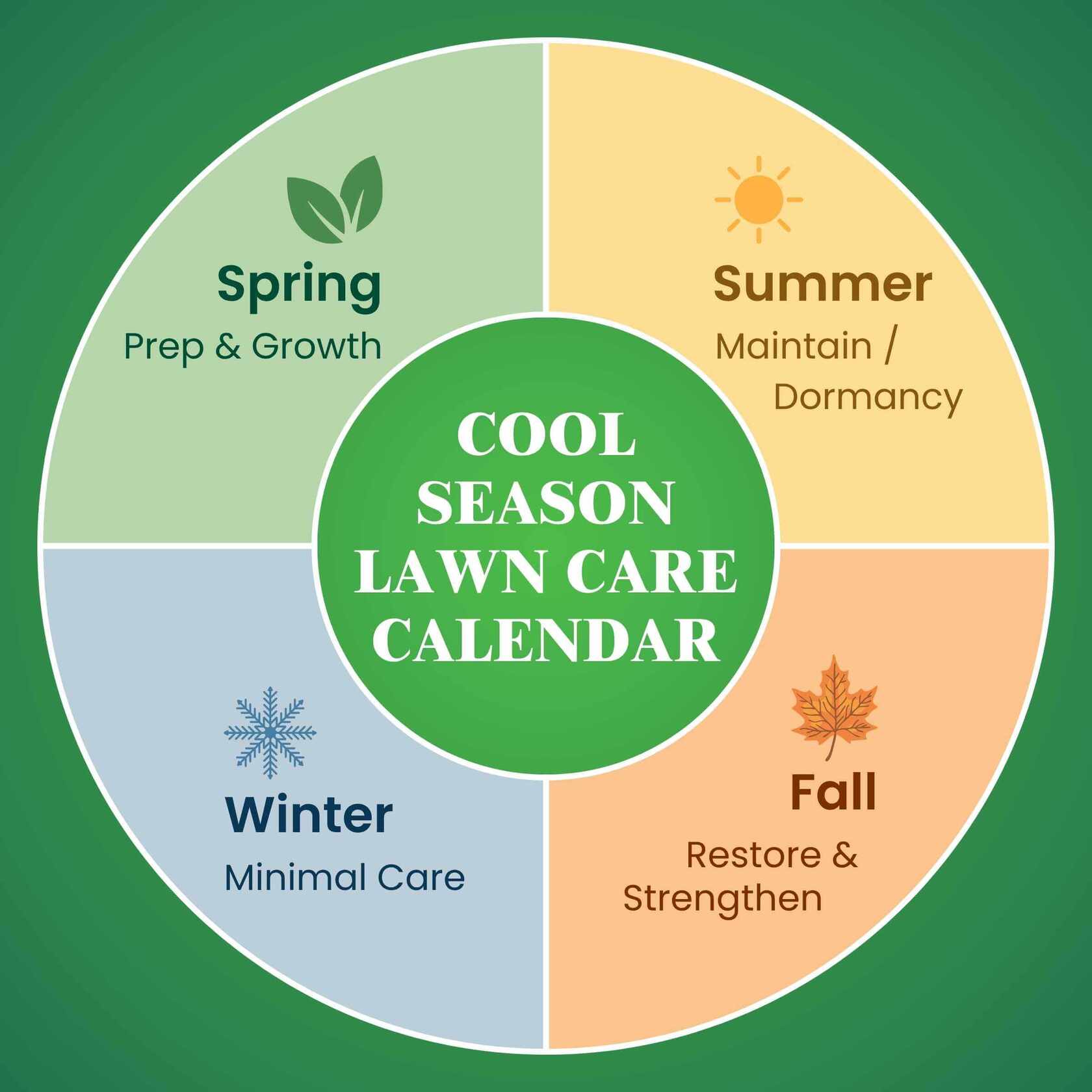
The best part about caring for cool-season grasses? The bulk of the work isn't in summer. This lawn care calendar for cool-season grass walks you through seasonal lawn tasks, with the most demanding chores saved for the cooler months of fall and early spring.
Some treatments may only be necessary monthly or annually. However, lawn mowing can turn into a weekly time commitment, which is why many homeowners choose to hire a lawn care professional for the job.
The exact timing of these tasks may vary depending on your region and climate conditions, but the seasonal pattern is largely the same for most cool-season grasses. Use the calendar below as a guide to help plan your lawn care throughout the year.
Cool-Season Lawn Care Calendar at a Glance |
Seasonal Timing |
Lawn Care Task |
Early Spring |
Clean up debris Rake matted turf Apply pre-emergent herbicide Provide supplemental water if needed Apply fertilizer (based on soil test results) when grass is actively growing Perform first mow of the season |
Mid- to Late Spring |
|
Summer |
Allow grass to enter dormancy or water weekly Monitor for pests and lawn disease Spot-treat weeds with post-emergent herbicide |
Early Fall |
Test soil if needed Dethatch, aerate, and overseed if needed Apply soil amendments Apply pre-emergent herbicide Apply fertilizer based on soil test results Provide supplemental water if needed Resume regular mowing |
Mid- to Late Fall |
Continue to apply fertilizer based on soil test results Gradually lower mowing height for the final mow before winter dormancy Provide supplemental water if needed Remove leaves |
Winter |
If winter is dry, provide supplemental water every 3 to 4 weeks Occasional mowing may be needed in regions with mild winters |
Timing may vary slightly depending on climate zone and local weather conditions. Common cool-season grasses include tall fescue, fine fescues, perennial ryegrass, and Kentucky bluegrass, which are widely grown throughout the northern United States.
Spring: March, April, May
Your cool-season lawn requires the most care during its active growing seasons, spring and fall.
If you didn’t dethatch, aerate, overseed, or soil test your cool-season lawn the previous fall, early spring is the second-best time to cross those chores off your list.
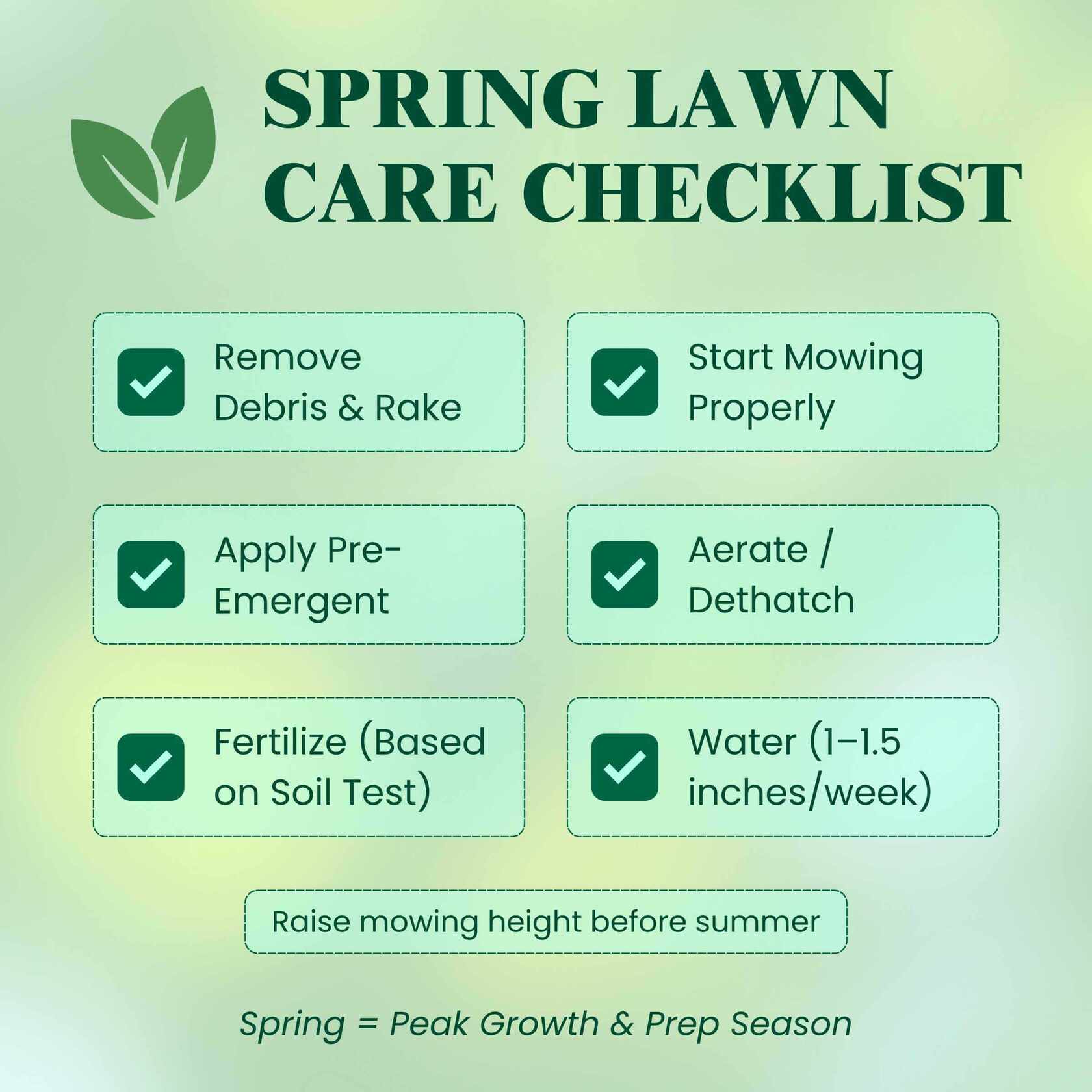
Rake and Remove Debris
As the yard thaws in early spring, gather and remove winter debris, such as broken branches from heavy snow, twigs, and old pine needles.
Why tidy up? Too much winter debris piled on the lawn can block sunlight from reaching your turf. Plus, debris may harbor fungus or pests that could wreak havoc on your spring lawn.
After clearing the lawn, gently comb the turf with a rake to help increase air circulation, loosen matted grass, and break down snow molds that may have developed over winter.
Mow New Growth
Cool-season grasses begin growing when soil temperatures reach about 50 to 55 degrees Fahrenheit in spring. Bring out the lawn mower and follow these best mowing practices for a healthy lawn:
Adjust the mowing height: Different grass types thrive best at different mowing heights. For example, set your mowing height between 2 and 3 inches if you’re mowing perennial ryegrass. On the other hand, fine fescues prefer mowing heights between 2.5 and 4 inches.
The rule of one-third: Never remove more than one-third of the grass blade’s height in a single mow. Otherwise, you’ll shock your turf. If you need to lower the cutting height, do so gradually over a series of cuts.
Sharpen mower blades: Dull mower blades rip and tear your grass, resulting in an uneven cut and unhealthy turf. Here’s a quick guide on how to sharpen your mower blades.
Change direction: Vary your mowing pattern to ensure the grass doesn’t lean in one direction.
Mow dry grass: Wet grass dulls mower blades much faster than dry grass. Wet grass also clumps easily and can clog your mower, resulting in frequent interruptions as you mow.
If you fall behind on mowing, don’t risk breaking the rule of one-third to catch up. Hire a lawn care pro for weekly mowing to ensure the grass always stays near its preferred height.
Apply Pre-Emergent Herbicide
If weeds are a problem in your yard, reevaluate your lawn care routine before turning to chemical treatments. Well-maintained, healthy lawns are typically less susceptible to weeds than poorly maintained lawns.
If necessary, apply pre-emergent herbicide in early spring to inhibit the growth of summer weeds. The best time to apply pre-emergent herbicides is when soil temperatures are 50 to 55 degrees Fahrenheit for several consecutive days.
Tip: Soil temperatures can differ from air temperatures, so many homeowners use a soil thermometer or online soil temperature map to determine the best time to apply pre-emergent herbicide.
Aerate, Dethatch, and Overseed (If Needed)
Fall is the best time to aerate, dethatch, and overseed cool-season grasses. However, if you missed the fall window, early spring is the second-best time to perform these tasks.
Note: If you applied pre-emergent herbicide in early spring, do not overseed. Not only does pre-emergent inhibit weed seeds, it also prevents grass seeds from growing.
Unfamiliar with aeration, dethatching, and overseeding? We’ll dive further into those terms in the fall section.
Fertilize
Always refer to the results of a soil test before sprinkling fertilizer on your lawn. Different lawns have different needs, and performing a soil test is the best way to reveal when to spread fertilizer, how much to apply, and what kind to use.
If your soil test recommends it, apply a slow-release fertilizer in early spring when the grass is actively growing and no longer dormant.
Note: Fall is the best time to test your soil, with early spring being the second-best time.
To learn more about fertilizer, check out the following guides:
Water
Most cool-season grasses need 1 to 1.5 inches of water per week during the active growing season.
In many regions of the U.S., spring rainfall provides enough water for the lawn. However, if the season is particularly dry, provide supplemental irrigation until the lawn receives its recommended 1 to 1.5 inches of water per week.
To reduce water loss from evaporation, water the lawn in the early morning before 10 a.m. Avoid evening watering, as grass that remains wet overnight is more susceptible to pests and disease.
Every lawn is different and requires a different watering schedule. Check out our comprehensive guide on how to water your lawn the right way.
Raise the Mowing Height
As the season shifts from late spring to early summer, gradually raise the mowing height for the final mow before summer. Keep mowing heights on the higher end of the grass type’s recommended range during summer to help the grass shade the soil and tolerate heat stress.
Summer: June, July, August
Mowing typically slows down in summer as growth declines. Invasive treatments, like aeration and thatch removal, should not be performed in summer.
Most cool-season grasses won’t benefit from summer fertilizer. Only apply a light amount of fertilizer if your soil test recommends it.
Monitor for Pests and Disease
Summer’s warm temperatures and humidity make your lawn an attractive environment for moisture-loving pests and fungi.
Monitor your lawn for signs of pests and disease, such as discoloration, wilting grass, thinning, or brown patches.
The best way to prevent infestations is with good lawn care. Ensure that your mower blades are set to the proper height, your broadcast spreader isn’t spreading too much fertilizer, and your sprinkler system isn’t overwatering the lawn.
If good lawn care doesn’t do the trick, pesticides or fungicides can help target the specific pest or disease.
Water
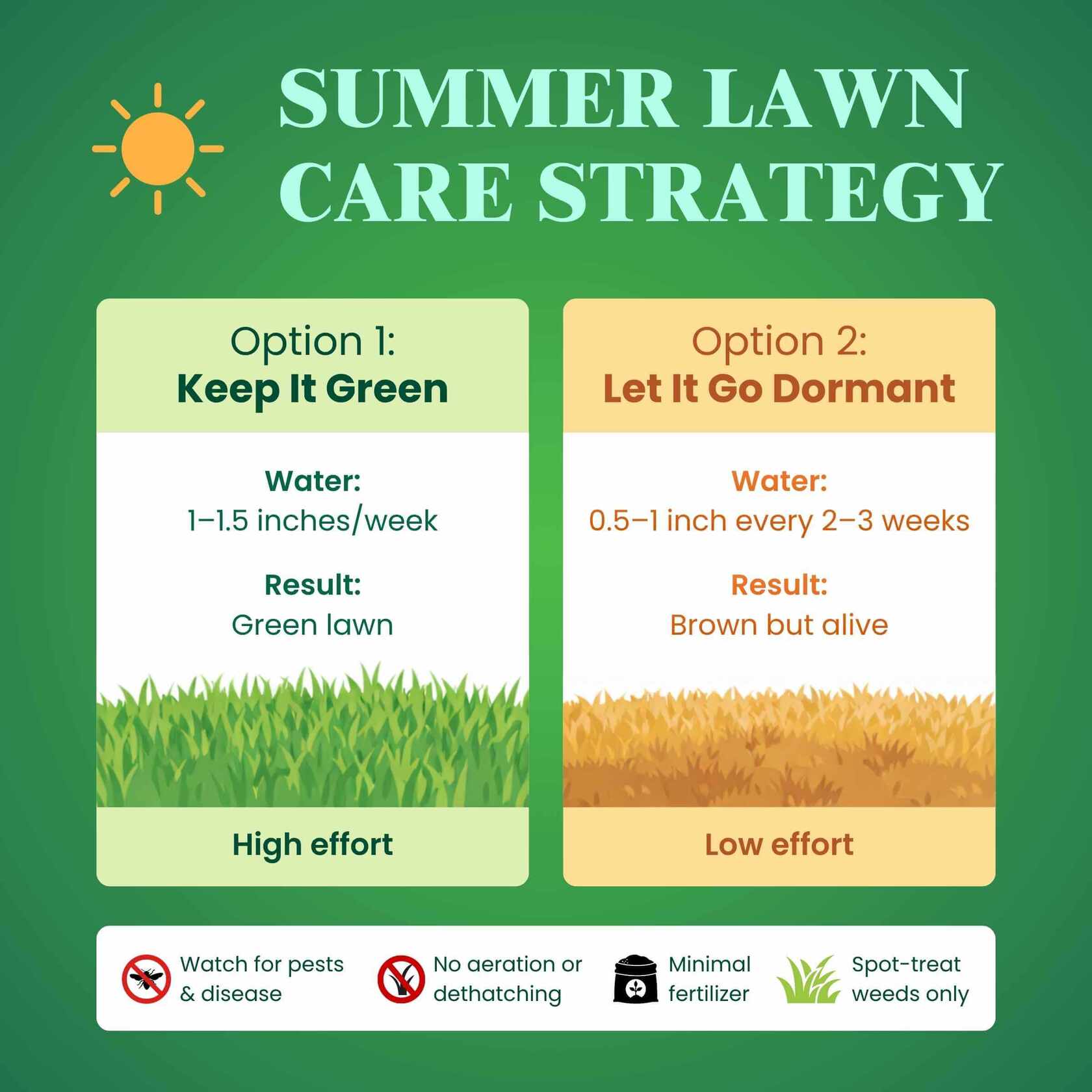
Homeowners have two options when it comes to watering their cool-season lawns in summer.
Option 1: Provide 1 to 1.5 inches of water per week to help the grass remain green throughout summer. This requires consistent watering, and a green lawn isn’t always achievable depending on your local climate and weather conditions.
Option 2: Allow the cool-season grass to enter dormancy in summer. Dormancy is your grass’s natural way of surviving heat and drought stress. During extended drought, a general rule of thumb is to supply your dormant lawn with 0.5 to 1 inch of water every 2 to 3 weeks to keep the crowns alive.
Remove Weeds
If summer weeds are vacationing on your lawn, spot-treat them with a post-emergent herbicide. Avoid spraying desirable turfgrass.
Not sure where to start? Visit this illustrated guide to controlling weeds in your lawn.
Fall: September, October, November
Fall is your cool-season lawn’s peak growing season, thanks to the air’s cool temperatures and increased moisture.
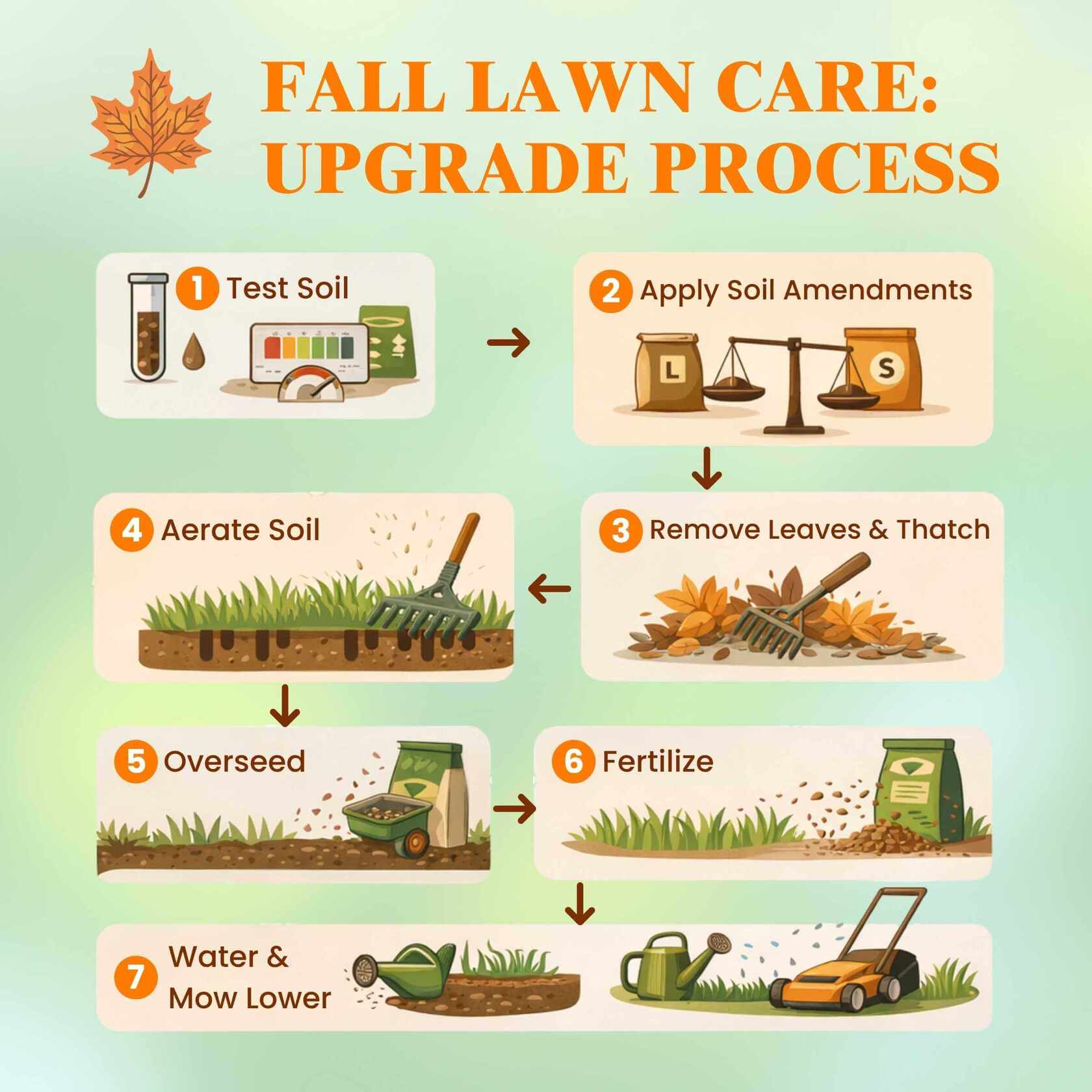
Increased growth means increased care, so get ready to aerate, remove thatch, test soil, fertilize, and overseed.
Mow the Lawn
Grab your sun protection and let’s get mowin’. As temperatures start to cool in early fall, your cool-season grass will resume regular growth after slowing down in summer.
Remember to follow mowing best practices to ensure a healthy lawn before winter.
Test Soil
Early fall is the best time to test your soil. A soil test can reveal the following traits about your soil:
Soil type (clay, sandy, loamy, or silt)
pH level (alkaline or acidic)
Nutrient deficiencies
Organic matter levels
At-home soil test kits are available for purchase, however, they typically don’t provide a comprehensive management plan. To receive detailed instructions on how to care for your lawn’s unique ecosystem throughout the year, send a soil sample to your local cooperative extension for laboratory testing.
Tip: Test your soil every 3 to 5 years.
Apply Soil Amendments
A soil test may recommend specific amendments to adjust your soil’s pH, texture, or organic matter levels.
For example, sulfur lowers soil pH, making it more acidic, while lime raises pH, making soil more alkaline. Most lawns grow best in slightly acidic soil.
Amendments like sulfur and lime can take months to change soil pH. Because grass roots struggle to absorb fertilizer when pH is too high or too low, follow your soil test recommendations for when to fertilize after applying amendments.
Apply Pre-Emergent Herbicide
If your lawn struggles with winter weeds, like chickweed and henbit, apply pre-emergent herbicide to prevent these annual weeds from sprouting. Apply the herbicide when soil temperatures drop below 70 degrees Fahrenheit but before they reach 55 degrees.
Remember: After applying pre-emergent herbicide, wait at least 12 weeks before planting new grass seed.
Remove Leaves
Colorful autumn leaves may look charming sprinkled on the lawn, but too many leaves can suffocate your turf and invite pests. Remove leaves from the lawn with a rake, leaf blower, or mulcher, or consider hiring professional leaf removal services.
Remove Thatch
What is thatch? Thatch is the layer of dead and living organic matter that collects between the grass blades and soil surface.
Why remove thatch? When the thatch layer exceeds one-half inch thick, it blocks sunlight, nutrients, water, and oxygen from reaching the soil. Too much thatch can also attract pests and disease.
How often to remove thatch? It depends on how quickly your lawn develops thatch. Most cool-season lawns don’t develop excessive thatch unless they’re overfertilized or overwatered. Your cool-season lawn may only need dethatching every 2 to 5 years.
When to remove thatch? Remove thatch when the layer exceeds one-half inch thick. The best time to dethatch cool-season grass is in early fall, with early spring being the second-best time.
Tip: Dethatch the lawn before aeration and fertilization to help increase access to the soil.
Aerate the Soil
What is aeration? Lawn aeration is the process of removing 1- to 2-inch-long plugs of soil from the ground to help alleviate soil compaction.
Why aerate soil? Compacted soil is solid and dense, making it difficult for oxygen, water, and nutrients to reach the grass roots.
How often to aerate? It depends on your lawn’s soil type and how often it becomes compacted. Clay soil compacts more easily than sandy soil and often requires annual aeration. Lawns with sandy soil typically need aeration every 1 to 3 years.
How to test soil compaction? Push a 4 to 6 inch screwdriver into moist soil. If it’s difficult to push the screwdriver into the ground, the soil is likely compacted and needs aeration.
When to aerate? The best time to aerate cool-season lawns is in early fall. Early spring is the second-best time to aerate.
Tip: Aerate the lawn after dethatching but before overseeding. Aeration creates small holes in the ground, making it easier for the grass seed to come in contact with the soil.
Overseed
After aeration is an excellent time to overseed. Overseeding is the process of spreading new grass seed over an existing lawn.
Overseeding thickens the lawn by filling in thin spots with new growth, creating a denser, healthier lawn.
Note: After overseeding, wait 4 to 6 weeks before applying a nitrogen-heavy fertilizer.
Learn How to Aerate and Overseed Your Lawn in 5 Simple Steps.
Fertilize
Cool-season lawns can benefit from 1 to 3 fertilizer applications in fall, spaced about 4 to 6 weeks apart. The exact schedule depends on the grass type and your desired level of lawn maintenance. To ensure your lawn receives the right amount of nutrients, always refer to the results of a soil test.
Water
Similar to spring, fall in many regions of the U.S. provides enough rainfall for lawns. Provide your lawn with supplemental water as needed to ensure it receives the recommended 1 to 1.5 inches of water per week.
Lower the Mowing Height
As the season transitions from late fall to early winter, gradually lower the mowing height for the final mow before winter dormancy. Mowing the grass down to the lower end of its preferred height range can help to prevent winter damage, snow molds, and matting.
Winter: December, January, February
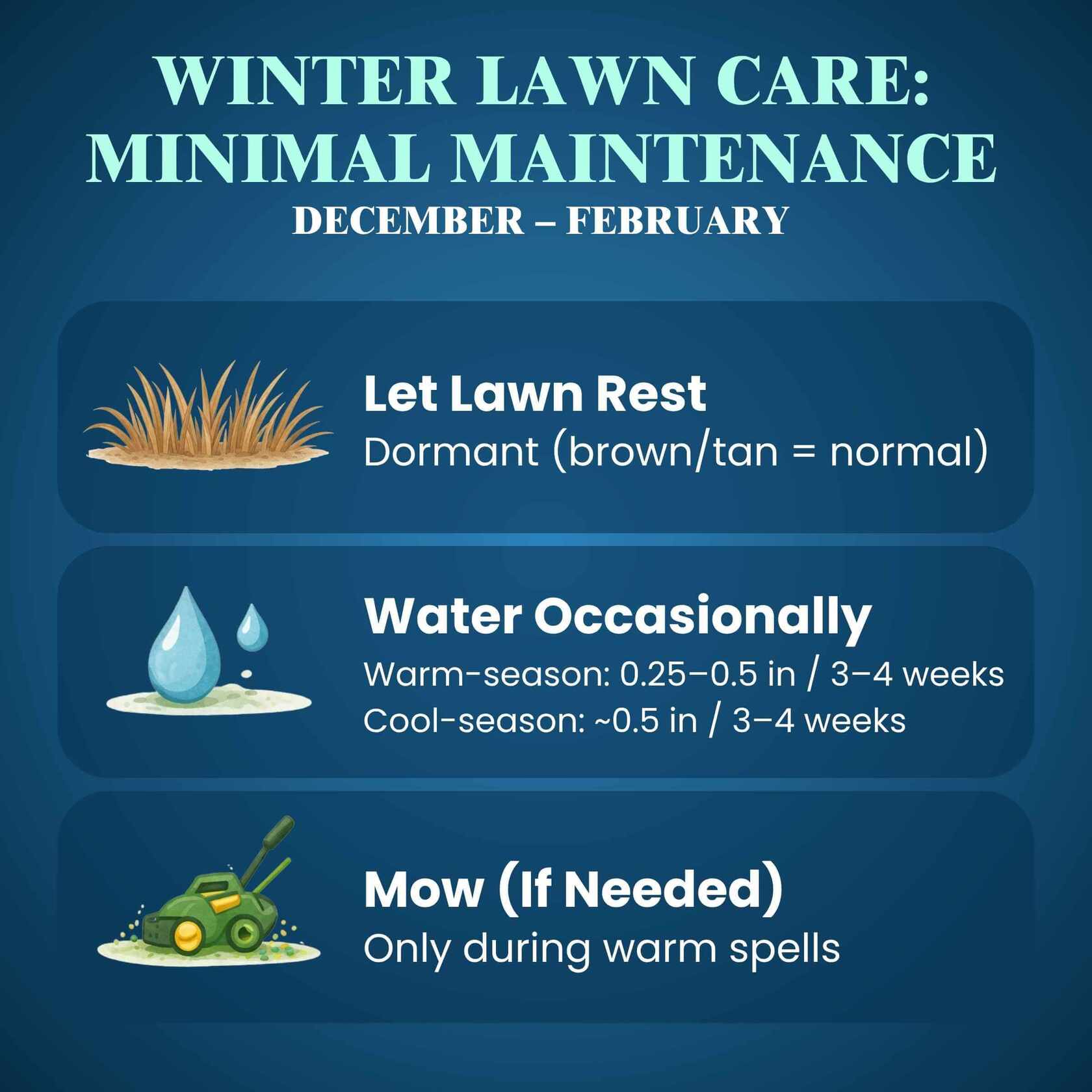
Come wintertime, most cool-season lawns require little to no maintenance.
However, because winters are relatively mild in some areas, such as Atlanta, Georgia, lawns may still need occasional maintenance. As a result, some homeowners rely on Atlanta lawn mowing services to handle occasional winter mowing.
During extended periods of drought, supply the lawn with approximately 0.5 inches of water every 3 to 4 weeks when air temperatures are above 40 degrees Fahrenheit.
Frequently Asked Questions
How Often Should You Perform Lawn Maintenance Tasks?
Here’s a general estimate of how often you can expect to perform various lawn care tasks:
Mowing: Between twice per week and once every two weeks, depending on the growth rate.
Watering: Between 1 and 1.5 inches of water per week during the active growing season, including rainfall.
Thatch Removal: Every 2 to 5 years, depending on thatch accumulation.
Soil Testing: Every 3 to 5 years.
Soil Amendments: Apply according to soil test results.
Fertilization: Every 4 to 6 weeks during the active growing season, based on soil test results.
Aeration: Clay soil often requires annual aeration. Sandy soil typically needs aeration every 1 to 3 years.
Overseeding: Annually, as needed.
Weed Control: Year-round, as needed.
Which Cool-Season Grasses Are the Easiest to Maintain?
Tall fescue and fine fescues are considered low-maintenance, boasting high drought tolerance, low fertilizer requirements, and strong disease and pest resistance. Fine fescues are slow growing, often requiring less mowing than tall fescue.
Which Cool-Season Grasses Are the Hardest to Maintain?
Kentucky bluegrass and perennial ryegrass are often considered difficult to maintain.
Kentucky bluegrass has high fertilizer and watering needs, and develops thatch more often than other cool-season grasses. Perennial ryegrass requires frequent fertilization and is the fastest growing cool-season grass, requiring regular mowing.
Hire a Lawn Care Pro With GreenPal
Cool-season lawns follow a predictable seasonal rhythm, with the busiest work happening in spring and fall. Fortunately, many tasks are only needed occasionally, like aeration and dethatching.
Mowing, however, often becomes a weekly chore. If you’d rather spend your weekends enjoying the season instead of pushing a mower, consider hiring a local lawn care professional to handle the job.