12 Benefits of Lawn Aeration
If your lawn is suffering from compacted soil, the benefits of lawn aeration can greatly improve your grass’s health.
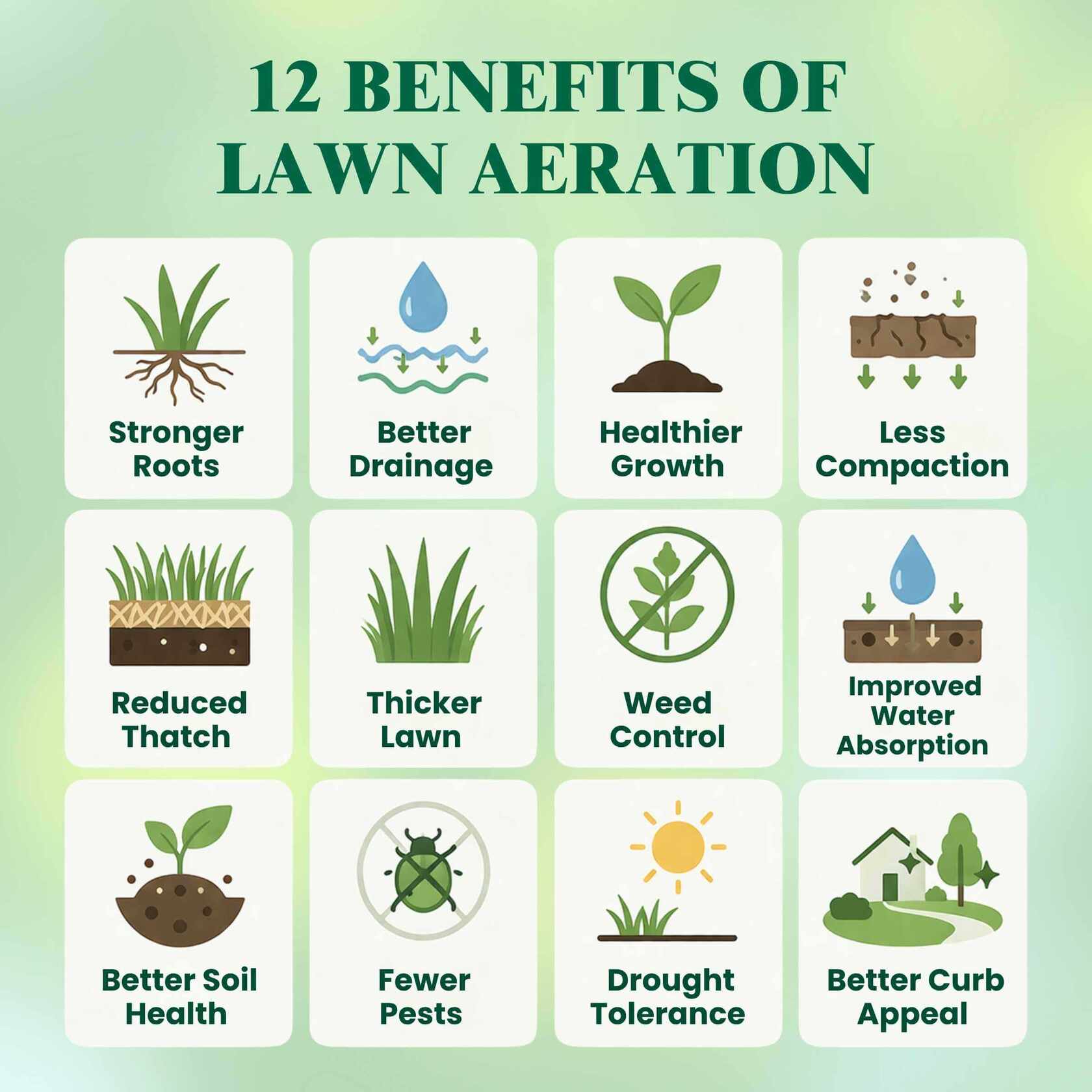
Lawn aeration improves soil structure by relieving compaction, allowing water, nutrients, and oxygen to reach grass roots more effectively. This leads to stronger root growth, better drainage, reduced thatch buildup, and thicker, healthier grass. As a result, aeration can enhance your lawn’s resilience to drought, pests, and disease while improving overall curb appeal.
To reap these benefits, learn how to aerate the lawn yourself or hire a lawn care professional for high-quality results.
1. Relieves Compacted Soil
Hard, dense soil that’s been compacted over time prevents the grass roots from accessing water, nutrients, oxygen, and the space needed for deeper root growth.
Core aeration creates small holes in the ground by removing plugs of soil, making space for compacted soil to shift and move. By loosening the soil, the grass roots can finally access the vital elements needed for a healthy lawn.
2. Increases Nutrient Availability
Your fertilizer applications won’t green up your yellow grass if nutrients can’t penetrate the soil. Compacted soil blocks that movement, preventing roots from accessing the essential food they need. Core aeration opens up the soil, allowing nutrients to reach the root zone.
3. Manages Thatch
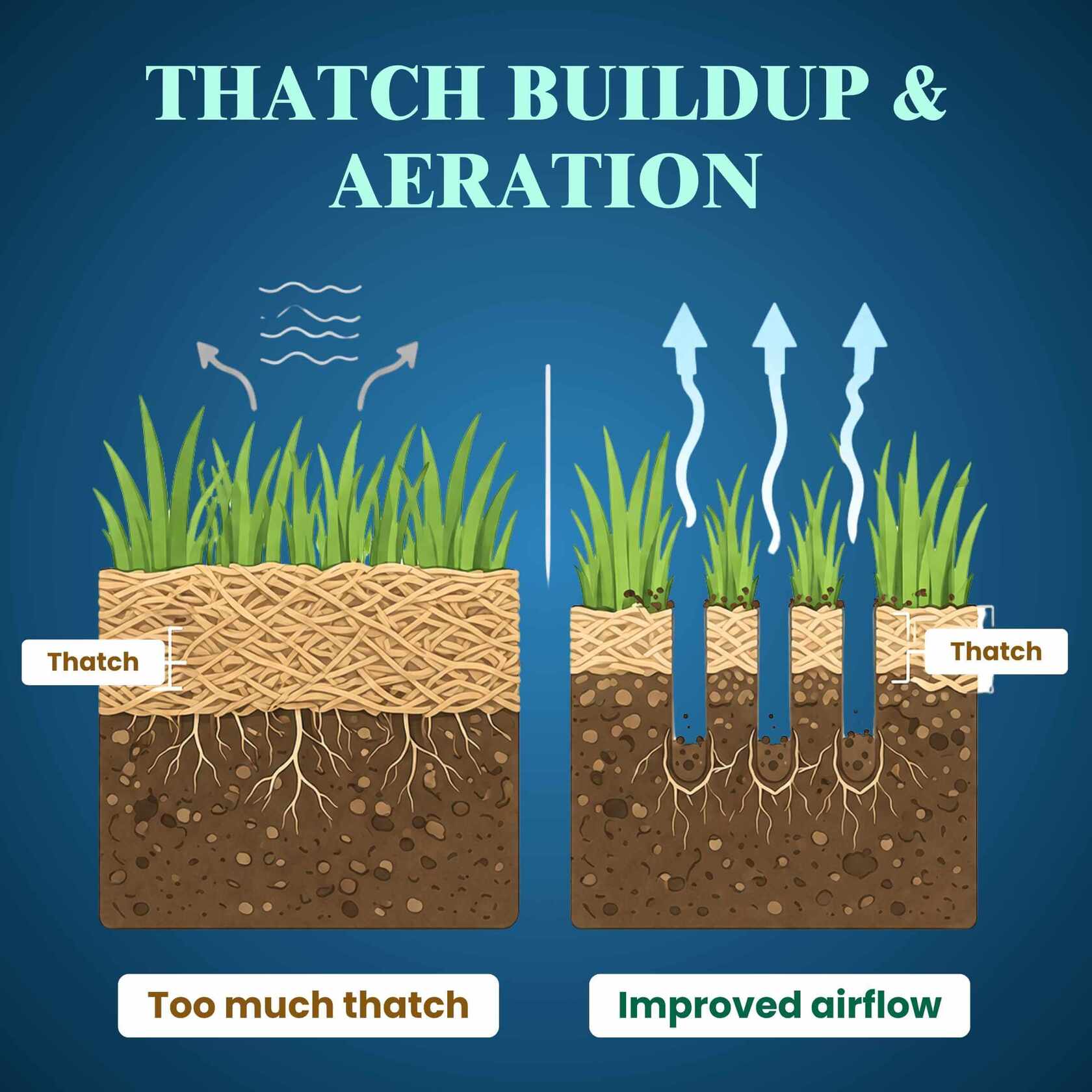
Core aeration reduces thatch buildup by removing small plugs of soil and thatch from the ground. The improved airflow in the soil also helps to prevent excessive thatch, because the increased oxygen fuels the microbial activity needed to decompose organic matter.
Note: Keep in mind that aeration is not a substitute for dethatching. If your lawn has a thatch layer thicker than half an inch, it will benefit from thatch removal using a dethatching rake or a motorized dethatcher.
4. Improves Drainage
Fido may enjoy splashing in puddles, but poor drainage creates the moist conditions that lead to pests, lawn diseases, and polluted water runoff. By reducing soil compaction, aeration improves drainage and helps roots absorb the water they need for healthy growth.
5. Improves Soil Amendment Effectiveness
Like fertilizer, soil amendments can’t do their job if they’re blocked by compacted soil. Think of them as skincare for your lawn — they improve overall soil health and physical properties like texture, pH, water retention, and microbial activity.
When these conditions improve, the rest of your lawn care becomes more effective. For example, amendments like lime or sulfur can adjust soil pH, making fertilizer nutrients more available for root uptake.
6. Thickens Lawn and Controls Weeds
When the grass starts to develop bare spots and become overrun with weeds, it’s a sign the lawn is struggling to breathe. By improving airflow with soil aeration, the grass roots grow into the empty holes and thicken the lawn over time, outcompeting persistent weeds and providing natural weed control.
As grass becomes thicker and healthier, it will require more regular mowing. Find a local lawn care professional near you who can take this weekly chore off your plate.
7. Preps Lawn for Overseeding
An excellent way to encourage new grass growth is to plant grass seed after aeration. While aeration isn’t required before overseeding, it improves seed-to-soil contact by exposing the soil and increasing the chances of successful germination.
Aeration can prep the lawn for other applications as well, including fertilization, topdressing, and soil amendments.
8. Improves Drought Tolerance
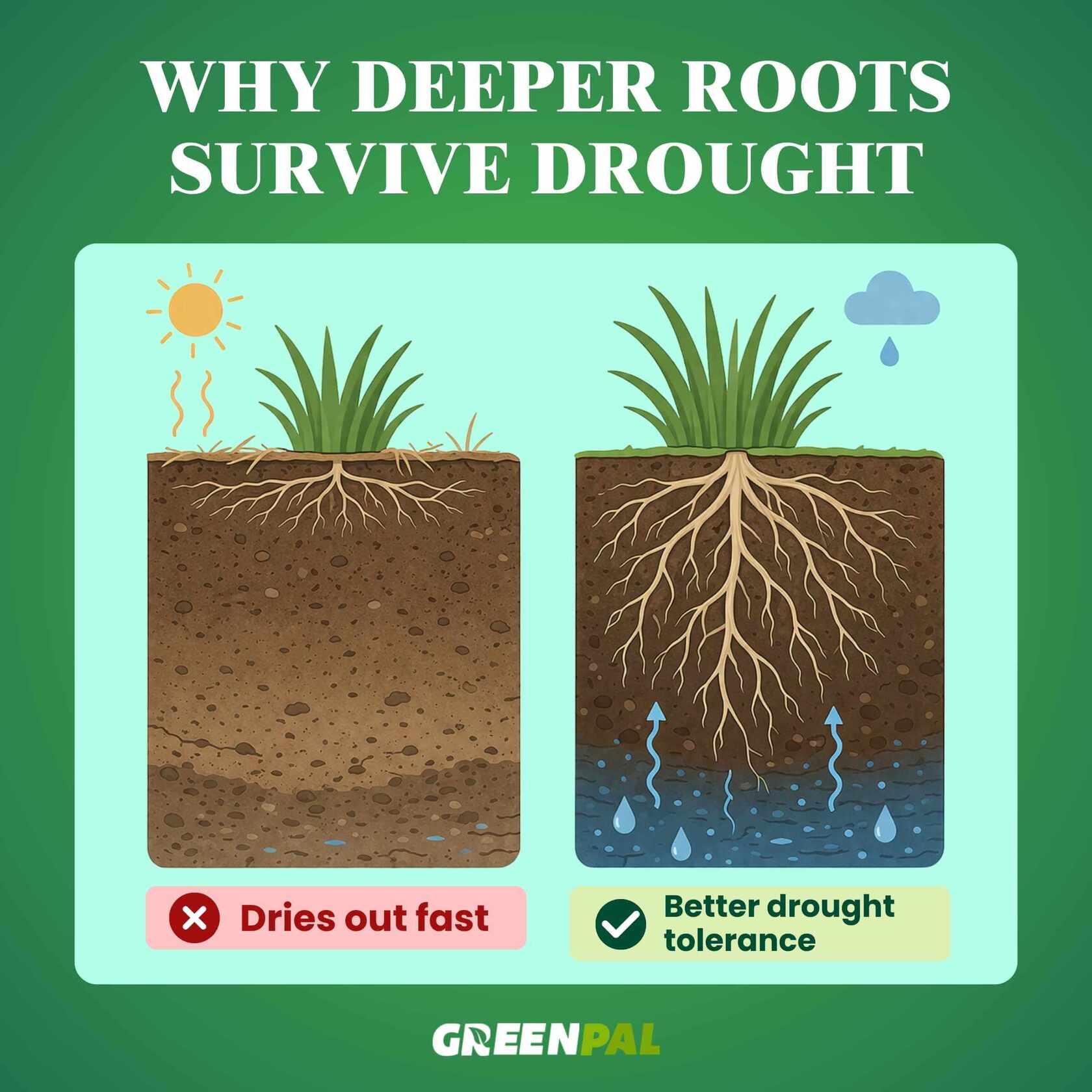
The deeper your lawn’s root system, the better it can tolerate periods of drought. Why? Because deep roots have more access to soil moisture than shallow ones.
Aeration helps deepen your lawn’s root system by reducing compaction and improving water movement through the soil. When water moves deeper into the soil, it encourages roots to grow downward in search of moisture. Because compacted soil struggles to drain water, the roots are forced to remain shallow to access water near the surface.
9. Saves Water
When soil drainage is poor, the lawn loses water to runoff, forcing you to run the hose or sprinkler multiple times until the water finally sinks into the soil.
Because aeration improves drainage, it allows the lawn to absorb water more efficiently, which means you save water and maybe even lower the water bill.
10. Encourages Beneficial Organisms
Just as your lawn needs water, nutrients, and oxygen to thrive, so do the beneficial organisms in the soil. Earthworms and microorganisms play an essential role in lawn health by decomposing organic matter (like thatch), improving soil structure, and supporting a balanced ecosystem.
When soil becomes compacted, this ecosystem can suffer. Aeration reintroduces air, water, and nutrients into the soil, encouraging the growth of these beneficial organisms.
11. Builds Resilience Against Pests and Disease
Core aeration is an excellent way to boost your lawn’s health and increase its natural defenses against pests and disease.
Healthy, well-maintained lawns are less likely to attract harmful pests and fungi than weak lawns. Here’s why: thick thatch is an inviting hideout and breeding ground, poor drainage creates moist conditions, and thin grass is susceptible to damage.
12. Boosts Curb Appeal
Finally, the #1 reason why your neighbors keep recommending aeration — because it creates a more beautiful, healthier lawn. With more access to water, oxygen, nutrients, and space for roots to grow, the lawn is able to develop a deeper root system, greener grass, and more lush growth after aeration.
Frequently Asked Questions
How Often Should You Aerate the Lawn?
Lawns with heavy clay soil may benefit from annual aeration. In areas with lots of clay soil, such as Kansas City, many homeowners choose to hire a lawn aeration professional to handle this recurring task.
Sandy and loamy soils become compacted less often, usually benefiting from aeration every 1 to 3 years. The key to determining how often to aerate your lawn lies in recognizing the signs its soil is compacted.
What Are the Signs My Lawn Needs Aeration?
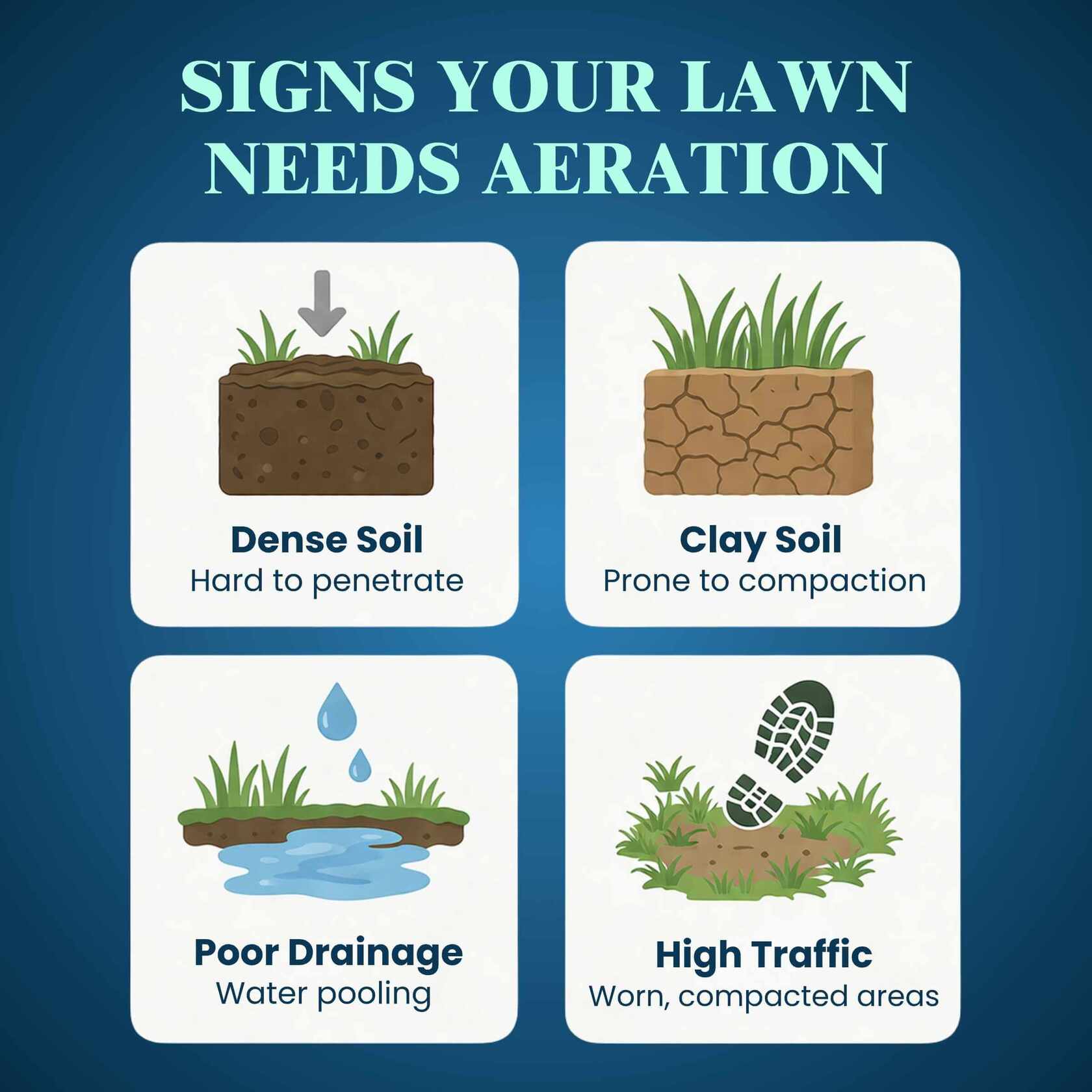
Strong signs your lawn needs aeration include:
Dense soil: If it’s difficult to insert a 4- to 6-inch screwdriver into moist soil, it’s likely compacted.
Heavy clay soil: Lawns with clay soil are more susceptible to compaction than lawns with sandy or loamy soil.
Poor drainage: Water pooling on the lawn’s surface is a sign the soil is compacted.
High traffic areas: Pressure from high foot traffic, vehicles, and heavy lawn equipment can compact soil over time.
When Is the Best Time to Aerate the Lawn?
The best time to aerate the lawn is during your grass type’s growing season.
If the lawn has warm-season grass, aerate in late spring to early summer.
The best time to aerate cool-season grass is in early fall, with early spring being the second-best time if you miss the fall window.
What Is the Difference Between Core, Spike, and Liquid Aeration?
Core aeration creates holes in the ground by removing cores of soil from the ground, allowing the compacted soil to shift and move into the open space. Core aeration provides the most effective results for severely compacted lawns.
Spike aeration creates holes by pushing soil deeper into the ground. While this method does allow water, nutrients, and oxygen to access the soil’s surface, the act of pushing can increase compaction in the surrounding soil.
Liquid aeration helps improve soil structure and create microscopic pathways for water, nutrients, and oxygen by encouraging microbial activity. While convenient for small compacted areas, it’s generally not as effective as core aeration for relieving severe soil compaction.
Find Professional Aeration Services Near You
Improved lawn health, soil structure, and curb appeal are just a few among many reasons why you should aerate the lawn. While DIY aeration is an option, manual aerators are labor-intensive, and self-propelling aerators are heavy and difficult to turn. For best results without the hassle, hire a local lawn care professional near you to achieve a greener, healthier lawn.