A Beginner’s Guide to Lawn Care
Your lawn is often a visitor’s first impression of your home. From proper mowing techniques to soil testing, this beginner’s guide to lawn care shows you how to achieve healthy, lush turfgrass.
Here’s the secret: Successful lawn care starts with proper mowing, watering, and soil health before relying on fertilizers or chemical treatments.
Be prepared to break a sweat — lawn care requires year-round effort. Weekly lawn mowing is typically the most physically demanding task, so consider handing off that chore to a local lawn mowing pro.
Identify Your Grass Type
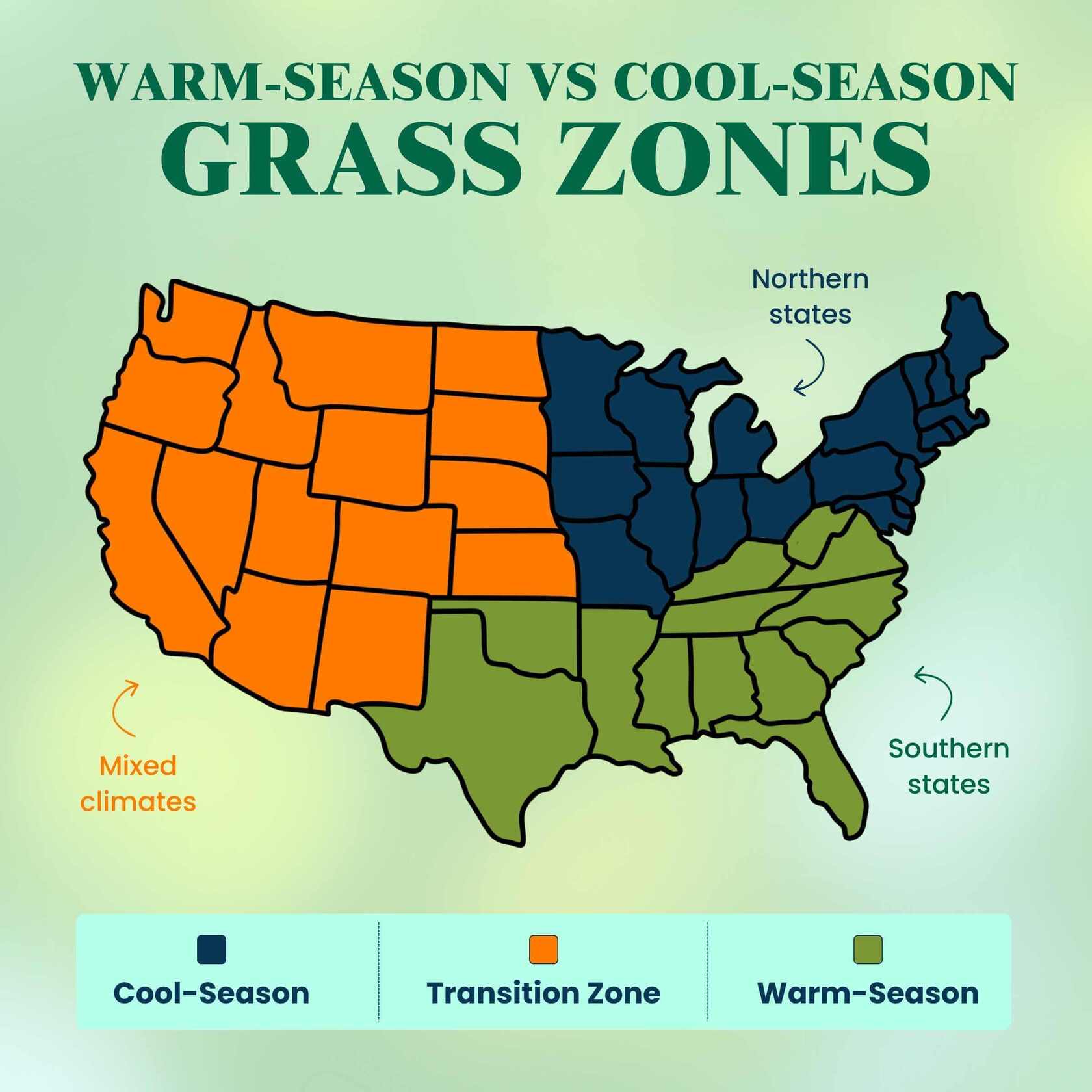
To develop a healthy lawn care routine, first identify whether your lawn has warm-season or cool-season grass. Each grass type requires a different kind of care.
Warm-season grasses grow well in Southern states where the hot summers are long and the mild winters are short. Cool-season grasses thrive in Northern states where the summers are short and frigid winters are long.
States located between the northern and southern regions of the U.S. fall within the transition zone. The transition zone experiences both hot summers and cold winters, making it suitable for either warm- or cool-season grasses depending on local conditions.
Cool-season grasses: Kentucky bluegrass, fescue, and ryegrass.
Warm-season grasses: Bermudagrass, zoysiagrass, St. Augustinegrass, centipedegrass, buffalograss, and bahiagrass.
Soil Testing
Before you start dousing your lawn in fertilizer, get to know your soil with a soil test. This test often reveals your soil’s:
Soil type (clay, sandy, loamy, or silt)
pH level (alkaline or acidic)
Nutrient deficiencies
Organic matter levels
For a thorough analysis of your soil and comprehensive maintenance recommendations, send a soil sample to your local cooperative extension for laboratory testing. These test results often include precise recommendations for fertilizer, soil amendments, and structural improvements.
Tip: Test your soil every three to five years.
Soil Amendments
Soil amendments help improve the soil’s texture, structure, and pH level.
For example, lime raises soil pH, making it less acidic and more alkaline. On the other hand, sulfur lowers soil pH, making it less alkaline and more acidic.
Refer to your soil test results to identify what kind of amendment your soil needs, how much to use, and when to apply it.
Note: The best time to apply soil amendments is fall. It can take several months for soil amendments to fully adjust soil pH. Follow your soil test recommendations for timing fertilizer and amendment applications.
Lawn Mowing
When your grass begins to grow in spring, it’s time to bring out the lawn mower (or hire a lawn pro for the job).
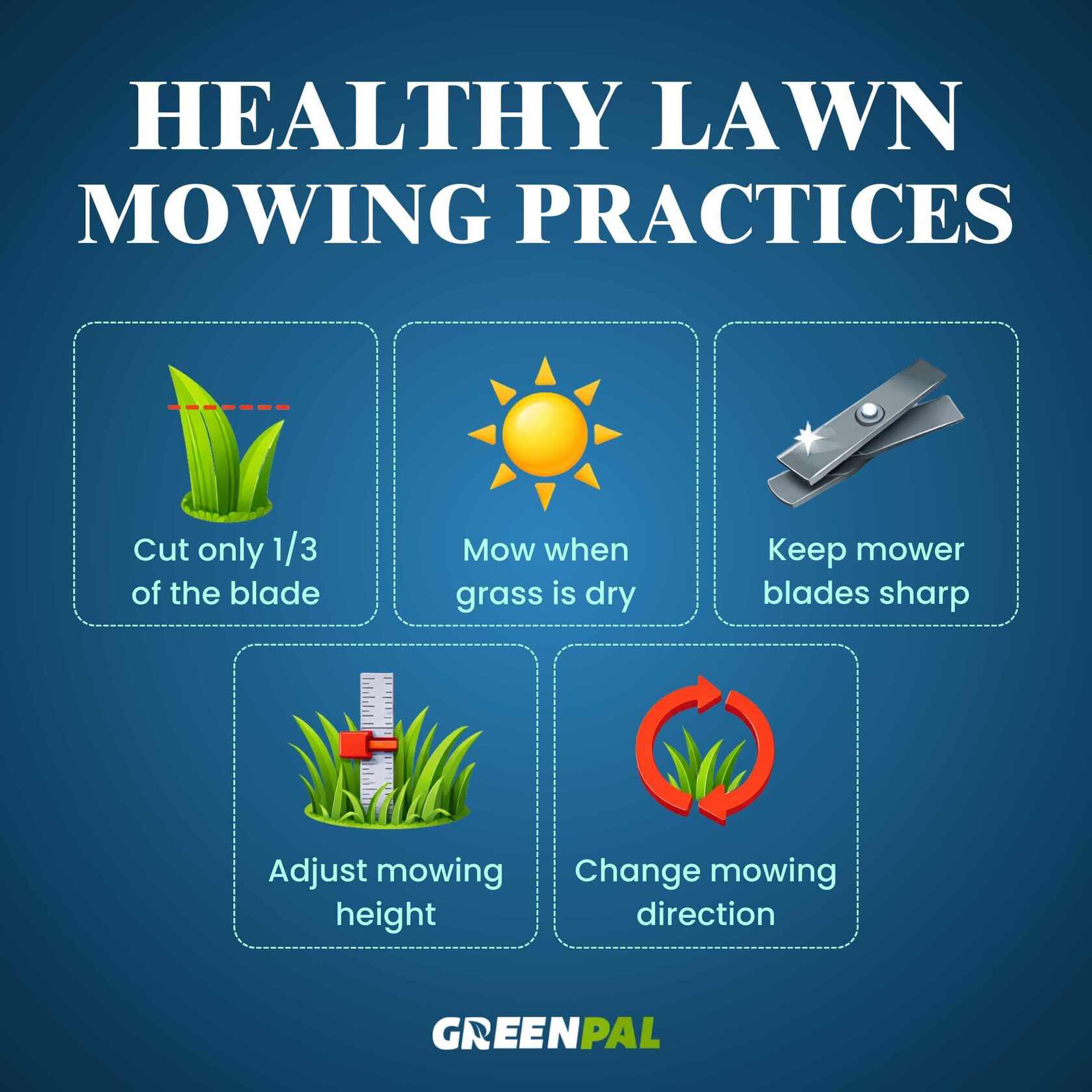
Poor mowing habits harm your lawn’s turf, so always practice the following lawn mowing tips:
Follow the one-third rule: Never remove more than one-third of the total grass blade height in a single cut.
Mow dry grass: Wet grass results in an uneven cut, and the wet clippings can clump and clog your mower.
Sharpen mower blades: Dull mower blades rip and tear turfgrass.
Adjust to optimal height: Set your mower blade to your grass type’s recommended height. For example, bermudagrass is typically mowed between 1 and 1.5 inches, while tall fescue performs best at 2.5 to 3.5 inches.
Vary your pattern: Change direction each time you mow so the grass doesn’t lean in one direction.
Thatch Removal
What is lawn thatch? Thatch is a layer of dead and living organic matter that collects between your lawn’s grass blades and the soil’s surface.
Why remove thatch? When the layer of thatch becomes too thick, it prevents the grass roots from accessing fertilizer, water, and oxygen.
How often to remove thatch? Remove thatch when the layer exceeds one-half inch thick. Different lawns develop thatch at different rates. Some lawns require annual dethatching, while other lawns only need dethatching every 2 to 3 years, sometimes every 5 years.
When to remove thatch? The best time to dethatch cool-season grass is in fall or early-spring. The best time to dethatch warm-season grass is in late spring or early summer.
Soil Aeration
What is lawn aeration? Aeration is the process of removing plugs of soil from the ground to relieve soil compaction.
Why aerate soil? Soil becomes compact over time, preventing it from absorbing fertilizer, water, and oxygen. Aeration relieves compaction, resulting in improved lawn health.
How often to aerate? Aerate the soil when it’s compacted. Clay soils often require annual aeration, while sandy soils typically require aeration every 1 to 3 years.
How to test soil compaction? Push a 4 to 6 inch screwdriver into moist soil — if it is difficult to insert, then the soil is compact and requires aeration.
When to aerate? The best time to aerate cool-season lawns is in fall or early-spring. The best time to aerate warm-season lawns is in late spring or early summer.
Overseeding
Overseeding is the process of spreading new grass seed over an existing lawn. This treatment thickens the lawn’s density, encourages new growth in bare spots, and builds resilience against pests and disease.
The best time to overseed cool-season grass is in fall. The second-best time is in early spring.
The best time to overseed warm-season grass is in late spring or early summer.
Pro Tip: Overseed after aeration. Aeration exposes the soil, creating better seed-to-soil contact.
Note: After overseeding, wait 4 to 6 weeks before applying a nitrogen-heavy fertilizer. If you applied pre-emergent herbicide to the lawn, wait 12 weeks before overseeding.
Ready to fill in your lawn’s bare patches? Learn How to Aerate and Overseed Your Lawn in 5 Simple Steps.
Fertilizer
Fertilizer is food for your grass. Soil test results often indicate how much fertilizer to apply, when to apply it, and what ratio of nitrogen, phosphorus, and potassium to use.
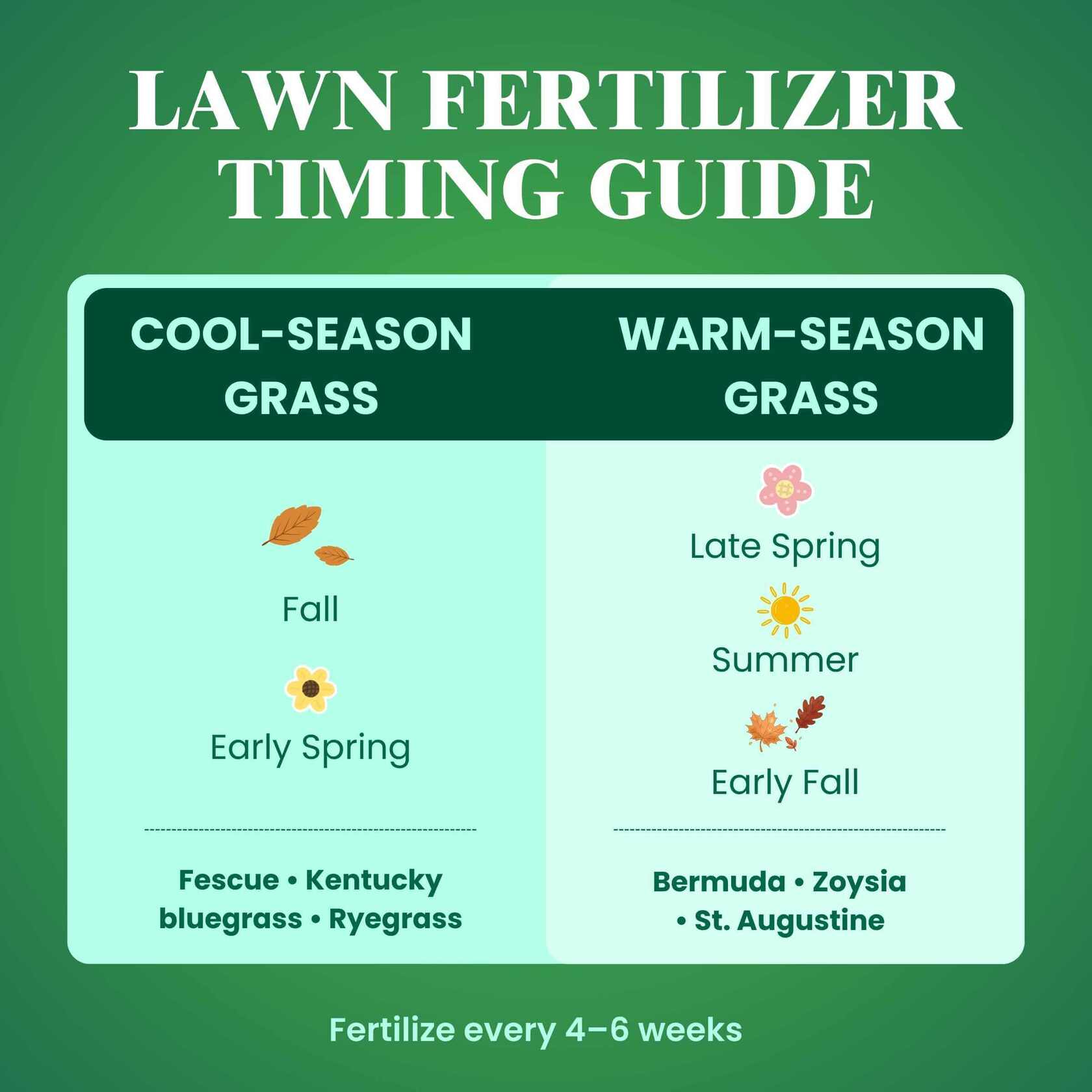
Apply fertilizer during your lawn’s growing season every 4 to 6 weeks, depending on the results of your soil test.
For cool-season lawns, apply fertilizer through fall and early spring.
For warm-season lawns, apply fertilizer late spring through early fall.
To learn more about fertilizer, check out the following guides:
Irrigation
Quench your lawn’s thirst with 1 to 1.5 inches of water per week. To promote a healthy root system, water your lawn deeply and infrequently rather than frequently for short periods.
Aim to water your lawn 1 to 3 times per week, depending on grass type, soil conditions, and climate.
Tip: Water the lawn in the early morning, before 10 a.m., to reduce water loss from evaporation. Avoid watering in the evening — the grass won’t dry properly, and excess moisture can invite pests and disease.
Weed Control
Weeds, like dandelions and crabgrass, compete with your turfgrass for nutrients, space, water, sunlight, and oxygen. When too many weeds crowd out the grass, your lawn’s health suffers.
The best way to control weeds is to maintain a healthy lawn. The healthier your lawn, the better it can outcompete weeds.
If you need to call for backup, apply pre-emergent herbicides to prevent weeds from growing in the first place. To destroy existing weeds, apply post-emergent herbicides.
Pest and Disease Control
When your lawn shows signs of stress, it may indicate a pest infestation or fungal disease.
Poorly maintained, weak lawns are susceptible to pests and disease. So the healthier you keep your lawn, the less you’ll need to worry about uninvited guests.
If improving your lawn care routine doesn’t resolve the problem, use a pesticide or fungicide that targets the specific issue.
Leaf Removal
It may be tempting to skip this laborious autumn chore, but leaf removal is essential to lawn health.
Too many leaves on the lawn can suffocate your grass and block sunlight. Plus, when it rains, the soggy leaves become attractive real estate for pests and disease.
Remove leaves from the lawn with a rake, leaf blower, or leaf mulcher.
Hire a Lawn Care Professional With GreenPal
Lawn care is a year-round process, but most maintenance follows the natural growing cycle of your grass type.
Caring for the lawn is no simple task. And when the sun is high and bright, mowing the lawn is the last way you’ll want to spend your weekend. Connect with a lawn care professional through GreenPal to receive competitive lawn mowing bids from providers near you.